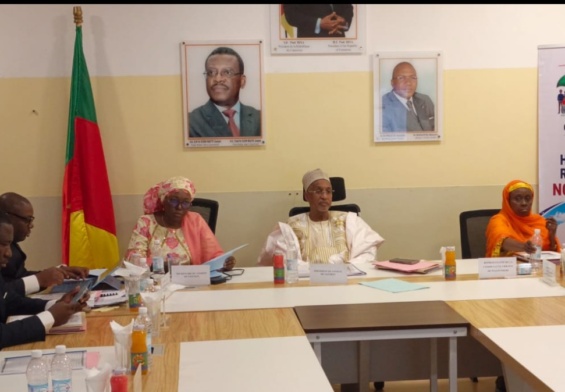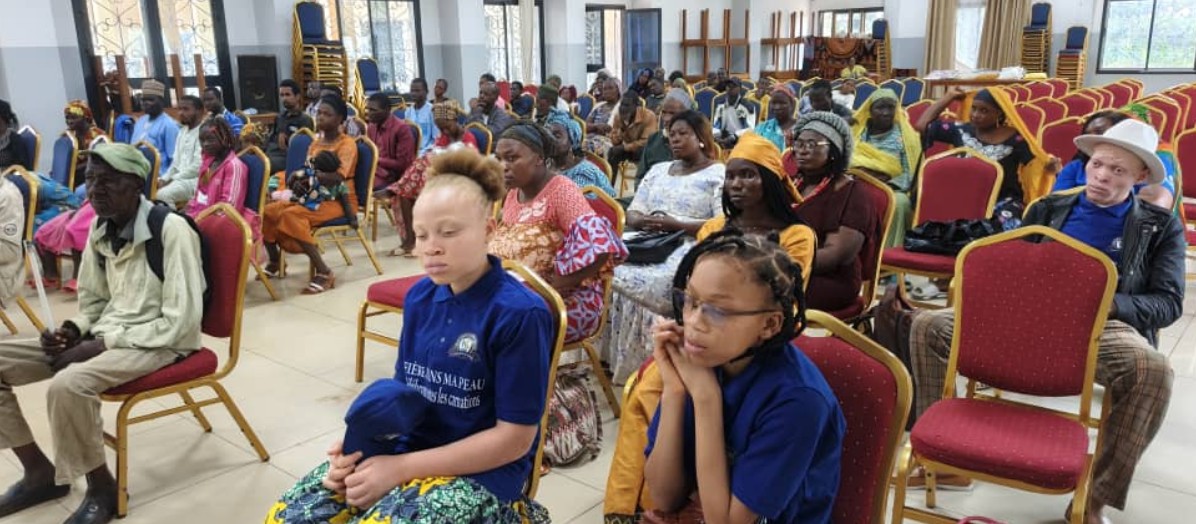
This was on the occasion of World Albinism Day, celebrated on June 13th under the theme: proudly in my skin: celebrating all skin tones.
In the Adamawa region, as elsewhere, despite awareness campaigns, people living with albinism continue to be the object of curiosity, prejudice, and even stigmatization. « Mokala, » « guenguerou, » « fake whites, » « nassara, » « mystical people, » etc., are just some of the stereotypes used to describe them. In many families, communities, and workplaces, people with albinism are the subject of much curiosity. These stereotypes and preconceived notions can impact the self-esteem of this group of people, who nevertheless possess the same intellectual abilities as those considered « normal. » « In my family, some of my brothers felt I was different from them, even though I’m capable of doing the same tasks they do. At first, it frustrated me, but I learned to cope, » says Adriana Ze Abena, a teacher with albinism. Manoël Ndzeutouo, a chemical engineering student at the University of Ngaoundéré, considers these realities to be part of his own truth and accepts them as they come. « If someone refers to me because of my skin color, I don’t see anything wrong with it. They’re not saying anything wrong, and it doesn’t mean anything, » he says with a touch of humor.
A low-key celebration
Initiated in 2014 by the United Nations, World Albinism Awareness Day is a time for reflection on policies to ensure the well-being of people with albinism, just like everyone else. In Ngaoundéré, the 2026 celebration would have gone largely unnoticed were it not for the commitment of a civil society organization dedicated to the well-being and empowerment of people with disabilities. “We fight to ensure that people with disabilities feel integrated into the community. In specific cases, the challenges are numerous, including stigmatization and even rejection. This can
significantly impact their self-esteem,” explains Reverend Félix Ambe, founder of the Victory Disability Outreach Association (VDOA). This organization provides training modules for people with albinism to help them achieve greater empowerment.
Dermatologists urgently needed
While children with albinism are increasingly integrated into education with the rise of inclusive primary and secondary schools, efforts are still needed in the social and healthcare sectors. The lack of skin pigmentation in people with albinism makes them vulnerable to various skin conditions, creating a significant challenge in accessing care. « We are increasingly making our mark in society through our abilities, but our main concern remains the harsh climate during the dry season, coupled with the lack of dermatologists in the region. It’s not easy at all, » says Adriana Ze Abena. She pleads, « We are appealing to the health authorities. If they could assign dermatologists to the city of Ngaoundéré and other towns, it would be truly beneficial for us and the entire population of the region. »
The celebration of World Albinism Day brings back to the forefront the importance of community awareness about the specificities of albinos, but also the consideration of their talents for a more inclusive society.
REACTIONS: Adriana Ze Abena, teacher
“We are not ‘aliens’”
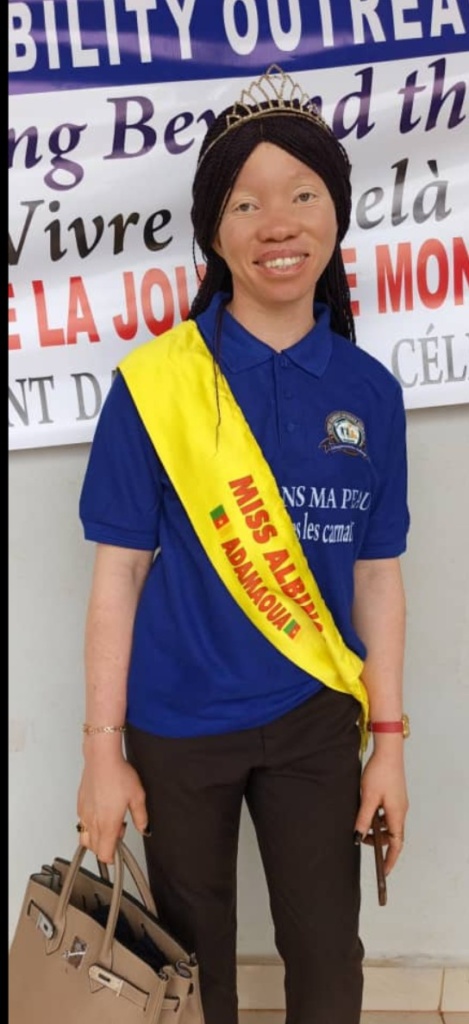
Albinism is a genetic condition. No one wants to be born this way, but we simply accept it. We face several challenges every day. It starts with the outside world. Because even family members accept us as being a little different, though not entirely. We face various challenges. For example, people outside the home, or children at school who aren’t well-informed about it, might bring it up with tasteless teasing and little schemes. As we face these different attacks, it makes us stronger because some people are very surprised, while others express outright disgust towards us. As I said, they aren’t well-informed and are afraid that the service a person with albinism should provide won’t be what they expect. We also have people who think that we’re not naturally able to cope. I didn’t really consider myself a disabled person. Deep down, I know it. And there, many people don’t expect us to do certain jobs. The little anecdote is about my brother who challenged me. Because, well, I was complaining that cooking, especially couscous, was normally quite exhausting and all that. He was sitting down. So, he complained and said to me, « But you, you shout too much. » He had been assigned a task, which was to move the dirt that was blocking the road to another position. So that’s how he asked me to do his job and he would do mine. Like, him to cook and me to move the dirt next to it. He successfully failed. Me, on the other hand, I said yes, why not? Why not? Because I also wanted to be seen in a different light. So that’s how I started working and everything. Then the idea came to me to film myself. So, I ended up doing it. There’s a tendency to marginalize the Adamaoua region. So, as someone who lives in Adamaoua and is also Miss Albino of Adamaoua, my first goal is to raise awareness among all people with albinism to see what projects we can undertake. How can we help them regain their self-confidence, because we’ve
noticed that the majority don’t really have it. After raising awareness, the focus will be on restoring confidence in each of us so that each of us can bring out what we have within us. In English, we say « skills, » our various talents, our know-how, and sharing them with society to showcase them so that more people understand that we are not different.Either we’re not « aliens » as many claim. We live in a region with a harsh climate during the dry season. That’s already a major problem. We don’t have enough dermatologists and not enough ophthalmologists either.
Manoël NdzeutouoChemical Engineering Graduate
« People with albinism face many difficulties in society, most of which stem from preconceived ideas. »
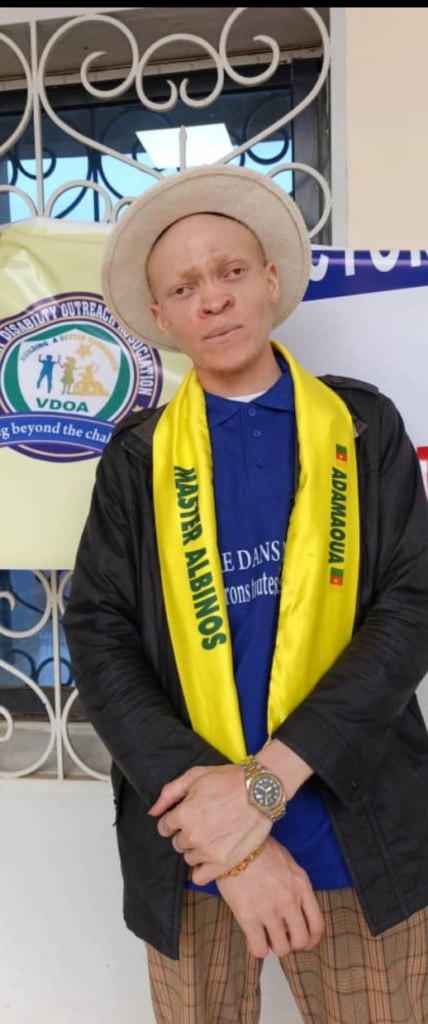
It must be said that people with albinism face many difficulties in society, most of which stem from preconceived ideas. For example, there are beliefs that people with albinism are witches. Sometimes people even say, « It’s just that when we die, we’re thrown into a swamp, » or « We simply disappear, » things like that, which are illogical. Of course, there are curiosities, of course. Friends often make jokes, asking about your sex. Does your body hair have different colors, black or white, things like that. There are so many curiosities of that kind. These are questions we don’t necessarily like to hear; not only are we unprepared, but they always come unexpectedly. We never ignore them. But with time, with culture and everything, and with a certain amount of experience, we’ve managed to deal with it, to understand that, in fact, these people who say these kinds of things, it’s not necessarily a bad thing, it’s just that there’s a lack of awareness on the issue. That’s
why I, as a person with albinism from the Adamawa region, take it upon myself to raise awareness about albinism as much as possible. And I also urge the Cameroonian government to increase its actions and initiatives, like Vdoa’s, to highlight the lives of people with albinism and to popularize the topic. In reality, initially, at a certain point, yes, of course, because nobody likes it when they say unpleasant things. But in fact, we realize that when you say « albino, » what exactly does it encompass? You’re an albino, that’s true, isn’t it? He only said what’s true, actually. At some point, you realize he’s just describing what he sees. That is to say, perhaps during childhood, our brains are programmed—perhaps it has a negative connotation. But otherwise, if someone calls you an albino, they’re simply describing what they see. I’m called arrogant because I don’t pay attention to all these things said, to all the opinions of others, to the fact that people want me to think like them, for the sake of others, for the good of others. I form my own opinion. I think everyone should first work on this psychological aspect, because everything is psychological. At some point, if you’re mentally weak, it will affect you. It will affect you, and you’ll be blocked. There are people with albinism who have enormous talent, but due to abandonment by their loved ones and everything else, they do nothing. They are afraid. They are afraid of what their loved ones will say to them. They are afraid of things.When I got my baccalaureate, I did preparatory courses for medical school. I was with some friends one day. I told them. They said this. It made me laugh, actually. ‘You want to go into medicine to treat who?’