Behind the commemoration of World Blood Donor Day lies a worrying reality: the Northern region continues to record a low rate of voluntary donations.
In Garoua, World Blood Donor Day did not go unnoticed. While the turnout appeared more subdued than in previous years, the regional branch of the National Blood Transfusion Center (CNTS) made sure to mark the event through several activities designed to highlight the importance of blood donation.
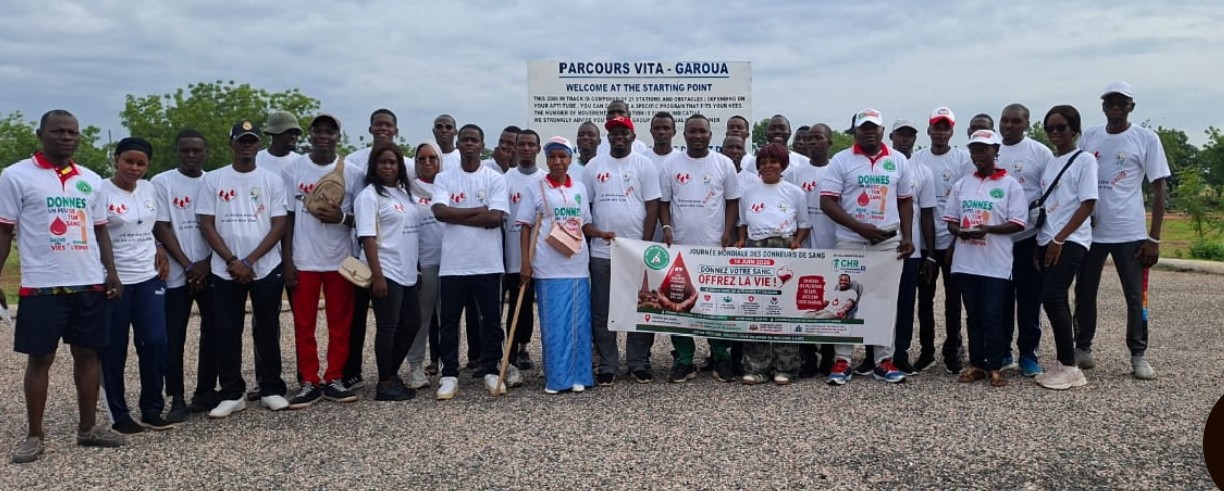
As a prelude to this celebration, a fitness walk was organized on June 14th at the Garoua Vita course. Healthcare professionals, partners, and volunteer donors participated in this activity, which aimed to be both athletic and civic-minded. Beyond the physical exercise, the message was clear: to promote voluntary blood donation as a simple, free, and life-saving act.
Activities continued the following Monday with an awareness session organized for the staff of the Socadel regional agency. CNTS officials presented the importance of blood donation, the requirements for becoming a donor, and the many lives that can be saved with a single unit of blood. Through these discussions, the organizers hope to encourage more citizens to donate.
Behind this awareness campaign lies a particularly worrying reality. Blood donations remain very low in the North region, a situation that reflects the difficulties observed nationwide. According to estimates from the World Health Organization (WHO), Cameroon needs approximately 400,000 units of blood per year to effectively meet the needs of healthcare facilities. Yet, the quantities actually collected remain far below expectations.
In the northern region, annual needs are estimated at 47,957 units of blood. However, according to statistics from the National Blood Transfusion Center, the region is still struggling to reach 30% of this target. In other words, less than a third of the needs are met, exposing healthcare facilities to daily stock shortages.
This shortage is primarily due to the low number of voluntary donors. Collection campaigns still rely heavily on family or replacement donations, made when a loved one is hospitalized. However, this system does not allow for the creation of permanent reserves capable of responding to emergencies. This situation serves as a reminder that blood remains a unique medicine. Unlike other pharmaceutical products, it cannot be manufactured in a laboratory. Only the generosity of donors makes it possible to replenish blood banks and ensure continuity of care.
Placed this year under the theme « A drop of humanity: give your blood, save lives », World Blood Donor Day is first and foremost a call for solidarity.
“Our message is simple and direct: Don’t wait for an emergency to save a life. Blood donation is a safe, quick, and essential civic act. Every unit of blood counts for a father, a mother, a child in your own neighborhood,” stated Dr. Sadou Pierre, regional representative of the National Blood Transfusion Center, in an interview. Awareness campaigns must now be sustained. The goal is to dismantle the misconceptions that still surround blood donation, reassure the public about the safety of the collection process, and encourage the continued participation of volunteer donors.
Beyond commemorative events, the real challenge remains fostering a culture of regular blood donation in the Northern region. Every unit of blood collected represents an additional chance to save a mother in childbirth, a road accident victim, or a seriously ill child. More than a medical act, blood donation is an act of solidarity, humanity, and collective responsibility.