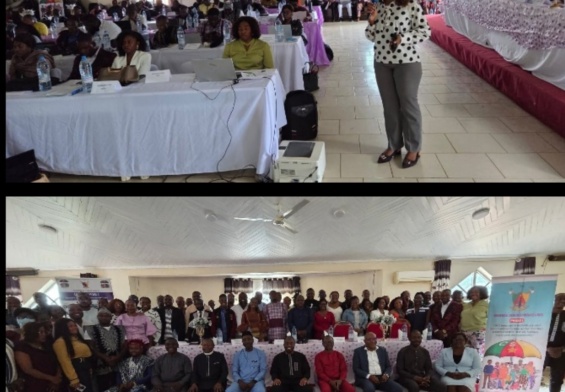
By now imposing real-time epidemiological analysis and surgical decoding of data at the heart of coordination meetings, this visionary leader is transforming routine meetings into true decision-making cockpits.
The Southern Regional Public Health Delegation held its monthly coordination meeting for services and programs today.
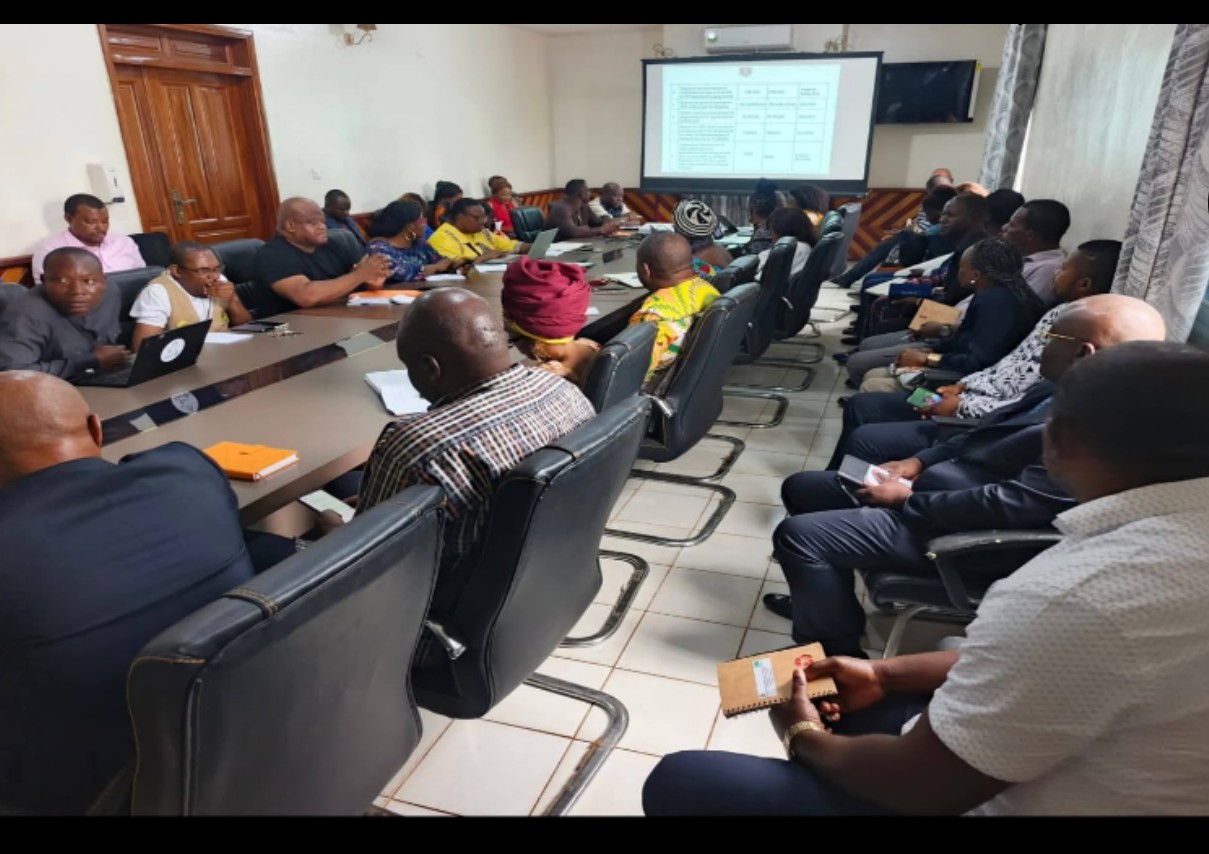
Health coordination meetings often have a bad reputation: long speeches, flimsy agendas, decisions that vanish the moment the door opens. But on Monday, June 29, 2026, in the meeting room of the Southern Regional Public Health Delegation in Ebolowa, the air crackled with a new energy. Here, people weren’t there to tick boxes or listen to dusty reports. They were there to declare the end of an era and the dawn of a new one where public health is no longer managed by instinct, but with the precision of data. Under the firm leadership of Dr. NGO’O MEBE, Regional Health Delegate for the South, the monthly coordination meeting for services and programs had a jolt of energy. A sweeping reform of the meeting format was unveiled, promising to transform these gatherings into true health governance centers.
The stage was set. Around the table were the heads of departments, the FRPS-South Administrator, program coordinators, regional managers, delegation focal points, and technology and financial partners. They had all come with a shared understanding: the Southern region, with its specific epidemiological challenges, hard-to-reach areas, and vulnerable populations, deserves more than routine meetings. It deserves a well-oiled health war machine, capable of anticipating, reacting, and protecting.
The Regional Delegate’s announcement was breathtaking. From now on, every coordination session must absolutely include two components that were previously relegated to the background. First, a review of program data, for real-time performance monitoring and precise management of activities. Gone are the days of being satisfied with approximate figures and yesterday’s reports. The South wants living indicators, graphs that speak for themselves, dashboards that reveal the truth on the ground. Second, an analysis of the region’s epidemiological situation, to anticipate outbreaks, react more quickly to alerts, and adapt the health response with sniper-like precision.
This dual requirement is not simply a technical addition. It represents a cultural
shift. It means that meetings will no longer be echo chambers where everyone repeats what they’ve already said, but decision-making arenas where the numbers speak for themselves, where epidemics are tracked at their source, and where every delay is a mistake. Dr. NGO’O MEBE hammered home the message with almost razor-sharp clarity: it’s about moving from a framework for discussion to a genuine decision-making tool. The objective is as simple as it is ambitious: to improve healthcare delivery throughout the department, reduce response times, and save lives by acting before crises take hold.
The participants greeted the reform with a mixture of gravity and fervor. For behind the words lie painful realities: cholera epidemics erupting in flooded areas, outbreaks of treatment-resistant malaria, and obstetric emergencies turning into tragedies due to a lack of coordination. Everyone knows that data doesn’t lie, and that the absence of data kills. The technology and financial partners present welcomed this direction, promising their support in equipping the delegation with robust information systems and enhanced analytical capabilities.
The meeting concluded with a solemn commitment from all participants to adopt this new format at the next session. No half-measures, no further delays. The South aims to be a testing ground for modern health governance, where transparency, rigor, and responsiveness are not mere slogans but operational principles. Dr. NGO’O MEBE concluded by emphasizing that health is not like any other sector: every minute lost is a life at risk. And in a region where distances and limited resources already complicate access to care, administrative efficiency becomes a therapeutic act in itself.
Ebolowa has thus experienced a day that could well mark a turning point. Health coordination in the South will never again be a soporific ritual. It will be a rendezvous with reality, a face-to-face encounter with the figures, a confrontation with emergencies. By placing data review and epidemiological analysis at the heart of its work, the Regional Delegation of Public Health for the South is charting a course that other regions could soon follow. Because in health, as elsewhere, the future belongs to those who know how to interpret the figures before lives are irrevocably altered. The South is on the move, and its compass is now calibrated to the data. Let epidemics beware: the response will no longer be delayed; it will be precise, relentless, and above all, life-saving.