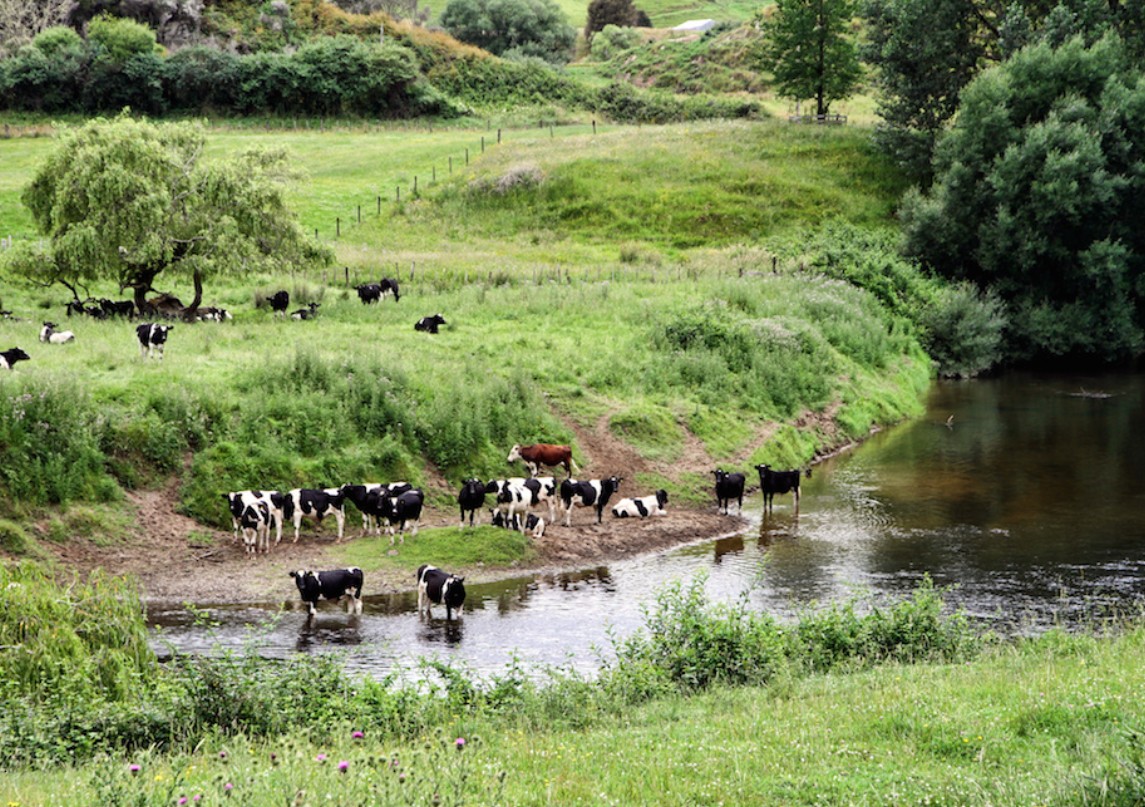
Its availability, quality, and temperature directly influence livestock productivity. Even a minor water restriction can lead to decreased feed intake and potentially fatal health risks.
Cattle, the mainstay of extensive livestock farming in Cameroon, require between 50 and 150 liters per day for a dairy or suckler cow, needs that can double during periods of high heat.
Whether under the scorching Sahelian sun or in the humid heat of the verdant highlands, one reality is undeniable to all livestock farmers in Cameroon: water is the most essential nutrient. It is the invisible lifeblood that flows through the veins of every farm, the vital fluid without which even the hardiest livestock collapses in a matter of days. Constituting 70 to 80% of an animal’s weight, water is not simply a dietary supplement; it is the foundation upon which the entire livestock production chain rests. Its availability, quantity, and quality are matters of life or death for herds, and neglecting them exposes farmers to catastrophic economic losses. Understanding the water requirements of animals is therefore key to grasping one of the essential keys to pastoral success.
The volume of water ingested directly impacts the health and productivity of animals. However, this volume is far from uniform: it varies according to the
species, the stage of production, the type of feed provided, and the vagaries of the weather. Cattle, the cornerstone of extensive livestock farming in Cameroon, require between 50 and 150 liters per day for a dairy or beef cow, needs that can double during periods of intense heat. Horses, invaluable for pastoral movements, require 30 to 45 liters daily. Pigs, raised in peri-urban areas, consume 12 to 15 liters per day. Small ruminants, such as goats and sheep, require only 4 to 15 liters, while poultry, found in almost every Cameroonian yard, need 100 to 150 milliliters per day for a laying hen. Behind these figures lies an implacable reality: even partial water restriction quickly leads to a decrease in food intake, a drop in milk production and increased vulnerability to diseases.
But quantity isn’t enough. Water quality is just as crucial, often overlooked by farmers pressed for time by daily demands. Poor-quality water, teeming with pathogenic bacteria like E. coli or salmonella, can decimate a herd in a matter of days. The evaluation criteria are strict and demanding. Cleanliness and clarity are paramount: drinking water must be fresh, clean, and free of any undesirable odor or taste. Microbiological analyses must guarantee water free of bacteria, viruses, and parasites, which requires rigorous, periodic monitoring of the water sources. The physicochemical composition must be free of excess minerals such as iron, sulfates, or nitrates, and must not be excessively hard, which could cause limescale buildup in pipes and create bacterial growth conducive to infection. Finally, water temperature plays an often underestimated role: ideally between 10°C and 18°C, water that is too hot or too cold limits consumption, which directly harms milk yield or the growth of young animals.
In the Cameroonian context, where climate change is making water resources increasingly unpredictable, these requirements take on particular urgency. Livestock farmers in the Far North, facing increasingly long dry seasons and extreme temperatures, must be more resourceful than ever to guarantee their herds sufficient water of impeccable quality. Boreholes, wells, and ponds are often the only available sources, but their maintenance and protection against contamination remain major challenges. The pastoral security initiatives led by the Ministry of Livestock, Fisheries and Animal Industries (MINEPIA) now include water quality monitoring programs, recognizing that herd productivity depends as much on the purity of watering holes as on the abundance of pasture.
To guide livestock farmers in their quest for optimal water management, several technical resources are available. The guide *Water Requirements for Livestock*,
published by Ontario.ca, offers valuable information tailored to different types of production. The technical note *Drinking Water Quality for Livestock* from GDS19 provides valuable insights into the analyses and thresholds to be met. To delve deeper into the physiological impacts, the document *Water and Health in Livestock Farming* offers an informed perspective on biological mechanisms, while the fact sheet *Water in Quantity and Quality* from Agri-Network summarizes best practices to adopt daily.
Water is not an infinite resource, much less a minor detail in livestock farming. It is the very foundation of animal health, the silent fuel that transforms feed into meat, pasture into milk, and livestock into a source of income. For Cameroonian livestock farmers, as for their counterparts around the world, mastering this precious resource has become a strategic imperative. Whether in the arid plains of the North or the humid highlands of the West, every drop counts, every analysis provides protection, and every well-designed watering trough brings livestock farming a step closer to excellence. The future of Cameroonian livestock farming will also depend on the clarity of its water sources and the rigor of its water management.