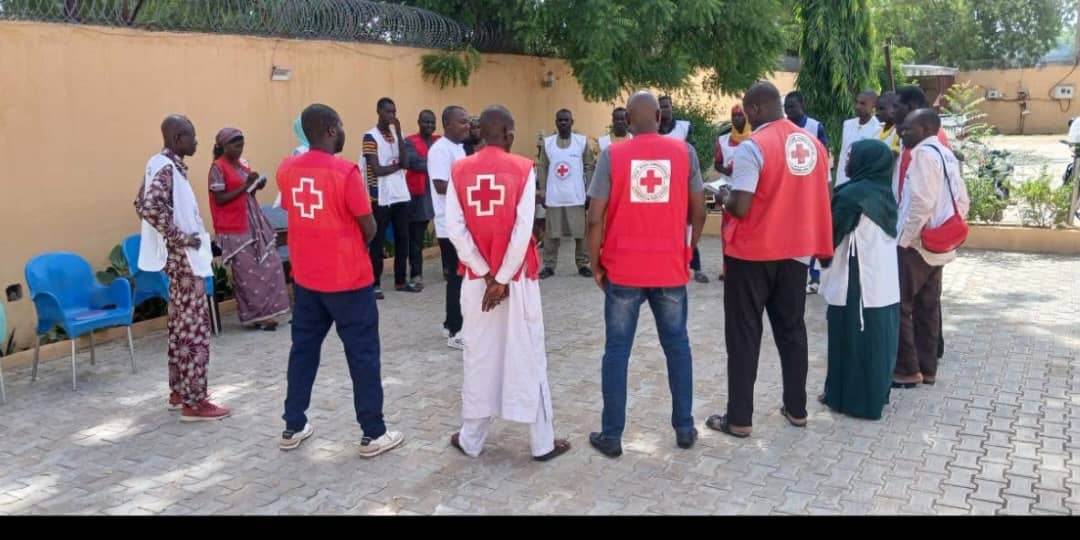
Volunteers from the Cameroon Red Cross committees of Kousseri, Blangoua, Hilé Alifa and Makary have completed a capacity-building workshop on needs assessment, project implementation and community accountability. Organized with the ICRC, the training aims to strengthen the quality, coordination and effectiveness of humanitarian assistance in Cameroon’s Far North Region.
Cameroon Red Cross volunteers from Logone-et-Chari participate in a training workshop to strengthen emergency response, community engagement and accountability in humanitarian operations.
Volunteers serving communities in Cameroon’s Logone-et-Chari Division have strengthened their operational skills through a training workshop to improve humanitarian preparedness and response in one of the country’s most vulnerable regions.
The workshop brought together Cameroon Red Cross volunteers from the departmental committees of Kousseri, Blangoua, Hilé Alifa and Makary. Organized by the Cameroon Red Cross in collaboration with the International Committee of the Red Cross (ICRC), the initiative is part of ongoing efforts to reinforce the operational capacities of local Red Cross structures and ensure that humanitarian interventions are more efficient, coordinated and responsive to the needs of affected communities.
Located in the Far North Region, Logone-et-Chari is regularly exposed to humanitarian challenges, including insecurity linked to cross-border violence, population displacement, flooding and limited access to basic services. In such settings, trained volunteers often represent the first line of assistance, providing essential support before larger-scale relief operations can be deployed.
During the workshop, participants strengthened their knowledge of initial needs assessment, data collection and analysis, beneficiary targeting, project implementation and monitoring. They also received practical guidance on organizing relief distributions and conducting post-intervention follow-up to ensure that assistance reaches the intended beneficiaries and responds effectively to identified needs.
A significant part of the training focused on accountability to affected populations. Volunteers enhanced their understanding of community engagement, feedback and complaints mechanisms, and the prevention and reporting of sexual exploitation, abuse and harassment (PSEAH). These components are increasingly recognized as essential to delivering humanitarian assistance that respects the dignity, safety and rights of vulnerable people.
Accordi ng to the organizers, strengthening these technical and operational skills will enable volunteers to plan interventions more effectively, collect reliable information from the field and adapt humanitarian actions to the realities faced by local communities. Better-trained volunteers can also help improve coordination between humanitarian actors while reinforcing trust with the populations they serve.
For the Cameroon Red Cross and the ICRC, investing in volunteer training remains a key element of building resilient local response capacities. By equipping frontline volunteers with practical tools and internationally recognized humanitarian standards, both organizations seek to enhance the quality, transparency and impact of emergency interventions.
As humanitarian needs continue to evolve across the Far North, strengthening the competencies of community-based volunteers is expected to play an increasingly important role in ensuring that assistance is timely, needs-based and delivered with accountability. For the communities of Logone-et-Chari, better-prepared volunteers mean a stronger and more effective humanitarian response when emergencies occur.