

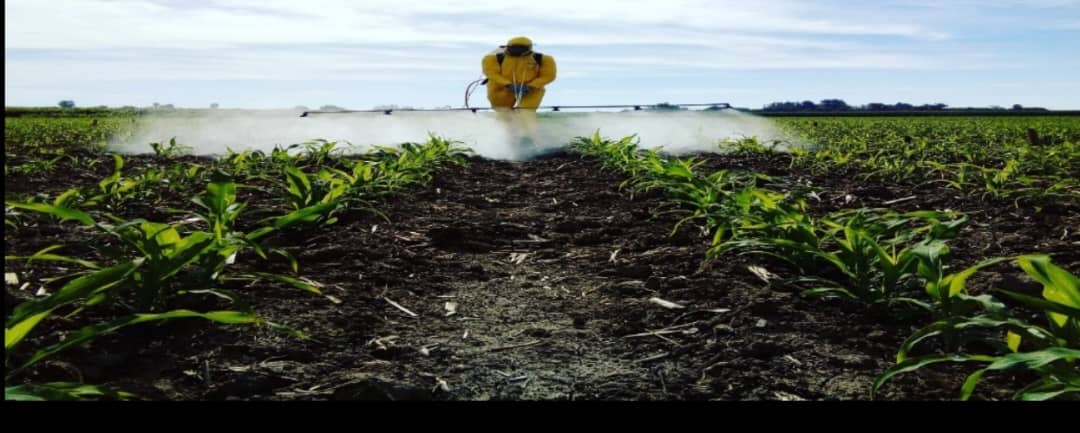
The uncontrolled use of chemical inputs is silently poisoning farmers and threatening consumer health..
Personal protective equipment, often considered too expensive or completely unsuitable for the rigors of the tropical climate, is abandoned in favor of simple city clothes.
In the vibrant markets of Yaoundé and Douala, fruit and vegetable stalls have never looked so dazzling, displaying perfect tomatoes and vigorous plantains. Yet, beneath this showcase of Cameroon’s booming agriculture, a silent health crisis is brewing, one that finds its way onto our plates daily. To boost yields and feed a rapidly growing urban population, the use of pesticides and chemical fertilizers has become the norm. However, this race for productivity is too often carried out in disregard of the most basic safety rules, transforming valuable agricultural aids into
formidable time bombs for public health. From field to table, the uncontrolled use of these chemical inputs now threatens the entire food chain.
At the forefront of this silent tragedy are the farmers themselves, who handle these highly toxic substances daily. Indeed, the vast majority of farmers mix and spread these substances without any protection whatsoever, underestimating the danger of the sprayed molecules. Personal protective equipment, often deemed too expensive or completely unsuitable for the harsh tropical climate, is abandoned in favor of simple street clothes. This is why cases of acute poisoning, characterized by nausea, skin irritation, and severe respiratory difficulties, are multiplying in rural areas. Beyond these immediate accidents, repeated and prolonged exposure over the long term opens the door to far more serious chronic illnesses, ranging from endocrine disruption and infertility to increasingly early-onset cancers. Moreover, the tragedy does not stop at the farm boundaries, as the infiltration of nitrogen fertilizers and adulterated pesticides permanently contaminates groundwater, impairing the kidney health of local populations.
Furthermore, this invisible threat travels along distribution networks to directly impact urban consumers. The crux of the problem lies in the systematic disregard for withdrawal periods, the mandatory period between the last chemical treatment and harvest, essential for the molecules to dissipate. Lacking training or driven by financial pressure, many market gardeners harvest produce prematurely, leaving it still saturated with chemical residues. Consequently, the regular consumption of this food profoundly alters the gut microbiota and weakens the body’s defenses against degenerative diseases. This food insecurity is dramatically exacerbated by porous borders, which facilitate the proliferation of obsolete, counterfeit, or outright banned pesticides on national markets due to their extreme toxicity.
Faced with this systemic threat, it is imperative to rethink our production model by integrating the comprehensive « One Health » approach, which links human, animal, and environmental protection. On the one hand, the National Commission for the Approval of Plant Protection Products must intensify its controls to clean up the input market and withdraw highly dangerous substances without delay. On the other hand, emphasis must be placed on the education and technical support of agricultural producers, both in rural and urban areas. Learning to rigorously calibrate dosages, promoting the use of appropriate protective measures, and enforcing strict adherence to harvest schedules are the only ways to reverse this trend. Only through collective awareness and strict regulation of these inputs can Cameroonian soil continue to feed its people without compromising their spiritual and physical future.


