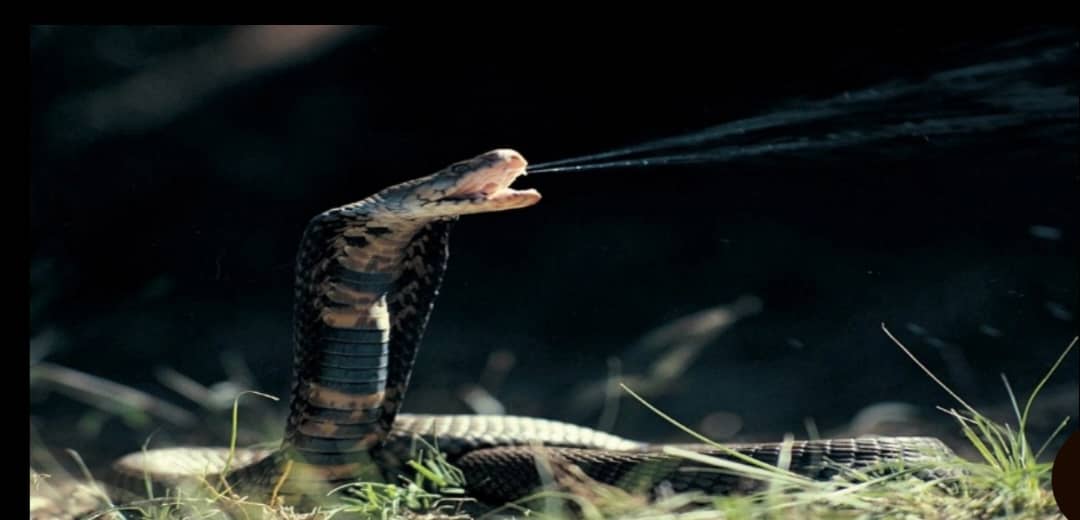
While its neurotoxic venom leaves no room for error, its disappearance would trigger an unprecedented health crisis. An encounter with a fierce giant that urgently demands respect.
The forest cobra is a first-rate thermal and biological regulator
Beneath the dense canopy of African forests, the rustling of dead leaves is enough to freeze even the most intrepid adventurer. In the green twilight, a silhouette rises, majestic and terrifying: the forest cobra unfurls its hood. This discreet giant, which can exceed two meters in length, embodies one of the greatest paradoxes of African biodiversity. Both an invisible guardian of the ecological balance and a deadly threat to humans, this snake fascinates as much as it terrifies. A journey to the heart of the reign of a much-maligned, yet oh-so-essential, predator. Behind its reputation as a ruthless killer lies, in reality, an exceptional agricultural ally. The forest cobra is a first-rate thermal and biological regulator. Its diet, composed mainly of rodents, amphibians, and other reptiles, makes it the first natural defense against pest infestations.
By eliminating thousands of rats and mice each year, it indirectly protects the crops of local communities and curbs the spread of zoonoses (diseases transmissible from animals to humans). Within the food chain, it occupies a pivotal position: while it is a formidable predator of small mammals, it also serves as food for large birds of prey or certain forest carnivores, thus maintaining a fragile but vital balance.
The black lightning bolt: a poison against time
Yet, coexistence with humans remains marked by fear, and for good reason. Cobra venom is a miniature weapon of mass destruction. Composed of a cocktail of enzymes, it combines cytotoxins (which destroy local tissues) and powerful
neurotoxins. When a bite occurs, the toxins instantly block the transmission of nerve signals to the muscles. Diagnosis is a race against time: without the rapid injection of a specific antivenom serum, the respiratory muscles become paralyzed, leading to fatal asphyxiation in less than an hour.
Flee rather than strike
Despite its extreme danger, herpetologists (reptile specialists) agree on one point: the cobra is not an aggressor without reason. Naturally timid, it much prefers flight to confrontation. The problem arises when the animal is cornered, surprised, or trapped by human expansion that encroaches on its habitat. It is in these critical moments that the cobra adopts its characteristic defensive posture, rearing up to intimidate its adversary before striking with lightning speed. Learning to respect its space is no longer just a matter of environmental courtesy; it is a question of survival.
The forest cobra is both poison and remedy, a threat and a protector. It embodies the duality of wild nature: beautiful, powerful, and ruthless. Understanding its ecological role means learning to coexist with it, respecting its space, and recognizing that its presence, far from being a curse, is a sign of a healthy ecosystem.
For in the shadows of the forest, the cobra keeps watch. It is the silent guardian, the predator that maintains the balance, and the danger that reminds us that we are only guests in its kingdom.