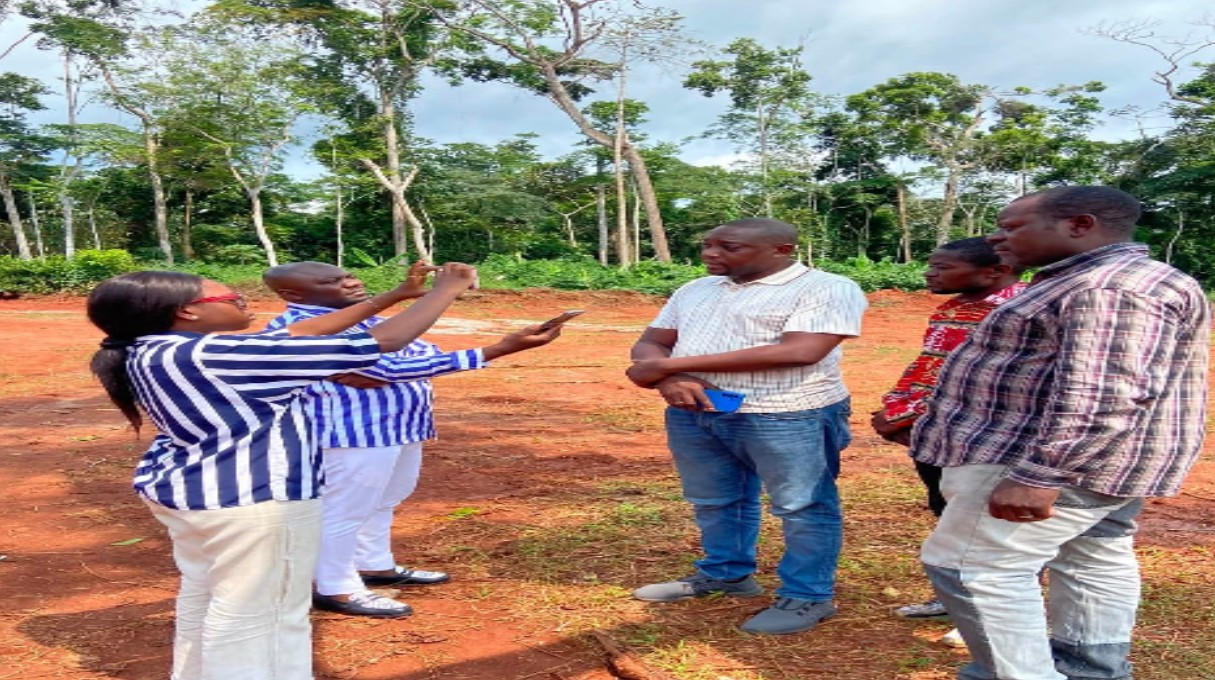
As part of the Integrated Health and Agriculture Intervention Project for Housing (PIISAH), a team of technicians has just been deployed to the Afanloum site.
The Afanloum site is now abuzz with activity as part of a major scientific and environmental expedition. For the past few days, teams of specialized technicians have been traversing its forests, armed with compasses, measuring tapes, and data sheets.
This field deployment marks the official launch of the systematic inventory of local forest resources, a crucial step in the PIISAH project. By venturing beneath the canopy, these experts are not simply conducting a technical inventory; they are laying the foundations for a sustainable development model capable of enhancing the value of the natural heritage while protecting the fragile ecosystems of this rich locality.
The objective of this inventory campaign is to establish a comprehensive and scientific catalog of the plant species present on the site. The research is structured around three major and complementary categories. First, technicians are cataloging fruit tree species, true pillars of food security and the local economy for the surrounding communities.
Second, the focus is on large trees, these giants of the forest essential for climate regulation, carbon sequestration, and the preservation of overall biodiversity. Finally, the inventory gives prominence to plants used in traditional medicine, an invaluable resource for community health and the safeguarding of ancestral therapeutic heritage.
This initiative of the PIISAH project addresses the dual challenge of conservation and sustainable forest management. At a time when deforestation and climate change threaten the forests of Central Africa, having an accurate database on the flora of Afanloum is a strategic imperative.
This assessment will make it possible to identify rare or endangered species in order to implement appropriate protection measures, while also promoting harmonious coexistence between human infrastructure and the surrounding natural environment.
Local communities, often custodians of centuries-old knowledge about these plants, are closely involved in this process, which recognizes their role as guardians of the forest.By combining the rigor of modern forestry with the wealth of local knowledge, the deployment at the Afanloum site has become a project of national significance.
The data collected by field technicians will serve as a compass for decision-makers to guide future land-use planning. Thanks to this successful alliance between science, ecology, and community development, the PIISAH project demonstrates that the future of the people of Afanloum will be written in perfect symbiosis with its biodiversity, transforming each identified tree into a promise of health, sustenance, and sustainability for future generations.