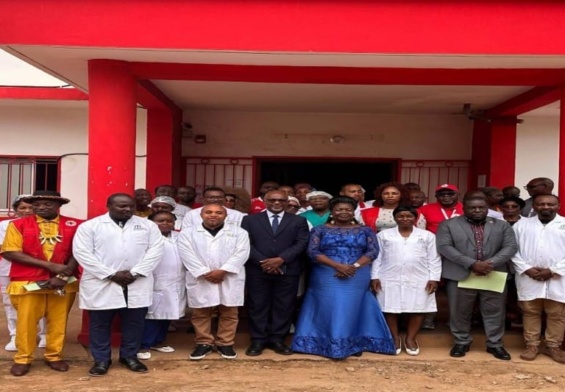
Cameroon has taken another step toward modernizing its healthcare system with the national dissemination of the NDHSP 2026–2030. Gathering government institutions, technical and financial partners, private sector representatives and health professionals in Mbankomo on July 15, the workshop sought to ensure that the country’s ambitious digital health roadmap is widely understood and effectively implemented over the next five years.
The Ministry of Public Health has officially launched the national dissemination of the National Digital Health Strategic Plan (NDHSP) 2026–2030, marking the beginning of a new phase in the country’s digital transformation agenda. While the strategy was formally unveiled in March this year, the Mbankomo workshop focused on ensuring that all stakeholders share a common understanding of its objectives, priorities and implementation mechanisms.
The initiative reflects the government’s determination to make digital technologies a cornerstone of healthcare delivery, public health surveillance and health system governance. Public administrations, development partners, academic institutions, civil society organizations and private companies were brought together to discuss their respective roles in translating the strategy into concrete action.
From strategy to implementationThe dissemination workshop aimed to move beyond policy adoption by encouraging ownership of the plan among institutions that will contribute to its execution. Participants were introduced to the strategic framework, implementation arrangements and monitoring mechanisms designed to guide progress through 2030.
The NDHSP builds on achievements recorded under the previous 2020–2024 strategy, including the deployment of national health information systems, the expansion of digital reporting tools and stronger institutional coordination in digital health. Authorities acknowledge, however, that important gaps remain in infrastructure, interoperability, workforce capacity and governance, making a comprehensive implementation strategy essential.
Eight priorities for a digital health ecosystemThe roadmap is structured around eight strategic pillars covering leadership and governance, legislation and regulatory compliance, human resources, digital infrastructure, financing and investments, digital health services and applications, interoperability standards, as well as research and innovation.
Its overarching vision is to establish, by 2030, an integrated, secure, interoperable and people-centered digital health ecosystem capable of supporting universal health coverage while strengthening the country’s digital sovereignty over health data.Among the expected outcomes are wider adoption of electronic medical records, improved connectivity between health facilities, expanded telemedicine services, enhanced disease surveillance, faster emergency response and greater use of health data for evidence-based decision-making.
The implementation framework also assigns responsibilities to various institutions while defining timelines, funding requirements and monitoring indicators.
A collective responsibilityOfficials stressed that digital transformation cannot be achieved by the Ministry of Public Health alone. Success will depend on sustained collaboration across government sectors, development partners, the private sector and research institutions.By promoting a shared understanding of the strategy, the Mbankomo workshop represents an important milestone in translating national ambitions into practical reforms.
As Cameroon advances toward 2030, the effectiveness of the NDHSP will ultimately be measured by its ability to improve access to quality healthcare, enhance system efficiency and strengthen resilience against future public health challenges.