Kenya has unveiled a five-year strategy to expand domestic production of medicines, vaccines, diagnostics and medical devices, aiming to reduce import dependence, improve access to essential health products and reinforce the country’s resilience against future health emergencies.
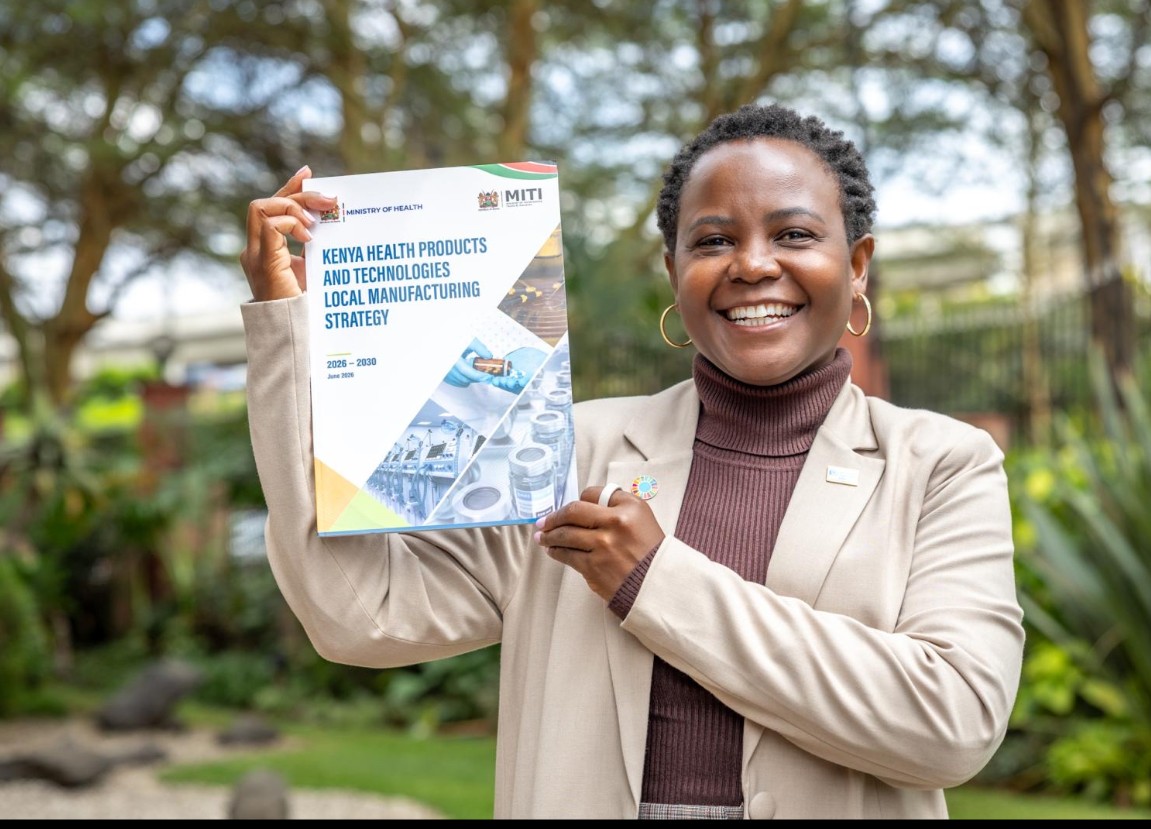
Kenya has taken a major step toward strengthening its pharmaceutical sector with the launch of the Kenya Health Products and Technologies Local Manufacturing Strategy 2026–2030, a roadmap designed to boost local production while enhancing the country’s regulatory capacity.
Launched on 23 June by Dr Ouma Oluga, Principal Secretary for Medical Services, the strategy brings together government institutions, manufacturers and development partners around a shared objective: ensuring that more essential health products are produced within Kenya to improve availability and reduce vulnerability to global supply chain disruptions.
The initiative reflects a broader continental ambition championed by President William Ruto, who has called for Africa to build stronger pharmaceutical manufacturing capacity as the African Union Champion for Local Manufacturing. He has argued that producing medicines locally is central to the continent’s health security and long-term sovereignty.
Reducing dependence on importsAlthough Kenya has established itself as one of Africa’s leading pharmaceutical producers, the country still relies heavily on imported medicines. Around 70 to 80% of the pharmaceuticals consumed nationally are sourced from abroad, despite a domestic market valued at approximately US$1.2 billion annually.
Kenya already ranks as Africa’s third-largest pharmaceutical exporter and the leading supplier within the Common Market for Eastern and Southern Africa (COMESA). More than 37 licensed manufacturers currently produce nearly 700 medicine formulations, supplying both the domestic market and neighboring countries including Uganda, Tanzania, Rwanda and Somalia.Exports have grown rapidly, rising from KSh12.2 billion in 2022 to KSh19.9 billion in 2024.
Yet local manufacturers currently produce only about one-fifth of the medicines listed on Kenya’s Essential Medicines List and operate below half of their installed production capacity.The new strategy seeks to reverse that trend by increasing utilization of existing manufacturing facilities by 70% by 2030. It also promotes compliance with internationally recognized Good Manufacturing Practice standards and introduces longer-term public procurement commitments intended to encourage manufacturers to prioritize the domestic market.
Quality and regulation at the centerThe strategy places equal emphasis on strengthening regulatory oversight to ensure that expanding production does not compromise quality or patient safety.Kenya is working to advance its Pharmacy and Poisons Board toward the World Health Organization’s Maturity Level 3 regulatory benchmark, an internationally recognized standard expected to enhance confidence in locally manufactured medicines across the region.
The Ministry of Health has also begun developing a National Action Plan on Substandard and Falsified Medical Products. The initiative follows the establishment of an interministerial steering committee in July to coordinate efforts against poor-quality and counterfeit medicines, which the WHO estimates affect roughly one in ten medical products in low- and middle-income countries.
Meanwhile, vaccine production remains another strategic priority. Earlier this year, Kenya joined the WHO–Medicines Patent Pool mRNA Technology Transfer Program through the Kenya BioVax Institute, supporting future local manufacturing of vaccines against COVID-19, malaria, tuberculosis and other infectious diseases.
WHO Representative to Kenya Dr Neema Rusibamayila Kimambo, stressed that expanding manufacturing capacity must go hand in hand with robust regulation and quality assurance.
Ultimately, she said, the strategy’s success will be measured by increased access to safe medicines, stronger health systems, new industrial opportunities and better health outcomes for Kenyan communities.