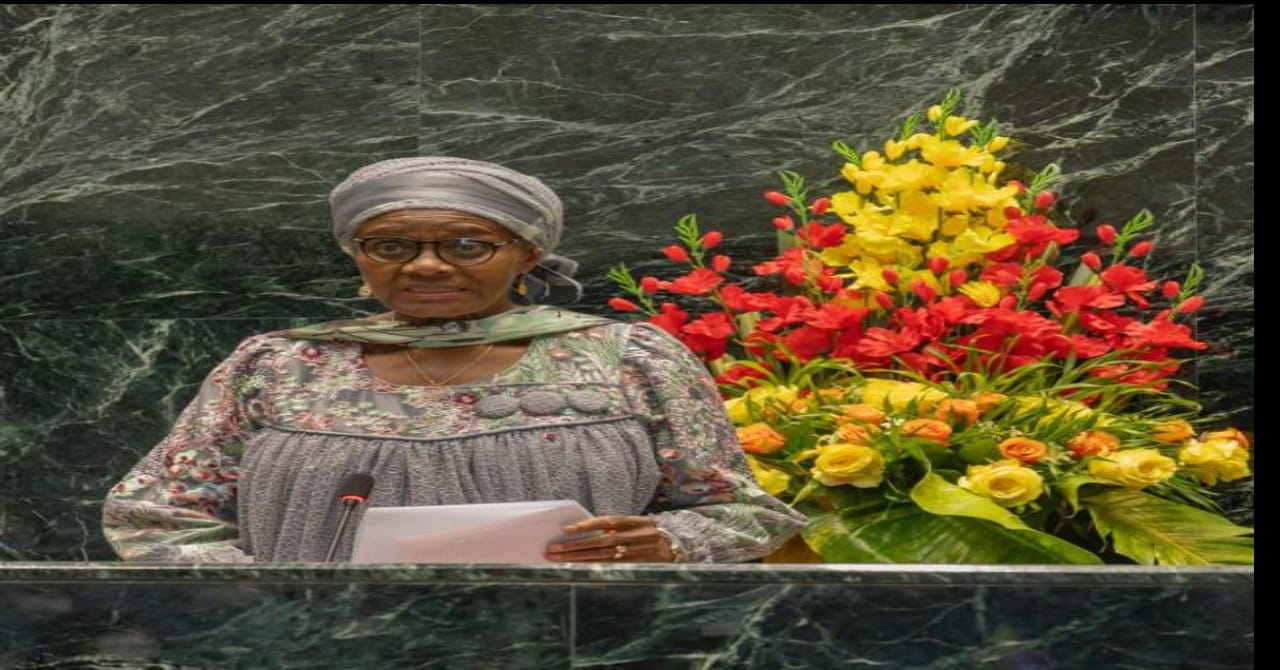
Faced with the resurgence of deviant behavior and the dissemination of obscene content by young girls on social networks, the Ministry of the Promotion of Women and the Family (MINPROFF) strongly condemns this depravity of morals.
The institution calls for urgent awareness and urges parents and educators to reinvest in their roles of transmitting normative benchmarks.
Finally, the Ministry reiterates society’s collective responsibility through concrete reporting and awareness-raising tools, such as the 116 hotline and the « I protect children everywhere, do the same » campaign. (p. 7-8)
The era when modesty, dignity, and respect for tradition formed the unshakeable foundation of a young Cameroonian girl’s education is teetering dangerously under the repeated onslaught of a poorly assimilated modernity. Everywhere—on digital platforms, in the ceaseless flow of social media, and even in the heart of our neighborhoods—the observation is striking and bitter. Entire segments of our youth flaunt themselves, expose themselves, and normalize violence and immorality, elevating decadence to the status of a model of social success.
Faced with this dramatic and alarming decline in morals, the Ministry for the Promotion of Women and the Family has decided to break the silence with a welcome firmness. Through the voice of Mrs. Abena Ondoa, née Obama Marie Thérèse, the ministry is sounding a resounding alarm, forcefully reminding everyone that human dignity cannot be sacrificed on the altar of the virtual and the sensational.
The evil, deeply rooted in the chaotic and misguided use of information technologies, finds fertile and unchecked ground on the internet. Transformed into a veritable global garbage dump, the web offers teenagers unrestricted and unfiltered access to pernicious, pornographic, and violent content that gleefully tramples our socio-cultural values. Cultural homogenization, coupled with the destructive phenomenon of sponsorship and the relentless pursuit of profit, is driving a segment of youth into the arms of tragic disillusionment.
Behind the touchscreens and the golden promises of virtual spaces, the traps of cyberspace lurk, transforming dreams of emancipation into veritable nightmares of exploitation, prostitution, and pimping. The ministerial authority thus points to the overwhelming responsibility of widespread negligence, where provocative clothing in schools and the indecent display of bodies are merely the visible symptoms of a society adrift without ethical bearings.
Beyond the strong condemnation of deviant behavior, this official statement from the government is a genuine call for collective action and shared responsibility. Protecting the young girl is not a mere administrative utopia, but a daily struggle that primarily involves parents, who are urgently called upon to re-establish a caring authority and closely monitor their children’s digital activities.
The Ministry of Women’s Empowerment and the Family (MINPROFF) aptly reminds everyone of the existence of concrete monitoring and support tools, such as the 116 hotline dedicated to reporting abuse, and the citizen campaign entitled « I protect children everywhere, do the same. » Educators, the media, community leaders, and public authorities must urgently combine their efforts to extricate young people from this destructive digital mirage. Saving today’s girls means refusing to compromise the future and building the Cameroon of tomorrow on sound, moral, and republican foundations.
INTERVIEW
« The response cannot be exclusively repressive. »

In response to the viral spread of obscene content involving young female influencers in Cameroonian online spaces, sociologist Dr. Keptchuime K. Leonel analyzes, in this interview, the profound transformations taking place within society. He examines the reshaping of values, the breakdown of socialization mechanisms, and the dynamics of visibility: an uncompromising analysis that calls for concerted action beyond mere repression.
For several days, the Cameroonian digital space has been marked by the viral spread of sexually explicit photographs and videos involving young women presented as influencers. The scale of these publications has sparked strong public outrage, fueling debates on changing social norms, the uses of social media, and the limits of exposing private life. Faced with this situation, how are public authorities responding, and what framework should we use to analyze it?
The authorities have reacted. The MinisterThe Ministry for the Promotion of Women and the Family issued a statement condemning these practices, which it deemed an affront to human dignity and contrary to social values. While this institutional response reflects a desire to reaffirm collective norms, it cannot, on its own, fully explain a phenomenon whose causes are deeply social. A sociological approach invites us to move beyond emotional and moral reactions to examine the transformations taking place within Cameroonian society.
So what are these transformations at the heart of Cameroonian society that explain this resurgence?
The first line of analysis relates to the reshaping of value systems. Economic,
cultural, and technological shifts are weakening traditional frameworks for socialization. In a context marked by youth unemployment, economic insecurity, family difficulties, the increasing use of psychoactive substances, and various forms of social violence, many young people are building their career paths around the pursuit of visibility and recognition. Social networks are thus becoming spaces where the quest for fame, influence, or symbolic success can sometimes overshadow ethical considerations or the long-term consequences of certain behaviors.
What is the role of the family in this context of change?
A second area of focus concerns the evolution of family structures. Without resorting to hasty generalizations, it is possible to observe that the weakening of certain mechanisms of family socialization sometimes reduces the capacity for guidance and the transmission of normative values. Transformations in family configurations, the economic constraints weighing on parents, and new forms of education influence how young people are supported in their relationship with digital technology.
Beyond the family, is there a failure of other supervisory institutions?
The third area of focus concerns the weakening of local support systems. Schools, associations, religious communities, youth organizations, and other intermediary institutions have traditionally played a crucial role in shaping social behavior. When these spaces lose their influence, social networks tend to become the primary producers of norms, often dictated by the logic of virality rather than the collective interest.
How do the very nature of digital platforms and the issue of regulation influence this dynamic?
It is important to highlight the limitations of digital governance. The rapid circulation of content, weak regulatory mechanisms, difficulties in controlling platforms, a sense of impunity, and the gradual normalization of certain content all contribute to creating an environment conducive to the proliferation of practices that were once marginal. Imitation effects, amplified by visibility algorithms, also contribute to this dynamic.
You just mentioned the feeling of impunity. What role does it play precisely in the spread of this content?
While not exhaustive, another avenue for understanding this issue is the question of impunity. In the absence of visible and deterrent sanctions, those who create such content may feel that their behavior is tolerated, or even goes unpunished. This impunity gradually fuels a trend, based on imitation and the pursuit of visibility: the more this content is disseminated, commented on, and shared, the more it appears as a socially normalized practice, encouraging others to reproduce it in the hope of
achieving online fame. The algorithms of these platforms, which often favor content that generates high levels of interaction, further reinforce this dynamic of social reproduction.
In conclusion, how would you summarize this situation and what solutions do you recommend?
Ultimately, the surge in obscene content on social media cannot be reduced to a simple question of individual morality. It reveals deeper shifts affecting modes of socialization, value systems, relationships with celebrity, and the transformations brought about by digital technology. Therefore, the response cannot be solely repressive. It requires concerted action involving families, schools, public institutions, the media, digital platforms, and civil society, in order to promote genuine education in digital citizenship, ethics, and the responsible use of social media.