From August 1st to 15th, 2026, the Mayo-Tsanaga department will host a large-scale campaign to combat onchocerciasis. In preparation for this operation, media professionals were briefed on Tuesday, July 28th in Maroua to support community mobilization and strengthen public adherence to treatment.
The National Onchocerciasis Control Program (PNLO) is ramping up its efforts in the Far North region. From August 1st to 15th, 2026, the Mayo-Tsanaga department will be the site of a large-scale awareness campaign and free distribution of Mectizan aimed at curbing the spread of onchocerciasis and filariasis. A few days before the launch of this operation, media representatives met on Tuesday, July 28th in Maroua for a briefing focused on the challenges of the disease and the strategic role of communication in the campaign’s success.
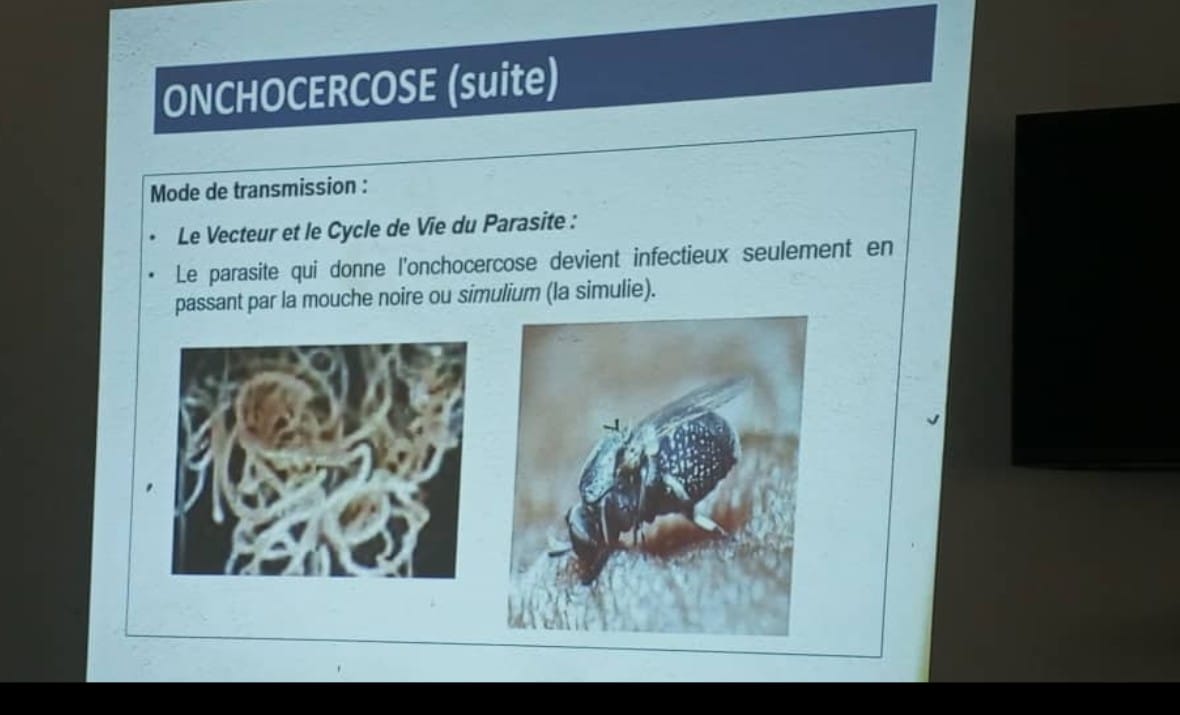
During this meeting, PNLO officials reiterated that onchocerciasis, more commonly known as « river blindness, » is a parasitic disease caused by the worm Onchocerca volvulus. It is transmitted to humans through the bite of the black fly, a species that breeds in fast-flowing waterways. This characteristic explains the high exposure of populations living near rivers, particularly in several localities in the Mayo-Tsanaga region.
Experts explained that the parasite follows a particularly long life cycle. After biting an infected person, the blackfly ingests the microfilariae, which develop within their body before being transmitted to a new host through another bite. In humans, these larvae gradually develop into adult worms that settle in subcutaneous nodules and can survive for more than a decade, continuously producing new microfilariae responsible for the symptoms of the disease.
The consequences of this condition can sometimes be severe. The first symptoms are primarily cutaneous and include intense itching, rashes, painless nodules, dry skin, or a characteristic depigmentation known as « leopard skin. » When the parasites reach the eyes, the complications become much more serious. Redness, tearing, sensitivity to light, decreased visual acuity, night blindness, and, in the most advanced cases, total loss of sight can occur, hence the name « river blindness. »
Diagnosis is primarily based on a skin biopsy, which allows microfilariae to be visualized under a microscope. Serological tests or other specific tests may also be used depending on the case.
The data presented at the briefing show that onchocerciasis remains a significant public health problem. The disease is still present in 26 African countries, Yemen, and six Latin American countries. Nearly 17.6 million people are living with this infection, including approximately 270,000 who suffer from blindness and 6.5 million who experience severe itching.
In Cameroon, 138 health districts have been identified as historically endemic areas. While most of them have now moved to a surveillance phase after several years of mass treatment, the Far North region remains entirely covered by the National Lyme Disease Program (PNLO). The region’s 36 health districts continue to administer community-based ivermectin treatment, which justifies this campaign in the Mayo-Tsanaga department.
Mectizan is the primary tool in this elimination strategy. Administered free of charge to eligible populations once or several times a year, this medication destroys microfilariae, slows the progression of the disease, reduces itching, prevents eye complications, and sometimes improves the vision of those affected. It also helps
eliminate certain intestinal parasites. Combined with measures to control blackfly breeding sites, it remains one of the most effective ways to interrupt the transmission of onchocerciasis.
The National Onchocerciasis Control Programme aims to strengthen community knowledge of the disease, maintain therapeutic coverage of at least 80% in endemic areas, consolidate ivermectin treatment under community guidelines, improve the notification of complications related to filariasis and continue assessments of the impact of mass treatments.
During the two-week operation, health teams, supported by community distributors, will travel through the villages of Mayo-Tsanaga to raise awareness and administer Mectizan. Health authorities urge residents to welcome the teams deployed in the field and to accept the treatment. For the National Tropical Disease Program (PNLO), only strong community support will make it possible to achieve the goal of eliminating this neglected tropical disease, which continues to threaten the health of thousands of people in the Far North region.
REACTION
« The consequences of onchocerciasis are numerous.
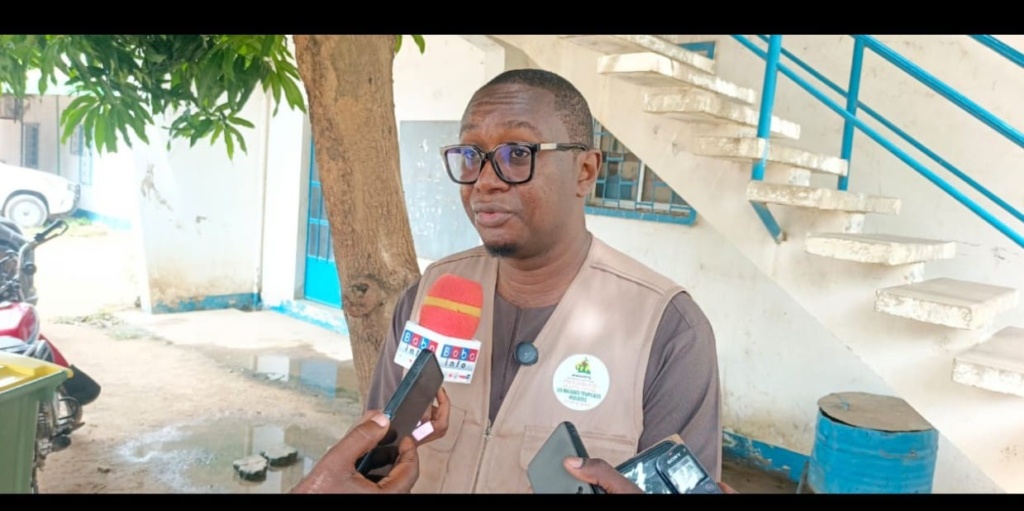
« The Far North region, like several other regions of Cameroon, is an endemic area for onchocerciasis. The health districts of Mokolo, Koza, Roua, and Mozogo have been implementing activities to combat this disease for many years. These interventions will continue this year to protect the population. »
Commonly known as « river blindness, » onchocerciasis is a parasitic disease that causes severe damage to the skin and vision. In the most severe cases, it can lead to irreversible blindness. It is particularly prevalent in areas crossed by fast-flowing rivers, such as those in the Mayo-Tsanaga department.
The disease is transmitted by a small black fly, called a simulia, which breeds near rivers. By biting people, this insect transmits the parasite responsible for onchocerciasis.
To combat this disease, a treatment based on ivermectin, also known as Mectizan, is administered once a year to populations living in endemic areas. This treatment must be continued annually for a period of 15 to 20 years.
Ivermectin does not kill adult worms, but it eliminates microfilariae, which are responsible for the symptoms of the disease and its transmission. By reducing these parasites in the body, the drug also protects people against reinfection from future blackfly bites. This is why it is essential that everyone affected take the treatment annually.
The distribution of medication is carried out by specially trained community health workers, under the supervision of healthcare personnel. Health authorities therefore urge all residents to fully participate in this campaign. If some people do not take the medication, they can continue to spread the disease and expose the entire community to the risk of infection.
The consequences of onchocerciasis are numerous. Dermatologically, the disease can cause intense itching, premature skin aging, thickened skin, or a mottled appearance, often called « leopard skin. » These lesions can lead to social rejection of those affected and profoundly affect their self-esteem.
In terms of eye health, onchocerciasis can cause progressive clouding of the cornea, sometimes leading to total blindness. The resulting blindness represents a significant disability for those affected, who often become dependent on their families and friends, with major social and economic consequences for the entire community.
Before the medication is administered, each household is registered by community health workers to identify all eligible individuals. The dose is determined based on each person’s height, using specially designed measuring rods.
It is recommended to eat well before taking the medication. However, alcohol consumption is not advised on the day of treatment. Those affected can resume their usual consumption the following day.