Following vandalism and breakdowns, CAMWATER’s mobilization made it possible to rehabilitate 6 boreholes and inject 9,000 m³ of drinking water per day into Garoua, while also putting the Kaélé station back into service thanks to a 22 kW electric pump, thus securing the supply of both localities.
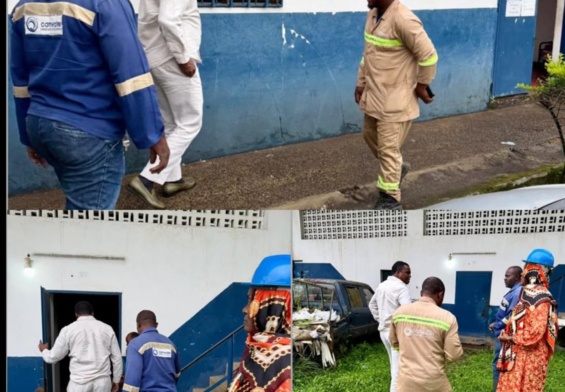
Sometimes all it takes is a severed cable, a vandalized electrical box, or inside complicity to deprive thousands of households of essential services. In Garoua, it wasn’t a climatic event that dried up the taps, but a series of repeated acts of vandalism and incivility that forced the Cameroon Water Utilities Corporation to shut down more than six boreholes. The city, already suffering from intense heat, found itself deprived of vital resources, plunging entire neighborhoods into a shortage with immediate health and social consequences. Alerted by the scale of the crisis, the Director General of CAMWATER reacted without delay, dispatching a multidisciplinary team to the field for a special mission. The order was clear: rehabilitate the shut-down boreholes, secure the electrical equipment, and take decisive action against the sabotage networks. For two weeks, around the clock, the technicians worked tirelessly.
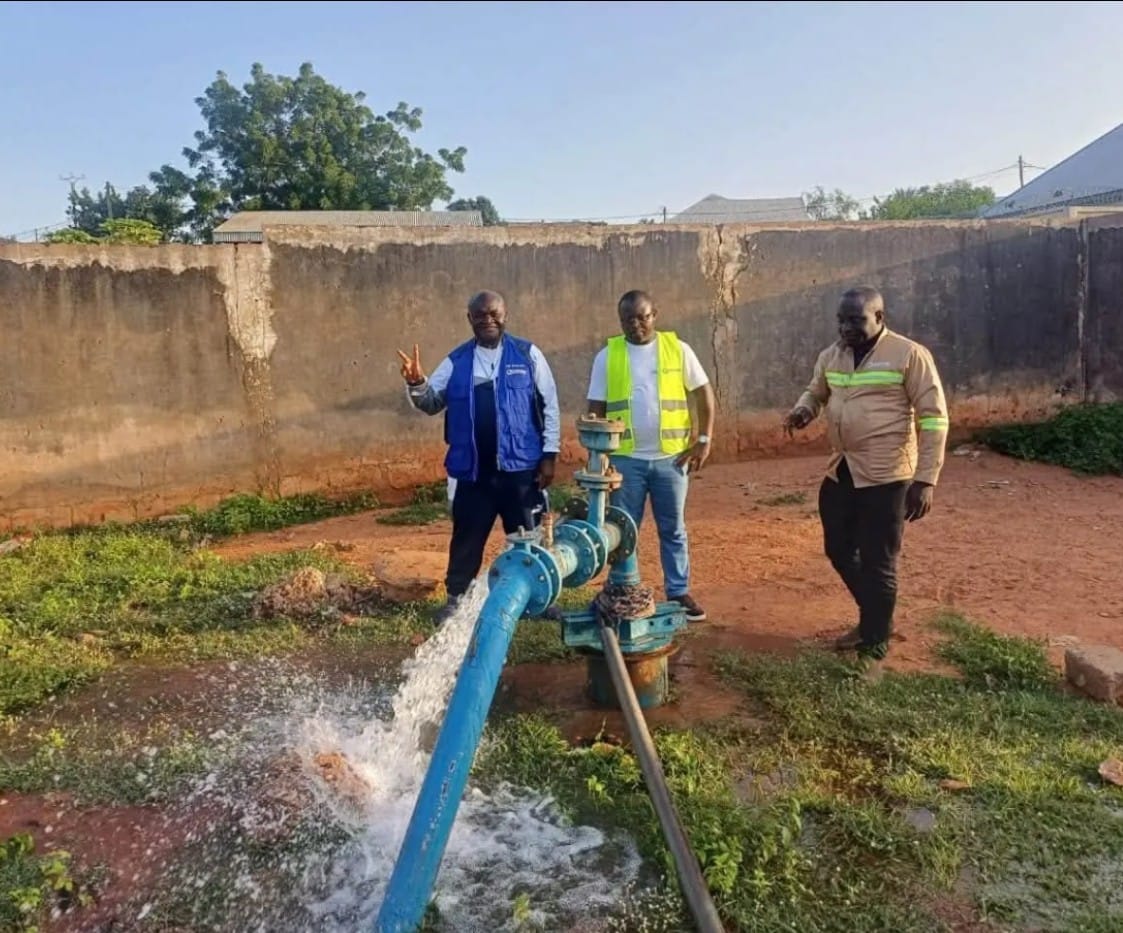
The results are commensurate with the urgency of the situation. The rehabilitation of boreholes F10, F19, and F3 has generated an additional 3,800 cubic meters per day for the city’s upper water network. Residents of Djamboutou, Kanadi, Plateau, Marouaré, Camp SIC, the Airport, the Regional Hospital, Soweto, Malacam, and Ouro Labo can now enjoy a regular water supply. In the lower network, the recommissioning of boreholes F12, F7, and F8 has added 5,200 cubic meters daily,
revitalizing the neighborhoods of Camp Chinois, Bamileké, Souari, Foulberé, Loperé, Poumpoumré, Laindi, Pitoua, and Nassarao. In total, an additional 9,000 cubic meters of drinking water are now supplied to the city of Garoua every day. This intervention is part of the special mission to rehabilitate production infrastructure, deployed on the direct instructions of the Director General of Camwater, Dr. Blaise Moussa.
In Kaélé, a city in the Far North region also facing supply difficulties, another battle has been won. The water production plant, which had been out of service, was brought back online on July 31, 2026, following meticulous technical work. Teams led by Adama Ousmanou, Salihou Bouba, and Gondang Michel submerged a 22-kilowatt electric pump, cleaned the electrical cells, tightened the cables, and fully automated the electrical cabinet. Load tests were successful, and the well was connected to the distribution network, restoring normal service for the residents of Kaélé and the surrounding area.
These technical successes would not have been possible without exceptional logistical support and the use of newly acquired equipment. CAMWATER, often criticized for its shortcomings, has demonstrated here that it now has the human and material resources to respond swiftly to crises. But the public utility is not content with simply repairing. It is calling on the public to mobilize and protect water infrastructure and report any acts of vandalism. The stakes are high: every damaged well, every stolen cable, means entire families deprived of water, children missing school, and sick people whose condition worsens.
At the same time, CAMWATER is ramping up its connection program. With the launch of the 200,000 Connections campaign, the company promises a connection to the drinking water network in less than 72 hours after the application is submitted to one of its branches. Meters and complete kits are available, making access to water a reality for thousands of households that are still unconnected.