Faced with deforestation and the resurgence of animal diseases, experts and stakeholders from the sub-region gathered in Douala are calling for integrated governance that breaks down the barriers between human, animal and environmental health to preserve the future of the Congo Basin.
It is a concept that, since the early 2000s, has attempted to break down the silos in which modern thinking has too often confined health. Faced with the alarming decline of Central African forests and the resurgence of zoonotic diseases, experts gathered in Douala, Cameroon, under the auspices of the Central African Forest Commission (COMIFAC), have revisited this conceptual framework to transform it into a vital safeguard. The stakes are high: to rethink ecosystem management not as a purely environmental issue, but as the very foundation of public health.
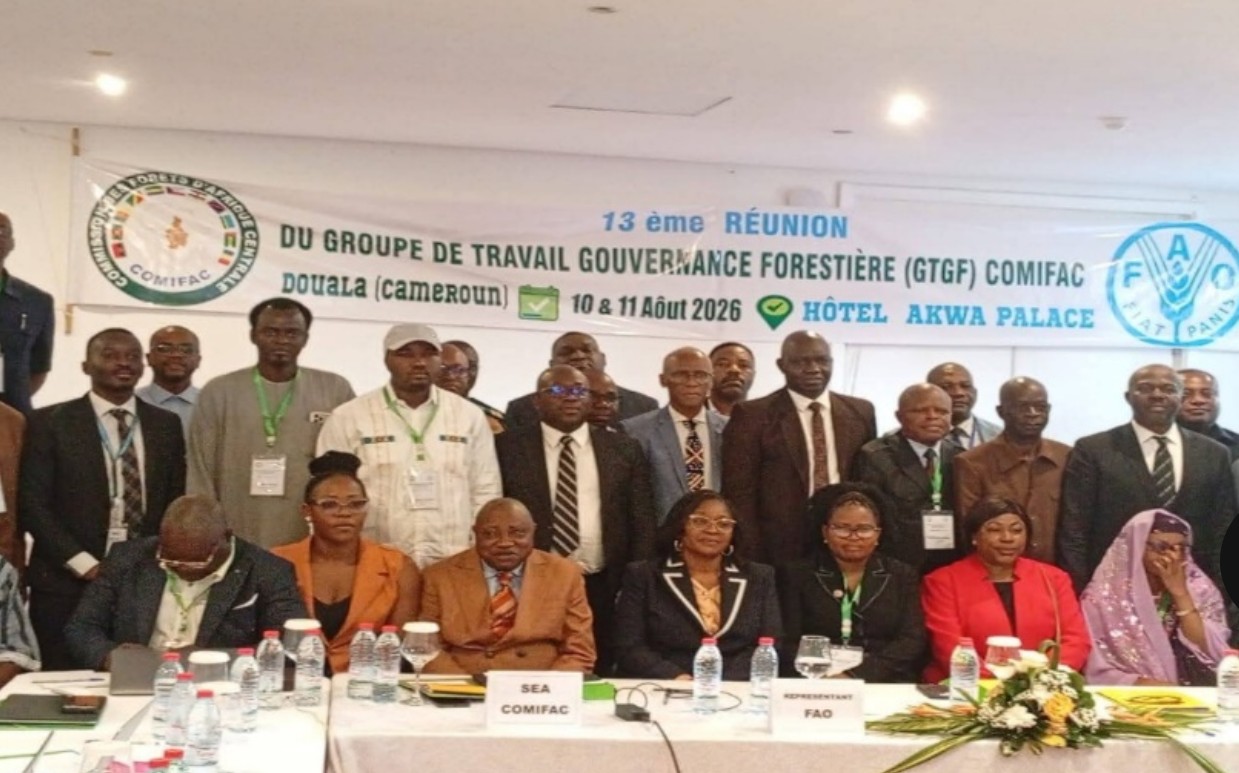
The sub-regional multi-sectoral workshop, held in Cameroon’s economic capital, brought together some fifty participants representing various sectors of human, animal, and environmental health. Focal points for the Convention on Biological Diversity, directors general of wildlife and protected area agencies, as well as members of the COMIFAC executive secretariat, took part in the meeting.
This mobilization responds to a health and environmental emergency. Scientists estimate that more than 60% of diseases affecting humans originate from animals and the environment. AIDS, Ebola, SARS, avian flu, chikungunya, Zika, and coronaviruses: the list of zoonoses—infectious diseases whose pathogens have crossed the species barrier to reach humans—continues to grow. Deforestation and the fragmentation of forest habitats disrupt the delicate balance of ecosystems, bringing wild animals dangerously close to human populations and creating fertile ground for the emergence of new pathogens.
The « One Health » approach aims precisely to break with this compartmentalized logic. It encourages collaboration, synergy, and cross-fertilization among all sectors and stakeholders whose activities can impact health. It is no longer a question of treating humans on one side, animals on the other, and managing forests in a third, but rather of recognizing the fundamental interdependence of all living things.
The discussions in Douala also highlighted the crucial role of communicators in popularizing this still little-known concept. The workshop brought together members of the Network of Communicators for the Environment and Information in Central Africa (RECEIAC) and those of the Network of Community and Local Radios (ReRaC).
As the Congo Basin, the world’s second largest rainforest, faces increasing pressure, experts gathered in Douala laid the groundwork for integrated governance. Through these pilot initiatives, COMIFAC aims to test the feasibility of sustainable forest management that fully integrates health considerations. The challenge goes beyond simply conserving biodiversity: it is about protecting populations from emerging health threats while preserving the ecosystems on which they depend for their livelihoods.
Ultimately, the Douala workshop served as a reminder of an often-forgotten truth: the health of forests, animals, and humans are all interconnected. In a world where the interfaces between humans and wildlife are multiplying, the « One Health » approach is essential as a vital shield, not as one option among others, but as the sine qua non for a sustainable future for Central Africa.