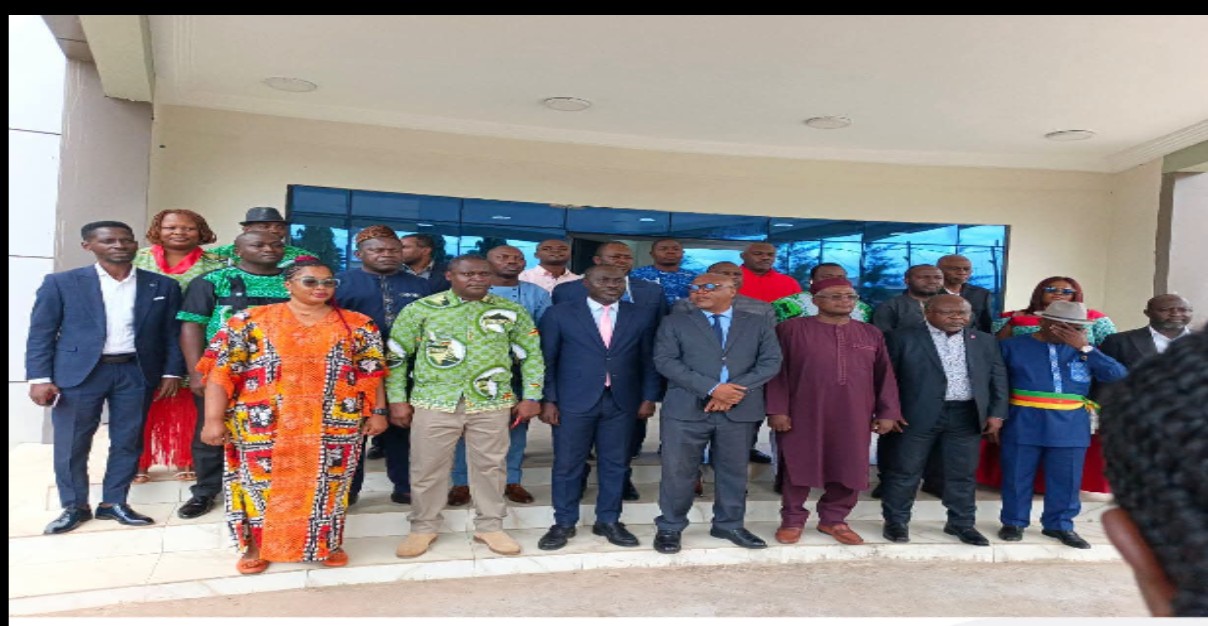
On the occasion of the 15th African Day of Decentralization and Local Development (JADDL), CAMWATER unveiled game-changing data: the Drinking Water Supply Project in 18 centers, supported by the African Development Bank, plans to triple the drinking water production capacity and increase storage from 500 m³ to 3,500 m³.
Held under the ambitious theme of « Empowering Local Authorities for Sustainable Water and Sanitation: Advancing Inclusive and Sustainable Cities and Territories Towards Agenda 2063, » the 15th edition of the JADDL (National Day for Sustainable Development and Local Development) provided a valuable forum for dialogue between local development stakeholders and technical operators. CAMWATER, as a key partner of local authorities, seized this opportunity to showcase its achievements and future prospects through three key presentations.
The first sub-theme, dedicated to water and wastewater treatment, provided an overview of the water challenges in the region and presented the technical solutions being considered to address them. The issue of wastewater treatment and management, often neglected in favor of drinking water supply, was tackled with the frankness that such a major health and environmental challenge deserves.
The second part, undoubtedly the most anticipated, focused on the Drinking Water Supply Project in 18 centers, Lot 2 – AfDB, which concerns strategic cities in the southern region such as Ebolowa, Sangmélima, and their surrounding areas. This large-scale project, financed by the African Development Bank, aims to significantly increase the supply of drinking water. The figures presented impressed the audience: production capacity will increase from 4,000 m³ to 12,000 m³ per day, tripling the current supply, while storage capacity will see a dramatic increase, rising from 500 m³ to 3,500 m³. A real breath of fresh air for cities whose rapid
population growth has long strained existing networks.
The third focus was on the CVUC-CAMWATER framework agreement partnership, signed on January 10, 2023. This collaborative framework aims to formalize and strengthen cooperation between CAMWATER and the municipalities by clarifying the roles, responsibilities, and commitments of each party. As a concrete example, the drilling of boreholes in Kribi 1st and Kribi 2nd was presented as a successful illustration of this partnership, demonstrating that synergy between the technical operator and the municipality can produce tangible results for the benefit of the population.
The discussions that followed the presentations demonstrated a strong interest from local authorities and participants in current and future projects. Mayors and local elected officials, eager to address the pressing needs of their constituents, raised numerous questions regarding completion timelines, connection procedures, and network expansion prospects. CAMWATER reassured them that the implementation of these projects in the short term in the city of Ebolowa is a stated priority, and that the technical studies are already well advanced to ensure timely completion.
Beyond these major infrastructure projects, CAMWATER reaffirmed its commitment as a technical partner to support local authorities in implementing their specific projects. From drilling and water supply systems to sanitation systems, the national operator stands ready to contribute its expertise and know-how to meet the needs expressed by municipalities, while adhering to its own standards and quality protocols.