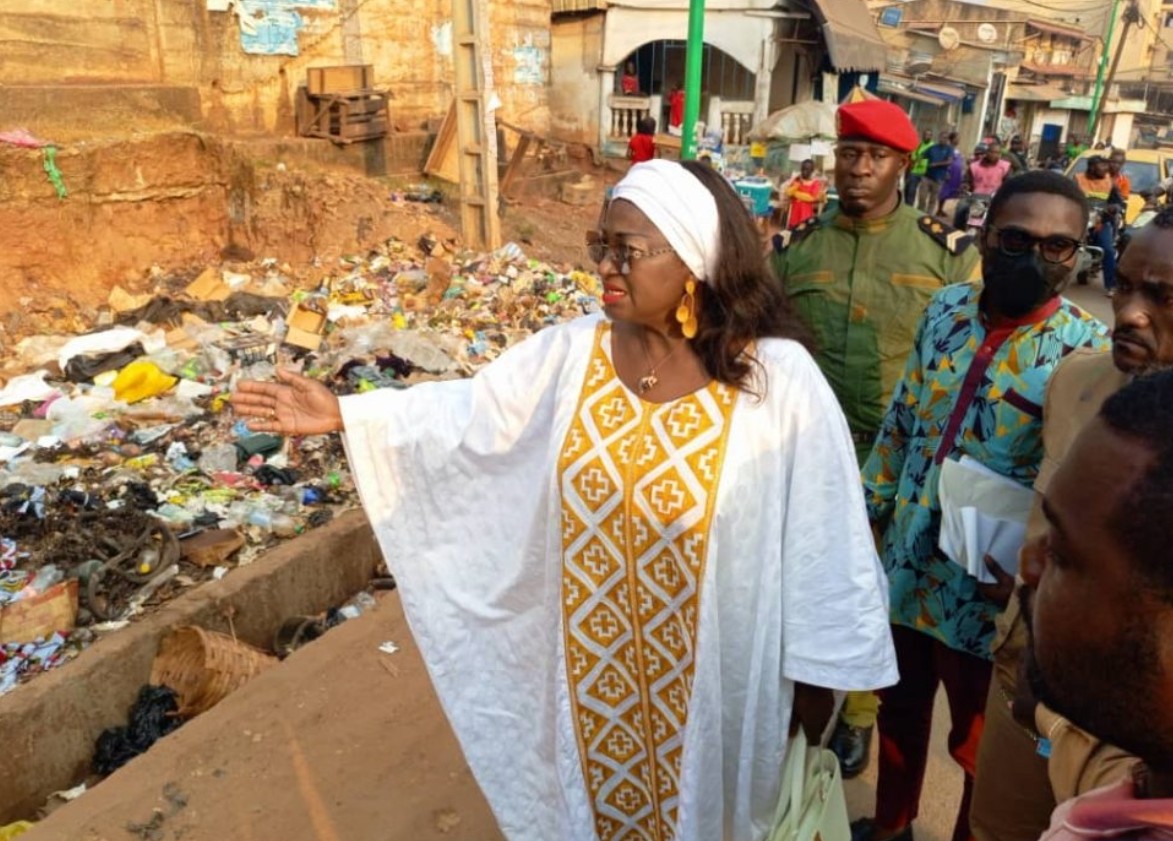
With 15.8 million of waste generated in Cameroon every year, theMinistry of Housing and Urban Development is strengthening civic education on waste management through an initiative tested in Yaounde 5. The experiment, carried out under the Urban Platform Project, has led to two national tools aimed at promoting better waste management practices.
Changing habits, not just collecting waste
For the Ministry of Housing and Urban Development, improving waste management cannot rely solely on collection services. It also requires changing the way citizens produce, sort, store and dispose of waste.
This approach is being developed through the Urban Platform Project in Cameroon, implemented by Expertise France with funding from the European Union. The project supports more sustainable and inclusive urban development, with waste management among its key areas of intervention.
The initiative therefore focuses on practical environmental citizenship, encouraging communities to adopt simple habits that can improve the cleanliness and safety of their surroundings.
Yaounde 5 as a testing ground
Yaounde 5 served as a testing ground for this approach, bringing together schools, teachers, neighborhood committees and community members.
According to project figures, 5,194 citizens were mobilized, including a strong participation of women and young girls, who represented 54% of those engaged. The experiment also involved 18 neighborhood committees and 216 teachers.
The awareness campaign was accompanied by practical measures. A total of 120 bins and sorting cages and 28 composters were provided to schools and other target groups, while HYSACAM supplied 50 waste bins.
The objective was to move beyond awareness messages and give citizens the means
to put responsible waste management into practice.
Two tools for national use
The Yaounde 5 experience has contributed to the development of two national educational tools.
The first, the Illustrated Booklet of Local Good Practices for Solid Waste Management, presents nine simple and illustrated actions that citizens can adopt in their daily lives.
The second, the National Guide for Education and Citizen Mobilization for Solid Waste Management, provides a practical methodology for trainers and local authorities working to promote responsible waste management.
The transition from a local experiment to national tools gives the initiative a broader ambition: to make lessons learned in Yaounde 5 useful to other communities across the country.
A public health concern
Waste management is also a public health issue. Poorly managed waste can contribute to unsanitary environments, obstruct drainage channels and create conditions favorable to mosquitoes, flies, rodents and other pests. Waste accumulation combined with stagnant water can further increase environmental and health risks.
This makes prevention a shared responsibility. Waste collection infrastructure remains essential, but household practices, community participation and proper sorting and disposal are equally important.
For the MINHDU, promoting these behaviors is therefore part of a broader effort to improve urban living conditions and build healthier communities.
Beyond Yaounde 5
The next challenge is to ensure that the lessons and tools developed through the experiment are sustained and replicated elsewhere.
The initiative places the MINHDU at the center of a collaborative approach involving local authorities and partners. Its success will ultimately depend on whether the recommended practices become part of everyday life.
The message is straightforward: cleaner cities cannot depend on waste collection alone. They also require citizens who understand their role and have the tools to
turn responsible waste management into a daily habit.