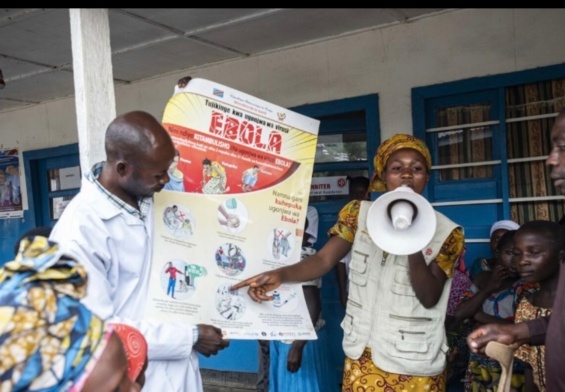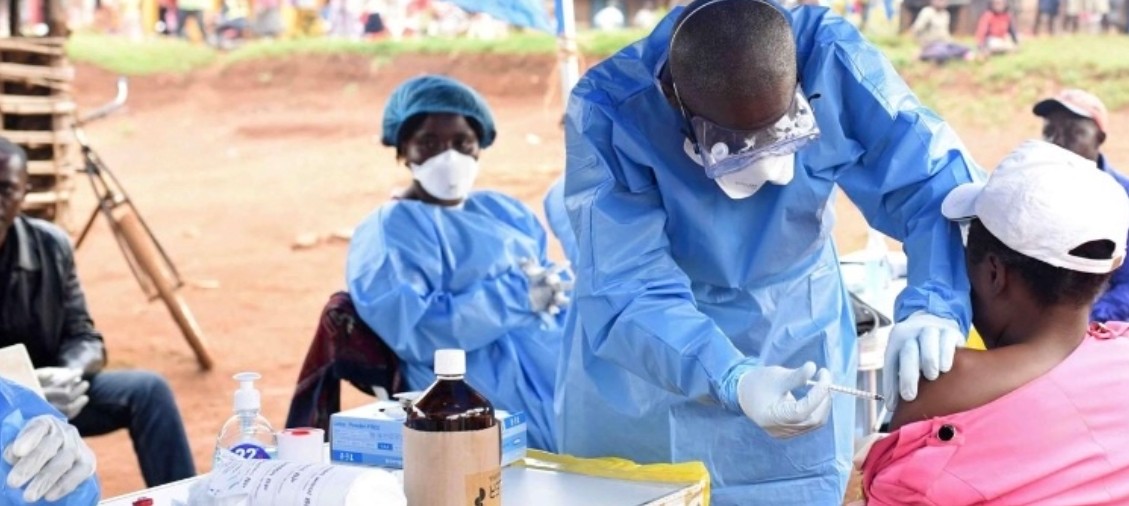
Africa CDC is supporting the Democratic Republic of Congo’s decision to immediately deploy the Ervebo vaccine as part of the response to the country’s rapidly expanding Bundibugyo Ebola outbreak, combining emergency protection with the collection of evidence on the vaccine’s potential against the virus.
The Africa Centers for Disease Control and Prevention (Africa CDC) has backed the immediate implementation of the Democratic Republic of Congo’s decision to use the Ervebo Ebola vaccine as a countermeasure against the 2026 Bundibugyo Ebola outbreak.
The move comes as the outbreak continues to expand across the country. According to the World Health Organization, 4,665 confirmed cases and 2,184 deaths had been reported in the DRC as of August 12, with transmission recorded across 54 health zones in six provinces. The outbreak has now become the largest Ebola outbreak ever documented in the country.
A vaccine being used against a different Ebola species
The decision presents a major scientific challenge. The current outbreak is caused by the Bundibugyo virus, while Ervebo was developed and licensed to protect against Ebola virus disease caused by the Zaire species
There is currently no approved vaccine specifically targeting Bundibugyo virus. Africa CDC’s position therefore comes as health authorities seek to act quickly while generating scientific evidence on whether Ervebo can provide protection
against the strain responsible for the current outbreak.
The World Health Organization’s technical experts have also recommended investigating Ervebo through clinical research in the DRC, amid the absence of a licensed vaccine specifically for Bundibugyo. Recent laboratory and animal research has provided indications that immune responses generated by Ervebo may have some cross-reactivity with Bundibugyo virus, but its clinical effectiveness against the strain remains to be established.
Protecting people while generating evidence
For Africa CDC, the strategy combines immediate public health action with scientific learning.
The planned deployment is expected to prioritize people at high risk of exposure, including eligible contacts, healthcare responders, community health workers and burial teams. The approach is intended to strengthen protection around transmission chains while allowing researchers to collect rigorous data on the vaccine’s performance against Bundibugyo.
This dual approach is particularly significant because the outbreak is spreading faster than health teams can identify and monitor all transmission chains. The WHO reported that 100 new confirmed cases were recorded within 24 hours on August 12 across 22 health zones, illustrating the scale of the challenge facing response teams.
A coordinated continental response
Africa CDC says it will continue working alongside the DRC government and partners to support a coordinated, country-led response.
The agency’s involvement comes as the outbreak has moved beyond the areas initially affected in Ituri and expanded to other provinces, including Bas-Uélé. The epidemic has also generated cross-border concerns, with confirmed Bundibugyo cases reported in Uganda.
The immediate use of Ervebo could therefore provide two forms of value: potentially increasing protection for people at high risk during the emergency and generating evidence that could help guide future responses to Bundibugyo outbreaks.
For Africa CDC, the priority remains clear: protect people now while producing the evidence needed to strengthen Africa’s preparedness for future Ebola outbreaks.