Often overlooked by legislation, yet essential to ecosystems, fungi fight in the shadows.
Nicknamed « white meat » for its high protein content, mushroom cultivation—or myciculture—is still struggling to find its place in the Cameroonian agri-food landscape. Domestic production of fresh mushrooms, primarily by small-scale farmers, has seen modest growth over the years. In 2005, it reached 37.25 tons, then 39.5 tons in 2009, representing an annual growth rate of 1.1%. It rose to 52 tons in 2014, and currently stands at around 45 tons per year. In 2022, myciculture generated 41.3 tons of fresh mushrooms, which represented only 25% of the quantity of imported mushrooms. The challenge lies in the fact that Cameroon imports more than 200 tons of edible mushrooms each year, mainly oyster mushrooms, ear mushrooms, and truffles. This dependence weighs heavily on the trade balance and deprives consumers of a more affordable local product.
Only three varieties are cultivated.
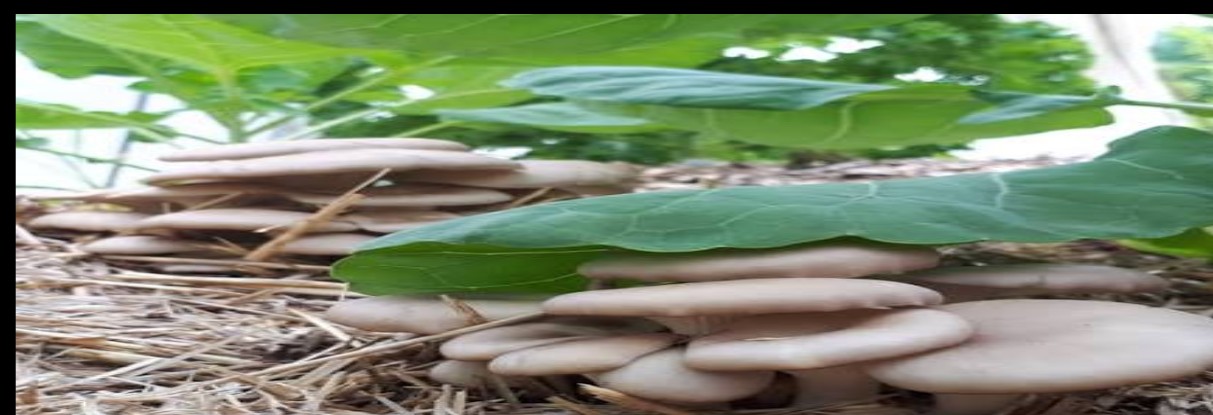
Yet, the potential is immense. Of the 300 species of edible wild mushrooms listed in sub-Saharan Africa, Cameroon cultivates only three varieties: morels, chanterelles, and oyster mushrooms. Oyster mushrooms, domesticated since the 1990s thanks to Sino-Cameroonian cooperation, remain the most widespread. The main production areas are concentrated in three regions: the Centre (Mfoundi and Lékié), the West (Noun, Mifi, Highlands, and Menoua), and the Littoral (Wouri). According to a 2016 study, 27.1% of producers are located in Mfoundi, 21.6% in Lékié, 16.2% in Noun, and 13.5% in Wouri.
Consumption is still timid
On the consumption side, habits remain modest. A study of 319 people in the southern forest region of Cameroon revealed that the annual per capita consumption of fresh mushrooms is between 1.1 and 1.4 kg, a rate significantly lower than that of Central and East Africa. However, local initiatives are beginning
to reverse this trend. In Bafoussam, the Common Initiative Group (GIC) Mushrooms produces and sells more than 150 kg of mushrooms per month, half of which is sold to individuals, restaurants, and hotels in the city. More than 650 enthusiasts have been trained in less than ten years, although only 160 mushroom growers remain active.
An overlooked ecological role
Beyond their economic value, fungi play a vital ecological role, often overlooked by legislation. Their mycelium forms a symbiotic relationship with plant roots, nourishing them with water and minerals while recycling plant waste into humus. Yet, unlike typical flora and fauna, fungi receive less legal protection. In Cameroon, harvesting is strictly prohibited in national parks such as Korup, the Dja Faunal Reserve, and Waza, but no specific provisions protect fungal habitats, such as the « integral mycological sanctuaries » that some experts advocate for to preserve non-cultivable species.
The Cameroonian government, through its Edible Mushroom Sector Development Support Program, intends to change the game. The objective is to strengthen local production, train young people and women, and reduce dependence on imports. The mushroom cultivation market in Cameroon, which showed a growth rate of 7.06% in 2025, is expected to reach 10.03% by 2029. This momentum, if it continues, could make mushrooms a pillar of food security and Cameroon’s green economy. The figures are still modest, but they already outline the contours of a silent revolution, growing on agricultural waste and promising to feed the country in a new way.