On the occasion of World Physiotherapy Day from September 4 to 8, 2026, with the theme of cardiovascular diseases and strokes, specialists from Laquintinie Hospital in Douala are highlighting their crucial role in the management of these diseases.
In Cameroon, cardiovascular diseases remain a significant public health problem. In the fourth quarter of 2025, the National Epidemiological Bulletin reported 457 cases of hypertension per 100,000 consultations and 93 cases of stroke per 100,000 consultations. Strokes also accounted for 30 deaths per 1,000 hospital deaths. These figures demonstrate the burden these diseases place on healthcare systems. Regarding stroke specifically, the Minister of Public Health noted in October 2025 that this disease is the second leading cause of death and the third leading cause of disability worldwide. In Cameroon, an average of 85 cases of stroke per 100,000 consultations was recorded, with an estimated hospital mortality rate of 60 deaths per 1,000. However, after a cardiovascular event or stroke, care does not end with
emergency treatment. Once the patient is stabilized, another crucial stage begins: rehabilitation. Paralysis of a limb, weakness on one side of the body, balance problems, or difficulty walking can persist and compromise the patient’s independence. It was in this context that, on the occasion of World Physiotherapy Day, scheduled for September 4-8, 2026, at Laquintinie Hospital in Douala, physiotherapists DASSI FANDOM Falonne and TUETE Lucie were guests on the program « LaquintinieAvecVous, » broadcast on Radio Balafon on Saturday, August 29, 2026. During this discussion, they explained the role of the physiotherapist in the recovery of stroke patients and the importance of physical rehabilitation in their recovery process.
A stroke can indeed drastically alter a person’s mobility. When blood flow to a part of the brain is interrupted or disrupted, certain functions can be impaired, causing weakness or paralysis on one side of the body. It is at this stage that the intervention of a physiotherapist becomes essential. « The physiotherapist manages the after-effects of the stroke, » explains Falonne DASSI, a physiotherapist. Her colleague, Lucie TUETE, emphasizes that physiotherapy aims in particular to restore movement, promote independence, and improve the patient’s quality of life.
Restoring movement after a stroke
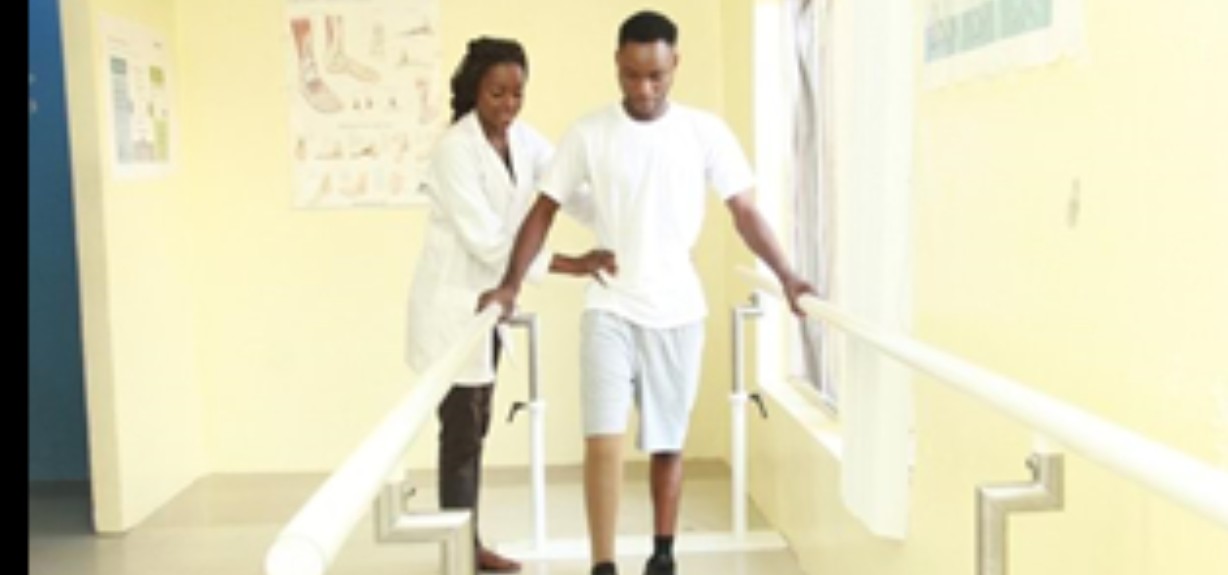
Physiotherapy is not simply about massaging the patient. According to experts, it begins with an assessment of the patient’s abilities and limitations in order to tailor exercises to their specific situation. After a stroke, a patient may present with monoparesis or monoplegia when only one limb is affected, hemiparesis or hemiplegia when one side of the body is affected, or even paraplegia, or impairment of all four limbs, in certain cases. The physiotherapist’s work then aims to progressively restore lost functions. Mobility, muscle strength, balance, coordination, posture, and gait are among the abilities that can be addressed. The ultimate goal is to enable the patient to regain as much independence as possible in their daily activities. Rehabilitation, however, should not be confused with treating the underlying cause of the stroke. As Dassi Falonne explains, the physician manages the underlying pathology, while the physiotherapist focuses on the resulting deficits and functional limitations. This complementary approach is essential. The World Health Organization recommends multidisciplinary rehabilitation after a stroke, including physiotherapy, occupational therapy, speech therapy, and psychological support. It should begin as soon as the patient’s condition is medically stable, ideally within the first few days.
The earlier rehabilitation begins, the better.
On the radio program « LaquintinieAvecVous, » a listener mentioned his sister, who had suffered a stroke two months prior and still experienced facial paralysis. Physiotherapists emphasized the importance of starting rehabilitation as soon as possible, after receiving the doctor’s approval: « Ideally, sessions should begin as soon as possible, » stressed Lucie Tuete. However, two months after a stroke does not necessarily mean that all possibility of recovery is lost. For facial paralysis, as with other aftereffects, recovery depends on the patient, the location and extent of the damage, and numerous other factors. An individual assessment is therefore necessary to determine the rehabilitation goals and protocol. Recent studies conducted in Cameroon confirm the importance of this rehabilitation. A study conducted on stroke patients at Yaoundé General Hospital showed a progressive improvement in quality of life during follow-up: the proportion of patients with a good quality of life increased from 0% at the start of rehabilitation to 12% at three months, 26% at six months, and 36% at one year. The authors also emphasize the importance of a suitable environment and a sufficient duration of rehabilitation.
At Laquintinie Hospital, activities planned from September 4 to 8 include free consultations at the physiotherapy department, as well as sports activities. This is an opportunity for professionals to emphasize that recovery after a stroke is a process that requires time, consistency, and appropriate support.
Marie Chantale FAIDA