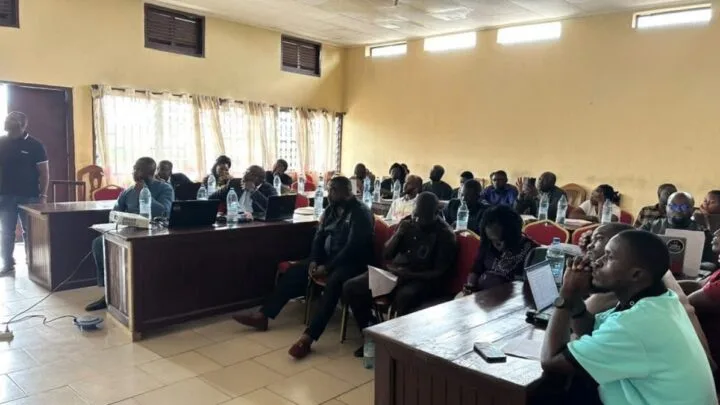

Meeting this Thursday, September 10, 2026 in Yaoundé under the leadership of Dr. Blaise Moussa, the Steering Committee of the project to supply drinking water to nine cities in Cameroon (phase 2) presented an overall physical progress rate of 84.25%.
When clear water finally begins to flow from the heart of parched lands, the entire face of daily life is transformed. In Yaoundé, on Thursday, September 10, 2026, the third session of the Steering Committee for the Phase 2 Drinking Water Supply Project for nine cities in Cameroon resonated like a promise of life fulfilled. Under the inspired and rigorous leadership of Dr. Blaise Moussa, Director General of CAMWATER and chair of the session, experts, representatives from sectoral ministries, and technical partners focused on a monumental undertaking that is redefining the nation’s future. Backed by a colossal investment of over 71.86 billion FCFA, co-financed by the State of Cameroon and EximBank of China, this large-scale project demonstrates that the country’s infrastructural transformation is not just wishful thinking, but a tangible reality unfolding before our eyes every day.
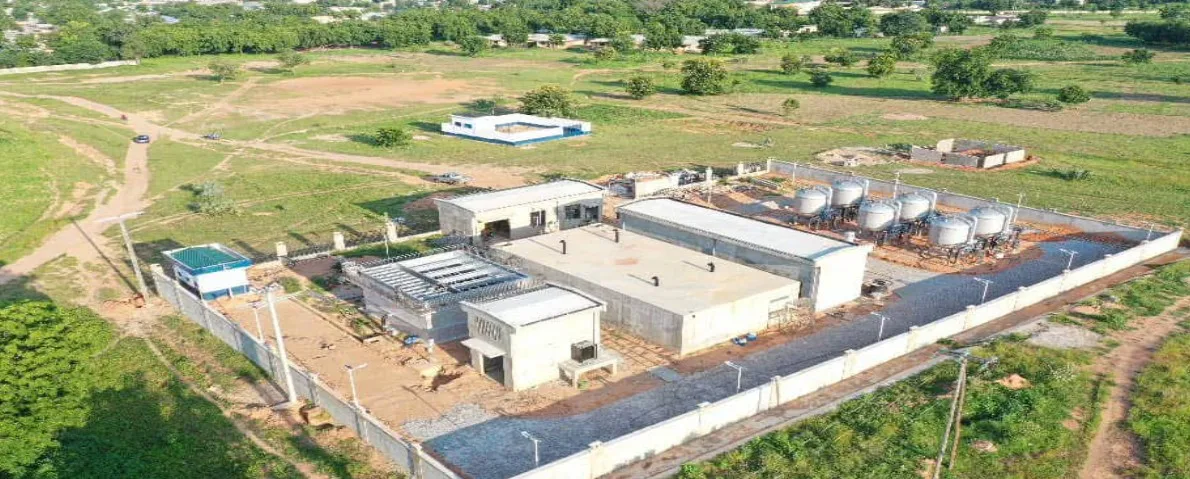
The figures presented at this meeting demonstrate exceptional momentum. With an overall physical progress rate of 84.25% and a time utilization rate of 83.46%, the teams on the ground have earned admiration. The project, which is showcasing its technical prowess across five key cities, is delivering remarkable performance. In Maroua, the rate has reached 91% thanks to the drilling of seven new boreholes, the construction of a 5,000-cubic-meter elevated reservoir, and the installation of nearly 79 kilometers of pipeline. Nearby in Garoua, the rate has reached 90% with eight new boreholes, four rehabilitated structures, two water towers, and over 99 kilometers of pipelines. The cities of Garoua-Boulaï, Yabassi, and Dschang boast completion rates of 80%, 71%, and 70% respectively, each benefiting from state-of-the-art infrastructure tailored to its specific hydrological conditions, including high-
performance treatment plants and innovative storage tanks. Simultaneously, the electrical connections essential for the operation of these facilities show a commendable completion rate of 67%, demonstrating that every link in the technical chain is expertly orchestrated.
But the true greatness of this project lies in its profoundly human and sustainable dimension. Far from being confined to a cold, technical vision, CAMWATER and its partners have integrated a remarkably dynamic Environmental and Social Management Plan. The local communities are not mere spectators; they are the primary beneficiaries of inclusive development. Wherever the project is located, local social infrastructure is being built, such as hand-operated boreholes that provide lasting relief to households. In Dschang, superb classroom blocks are being constructed to offer children dignified learning conditions. Extensive reforestation campaigns are protecting fragile ecosystems, while the creation of local jobs is bringing a breath of economic prosperity to each municipality affected by the program. Drinking water is thus revealed for what it truly is: the universal catalyst for development, impacting public health, education, and the future of young people.
This is not the time for complacent triumphalism, but for strategic clarity. As it approaches the finish line set for the end of February 2027, the Steering Committee has meticulously examined the remaining obstacles to overcome to ensure a flawless final delivery. Among the absolute priorities is the continued mobilization of financial resources, essential for expediting the settlement of invoices and fulfilling state contributions. The thorny issue of the water intake at Garoua-Boulaï also requires impeccable administrative and technical diplomacy with donors, as well as constructive dialogue with local residents. Finally, the expansion of the supplementary distribution networks necessitates additional funding to enable the infrastructure to fully absorb the daily production of 1,800 cubic meters.