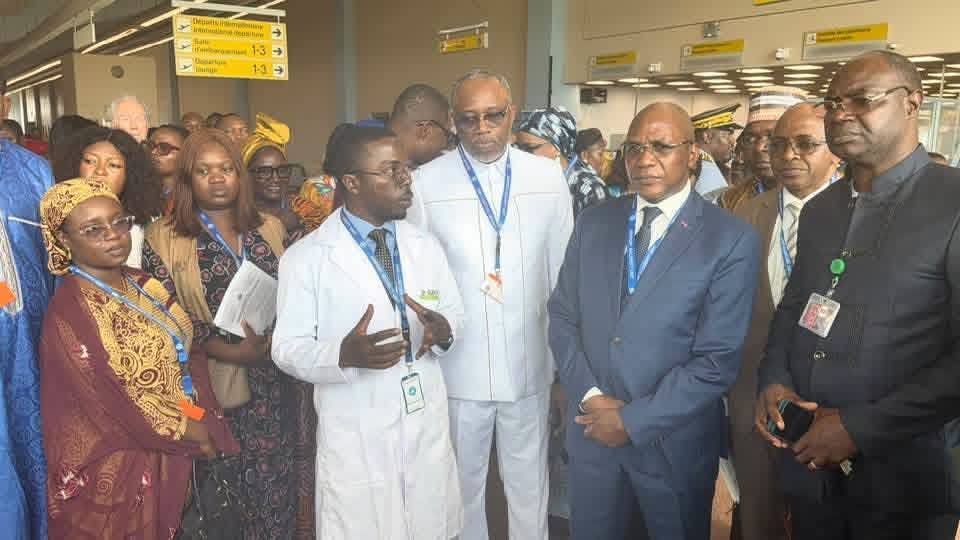
To test the response to Ebola, the Minister of Public Health inspected Nsimalen Airport. The assessment: an isolation unit and technical facilities are operational, but there is an urgent need for more personnel and the implementation of digital tools (QR codes) to effectively secure this gateway to the capital.

In light of the growing threat of the Ebola virus and the real risk of the epidemic being imported following the confirmation of recent cases in the sub-region the Cameroonian government is moving from strategic planning to field-level implementation. Building on emergency measures established by the Strategic Committee, the Minister of Public Health, Dr. Manaouda Malachie, conducted a high-level inspection on October 23, 2026, at Yaoundé-Nsimalen International Airport and the local District Medical Center (CMA). This field visit had a clear objective: to evaluate the operational readiness of systems for the detection, screening, and care of passengers a critical link in maintaining health security at the country’s air borders.
The exercise began with a practical, real-world scenario within the airport terminal. A live simulation of the procedures applied to arriving passengers tested the effectiveness of the health screening process. Staff stationed in the arrivals area demonstrated the use of handheld infrared thermometers for temperature
screening and showcased the designated isolation unit, which is equipped with three beds to temporarily accommodate suspected cases. This immersion in real-world conditions highlighted the responsiveness of the teams, while underscoring the need for constant vigilance in screening the flow of travelers arriving from high-risk areas, without disrupting international traffic.
Following this initial level of screening, the Minister and his delegation proceeded to the Nsimalen District Medical Center (CMA) a pivotal facility for the medical care of potential patients. An assessment of its technical resources revealed high-quality infrastructure, including a medical analysis laboratory, an electrocardiogram (ECG) machine, an intensive care unit for severe cases, and notably a small operating theater equipped with an anesthesia workstation. To complete the logistics chain, two dedicated ambulances, meeting biosafety standards, have been deployed to ensure the secure transport of confirmed cases, while strictly adhering to established isolation protocols.
However, the rigorous evaluation conducted by Dr. Manaouda Malachie also brought operational weaknesses to light. While the physical infrastructure is generally adequate, there is an urgent need to bolster human resources to ensure maximum efficiency and responsiveness in the event of a major health emergency. Furthermore, the Minister mandated the immediate implementation of a QR code system linked to a digital traveler form modern tools essential for ensuring rigorous contact tracing and optimal epidemiological monitoring of passengers entering the country.
This inspection visit to Nsimalen part of a broader, stringent oversight initiative that will next move to Douala International Airport demonstrates Cameroon’s determination to leave nothing to chance. By personally verifying the reliability of the entry points, the Minister of Public Health sends a strong signal: protecting the population against the Ebola virus requires flawless foresight, perfect coordination among services, and the unwavering commitment of all stakeholders within the healthcare chain.