
Thanks to curcumin, its active compound, turmeric reduces the production of molecules responsible for skin flare-ups and facilitates the renewal of healthy skin tissue.
Turmeric is a rhizome belonging to the same botanical family as ginger. Although native to South Asia, it is also widely cultivated in Africa, notably in Cameroon, Benin, Burkina Faso, and other countries across the region. This expansion is largely driven by the growing popularization of its therapeutic virtues for numerous health conditions, including its beneficial effect on psoriasis symptoms.
A Root Packed with Anti-Inflammatory and Antioxidant Properties
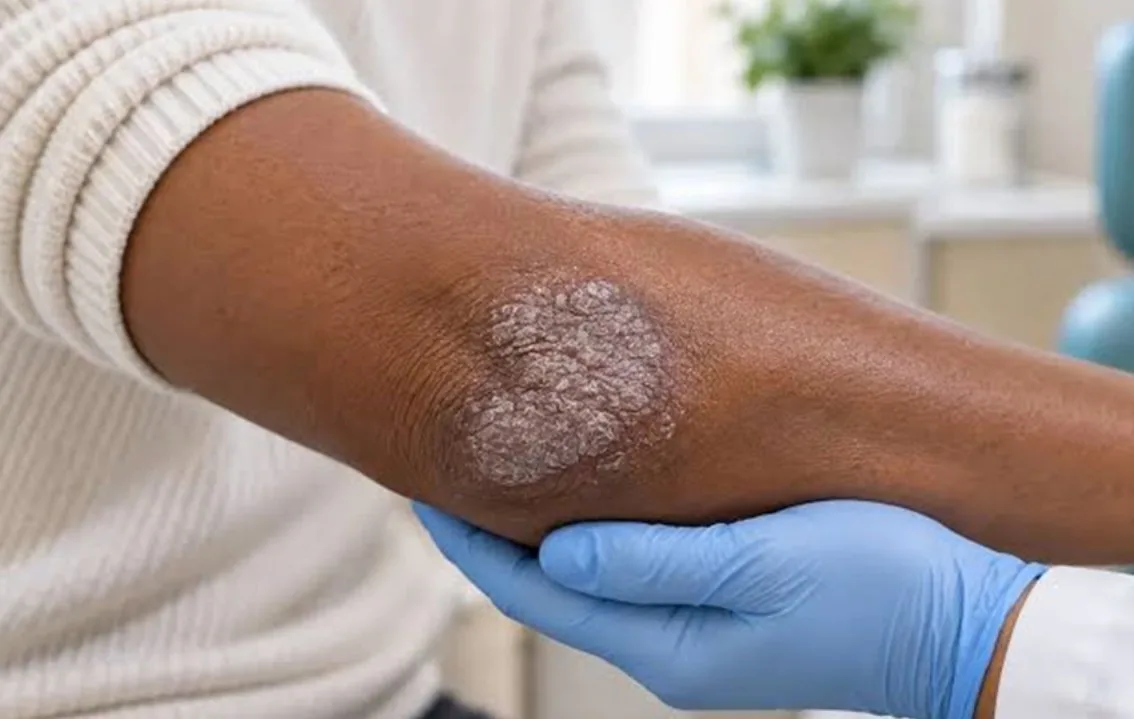
Psoriasis is a non-contagious, chronic inflammatory skin disease characterized by the appearance of red patches covered with dry, white, peeling crusts known as scales. To address this condition, turmeric stands out as an exceptional natural remedy, thanks to curcumin—its active compound renowned for its potent anti-inflammatory and antioxidant properties.
Medical research, including a comprehensive review published in JAMA Dermatology, demonstrates that turmeric brings significant improvements to psoriasis plaques. Curcumin also exerts a braking effect on abnormal cellular proliferation by blocking the activity of specific enzymes, such as phosphorylase kinase, thereby helping to slow down the rapid and abnormal turnover of skin cells. Furthermore, its healing and protective actions stimulate the healthy regeneration of cutaneous tissues while safeguarding dermal cells against oxidative stress.
For daily application, Armand, a naturopathic practitioner, explains that turmeric can be used through two complementary routes:
First, via external application, which directly targets scaly areas. This can be achieved through a homemade poultice made by mixing one teaspoon of turmeric powder with a small amount of
water or pure aloe vera gel to form a smooth paste left on the skin for fifteen minutes, or by using ready-to-use skincare products formulated with purified curcumin, which are more concentrated and do not stain the skin yellow.
Second, via internal consumption, which delivers a systemic action aimed at reducing inflammation from within, particularly in cases of psoriatic arthritis causing severe joint pain. In this context, dietary supplements in the form of standardized turmeric extract capsules are recommended to reach therapeutic dosages. Optimizing their absorption by combining turmeric with piperine or healthy fats multiplies its bioavailability within the body.
Usage Precautions and Medical Guidance
Although natural, turmeric used for therapeutic purposes requires caution due to potential drug interactions with blood thinners, antidiabetic medications, or antacids. It is strictly contraindicated in cases of bile duct obstruction or gallstones. Additionally, performing a skin allergy patch test on a small, healthy area before applying any topical mixture is strongly advised.
Finally, while turmeric serves as an excellent complementary approach, it should under no circumstances replace fundamental treatments prescribed by a physician or dermatologist, such as topical corticosteroids, methotrexate, or biotherapies.