
Millions of patients are benefiting from free or subsidized care—including treatment for malaria, cesarean sections, and dialysis—for an annual fee of just 15,000 FCFA. It is a resounding success, achieved despite budgetary constraints.
Launched on April 12, 2023, under the guidance of the Ministry of Public Health, Universal Health Coverage (UHC) has established itself as an essential pillar of social policy in Cameroon. The 159th weekly report, published by the National Technical Unit (CTN-CSU), presents an impressive set of figures detailing progress made across the country, reflecting a profound transformation in access to healthcare.
More than 5.2 million people enrolled: widespread public participation
Statistics as of early October 2026 confirm that UHC has taken firm root among the population. With a total of 5,281,328 individuals officially enrolled—out of a priority target group estimated at 7,261,114—the overall performance rate has reached 73% nationwide, representing 91% of the targets set for the first phase. This operational success is the result of remarkable mobilization across several key regions. Regions such as Adamaoua (114% overall performance, 453,187 enrolled), the North (108%, 1,024,567 enrolled), the Far North (79%, 1,272,317 enrolled), and the South (104%, 250,157 enrolled) have achieved results that exceed expectations. In major urban centers and densely populated areas—such as the Centre (467,847 enrolled) and the Littoral (534,362 enrolled)—the deployment of field teams, combined with the digitization of procedures via a dedicated application and web portal, continues to accelerate the enrollment process.
Curative care: Drastically reduced costs for families
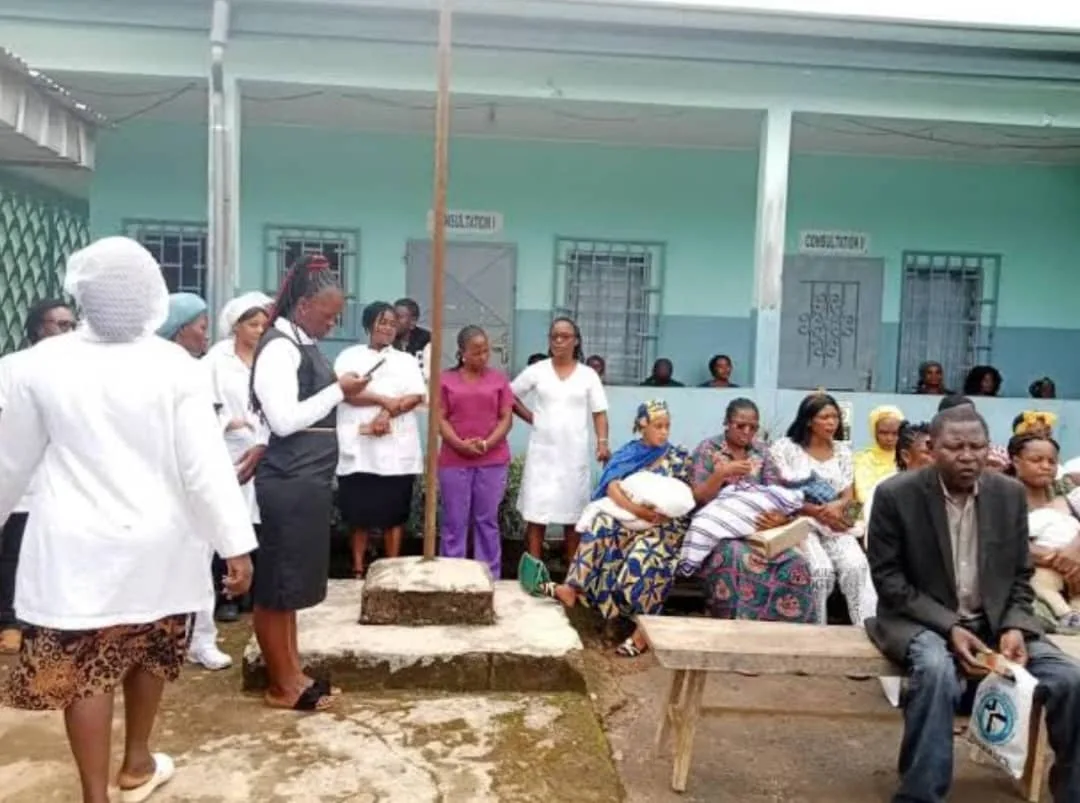
Regarding medical care, the tangible impact of Universal Health Coverage (UHC) is reflected in a dramatic reduction in out-of-pocket health expenditures for households. More than 2,974,598 children aged 0 to 5 have benefited from free consultations. Among them, 618,564 children received free treatment for
uncomplicated malaria, and 771,295 were treated for severe malaria. Through the UHC « Health Voucher » (*Chèque Santé*) mechanism, 35,632 cesarean sections were performed at a nominal flat fee of 6,000 FCFA per patient. For expectant mothers, prenatal care and childbirth services now come with cost reductions of up to 90% to 95%. A major breakthrough for individuals with renal insufficiency: 1,630 people undergoing dialysis now pay only 15,000 FCFA per year for their weekly sessions, down from 520,000 FCFA previously. Furthermore, many patients also receive follow-up care and treatments at no cost.
Prevention and Proximity: The Decisive Impact of Community Health
The strength of the system also lies in its focus on prevention and health promotion. Community health workers (CHWs) have conducted over 7.6 million home visits across the country. Supplementation and vaccination campaigns have facilitated the distribution of vitamin A to more than 2.4 million children, the treatment of over 4.4 million children for helminths (using Mebendazole), and the administration of the BCG vaccine to more than 3 million newborns. Additionally, nearly 2 million pregnant women have received iron supplementation.
Financial Challenges and Institutional Outlook
Despite these significant strides, the CTN-CSU (National Technical Committee for Universal Health Coverage) has identified certain operational constraints—notably, a lack of financial resources to optimally execute the communication plan, as well as delays by the Ministry of Finance in disbursing funds to cover service arrears. To consolidate these gains, the UHC governance body is currently focused on organizing the « General States of Health » (national health summit), convening the strategic steering committee, and implementing the institutional transformation of the management entity. The objective remains unchanged: to ensure equitable, efficient, and sustainable health protection for the entire Cameroonian population.