

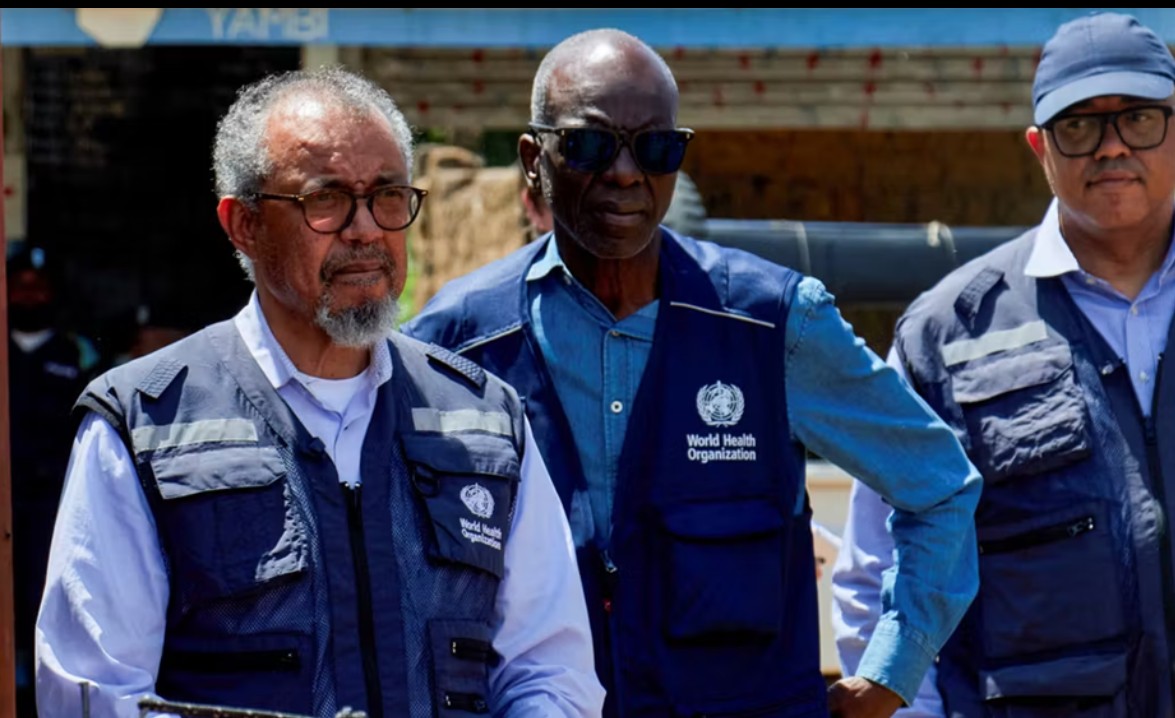
As the Ebola epidemic declared on 15 May 2026 in the north-east of the Democratic Republic of Congo gains ground and has already crossed the Ugandan borders, the World Health Organization and the Africa Centres for Disease Control and Prevention unveiled, on Friday 5 June, an emergency plan worth $518 million.
From June to November, the goal is clear: contain the Bundibugyo strain before it plunges the region into an unprecedented health catastrophe. The figure is staggering. $518 million – that is the price, according to WHO and Africa CDC, of a response capable of extinguishing the viral fire that has been smouldering for three weeks now in the eastern provinces of the DRC. The epicentre is in Ituri, a region scarred by decades of armed conflict and population displacement. It is there that the Bundibugyo strain, less well known than its cousin Zaire but just as formidable, has resurfaced. According to the latest WHO figures, 381 cases have already been confirmed in the DRC, and 64 patients have not survived. In neighbouring Uganda, 16 cases are now officially recorded, including one death.
A virus that circulated in silence
But what worries experts most is the lost time. Health authorities indeed believe that the virus had been circulating undetected for several weeks, or even several months. « The Bundibugyo strain is more discreet, less explosive initially than other strains, but it is no less deadly, » explained a WHO epidemiologist on the ground. Africa CDC estimates that the current epidemic is already larger than the two previous outbreaks caused by this same variant, in 2007 and 2012. The terrain, for its part, makes nothing easy. Ituri and North Kivu are areas of dense forests, impassable roads and active armed groups. Each deployment of a medical team is sometimes an expedition. In this context, the plan announced on Friday by the WHO Director-
General, Tedros Adhanom Ghebreyesus, is intended as a « concrete plan », in his own words. It is based on six pillars: emergency coordination, epidemiological surveillance, laboratory analysis, infection prevention and control, clinical care, and community mobilisation.
The conclusion: Africa faces its health destiny
« It is a concrete plan, » Tedros Adhanom Ghebreyesus insisted during a press conference. « It defines what we must do now, together, to contain the current epidemic and reduce the risk of spread. » Yet the stakes go beyond the DRC alone. With Uganda now affected, Burundi, Rwanda and South Sudan are on maximum alert. The region’s porous borders raise fears of rapid dissemination. Nobel Peace Prize winner Denis Mukwege, accustomed to health crises in eastern Congo, has himself warned: « This new Ebola epidemic could become the deadliest ever recorded. » The international community has chosen to believe that $518 million will be enough to stop it. History will judge. But in the meantime, in Ituri, children continue to mourn their parents. And the virus, for its part, knows nothing of billions. It knows only defenceless bodies.
Audray NDENGUE
