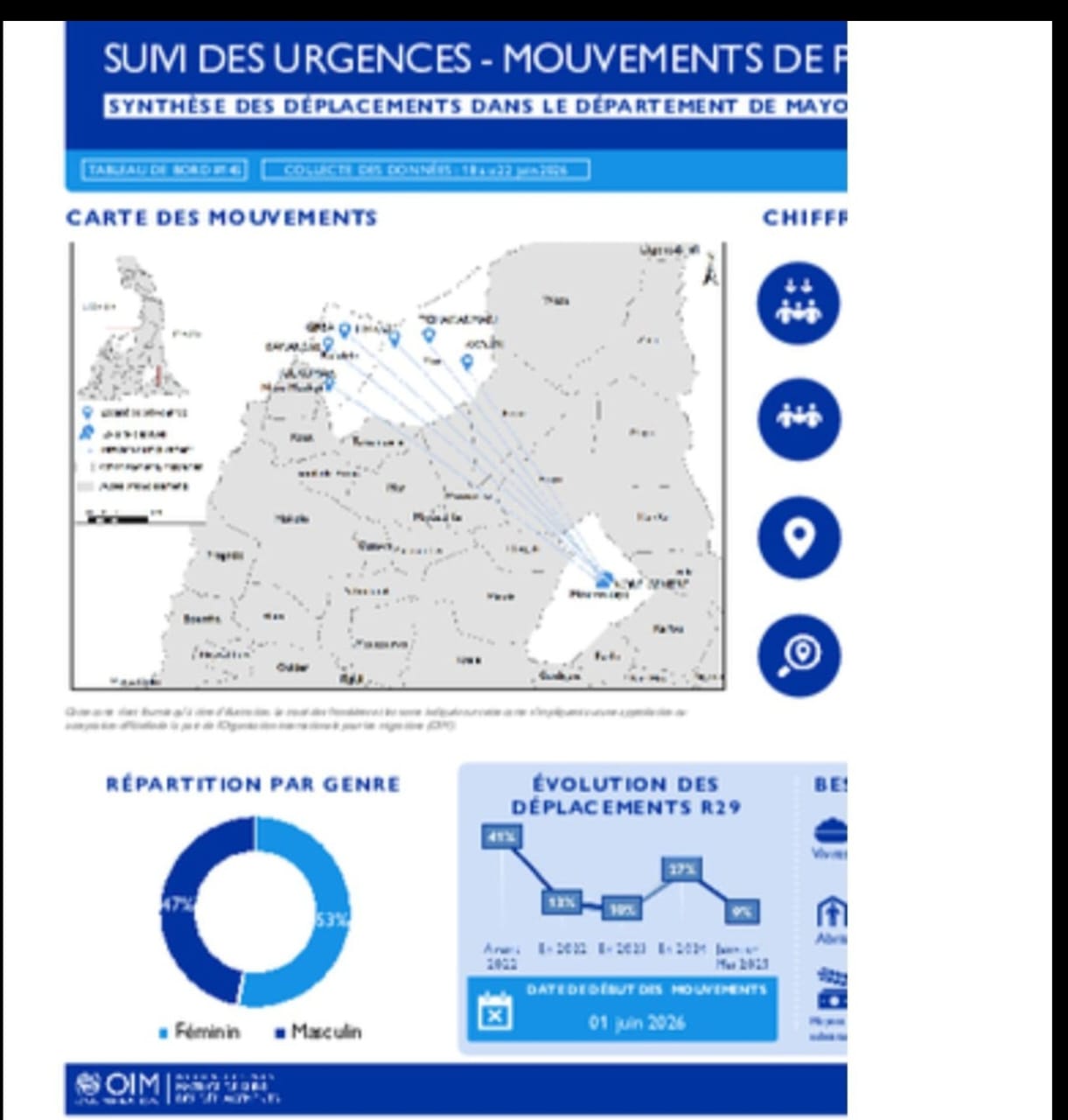
An IOM Cameroon report reveals that over 900 people fled their homes in June 2026 in the Far North region. A health center was looted during an attack in Gouzda Wayam. The region already has 15 out of 33 health districts experiencing measles outbreaks.
In the Mayo-Tsanaga department, fleeing does not just mean leaving home. It also often means losing access to basic healthcare.
According to the International Organization for Migration (IOM), approximately 78 households, or 482 individuals, moved to host communities and spontaneous sites in the department between June 1 and 5, 2026. For the entire month, IOM Cameroon reports a higher figure: more than 900 people forced to flee, or about thirty each day, in the Far North region.
A looted health center
The cause of this exodus is directly documented by the IOM. Between April and June 2026, the Mayo-Tsanaga region was struck by several attacks and kidnappings attributed to non-state armed groups. On the night of June 3-4, an attack in Gouzda Wayam, in the Koza subdivision, resulted in the theft of food and livestock, as well as the looting and vandalism of the village health center. A month earlier, on April 22, an attack in Vouzod, in the Mokolo subdivision, left two people dead and destroyed five homes by fire.
These displaced populations are converging on areas deemed safer in the same department: the sites of Mabaskolai-Mouhour, Zamalva, Sirak-Gorai and the
locality of Zileng, adding to an already weakened health system.
A region under health crisis
The epidemiological situation in the Far North is exacerbating the vulnerability of displaced persons. According to the latest OCHA situation report, fifteen out of 33 health districts in the region are experiencing a measles outbreak. Nutritionally, more than 200,000 children have been screened for malnutrition, with rates of severe acute malnutrition exceeding 20% in Bogo and Maroua 3.
Humanitarian organizations like Doctors Without Borders are raising the alarm about the state of local health facilities. These facilities are under-equipped or closed, plagued by staff shortages, recurring epidemics, and food insecurity.