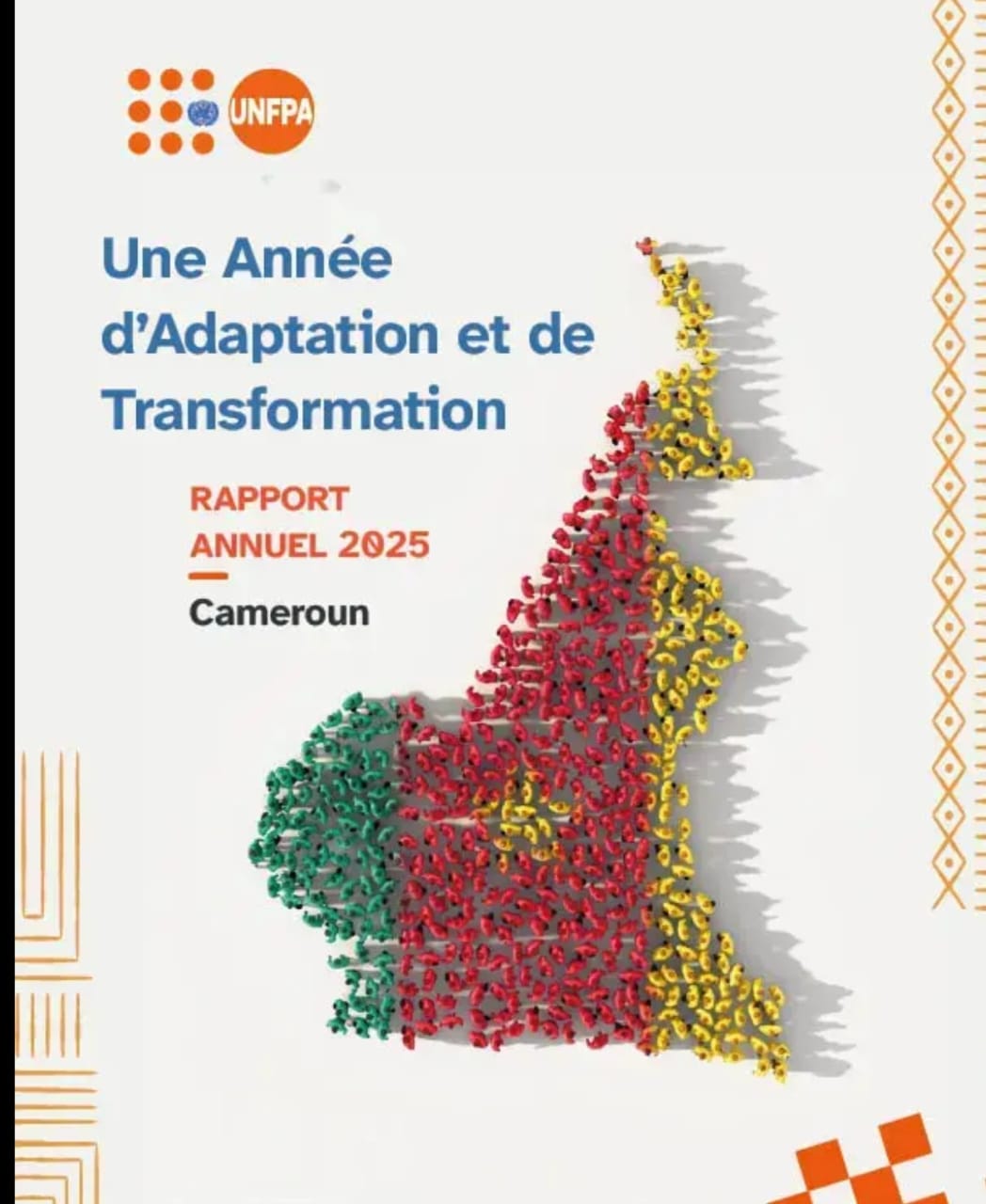
Faced with the crises of 2025 in Cameroon, UNFPA focused on agility and digital technology, marking the year with concrete results: more than 448,000 new women under family planning, the protection of 210,000 survivors of GBV, the opening of the AFIRI window and a budget execution rate of 96%.
The deployment of the United Nations Population Fund (UNFPA) took place within the constrained macroeconomic environment of the 2020-2030 National Development Strategy, marked by budgetary pressures and a lack of statistical data. The country is facing a humanitarian crisis affecting approximately 3 million people, including more than 1 million internally displaced persons, while the Far North region has recorded 178,000 victims following devastating floods. Furthermore, the presidential election of October 2025 was held in a climate of intense socio-political tension, requiring UN agencies to strictly maintain neutrality. Family planning: A historic milestone was reached thanks to the Country Engagement Pact. A government transfer of $323,677 (approximately 181.5 million CFA francs) unlocked $409,185 in international co-financing, doubling the supply capacity for advanced contraceptives (hormonal intrauterine devices and carbetocin). The adoption of the 2025-2030 National Operational Plan enabled 448,023 new women to adopt modern methods, while 57 youth organizations supported over 500,000 adolescents.
Maternal health:Establishment of the national accreditation body for midwifery schools (aligning 4 pilot institutions with international standards) and an immersion mission to Rwanda. 256 health facilities are integrating the standards for Emergency Obstetric and Neonatal Care (EmONC). Treatment of 184 cases of obstetric fistula (with the reintegration of 50 women) and technical support to 61 health districts through the PETVISIDAME project (Ministry of Health-UNICEF-IDB) to eliminate mother-to-child transmission of HIV.
Combating gender-based violence:Inauguration of the AFIRI Center in Yaoundé, the first fully operational one-stop shop offering a continuum of care. 210,100 women and girls accessed protection services, and 160,148 people benefited from prevention initiatives. Active advocacy for a specific law against gender-based violence (GBV) in the National Assembly and establishment of the Office of the Positive Masculinity Ambassadors Club (48 local organizations mobilized).
Youth and social cohesion:Awareness-raising efforts reached 695,000 young people and three guiding frameworks were validated (National Youth Policy 2025-2035, Youth, Peace and Security Plan, and National HIV/AIDS Action Plan). Comprehensive sexuality education was implemented in 241 organizations (with 486 trained providers). The moral rearmament program reached 40 municipalities, and the « Na We We Sports » tournament brought together 6,000 young people (displaced persons and refugees).
Demographic data:Technical support for the 4th General Population Census. The integration of WorldPop technology achieved a scientific accuracy of 92% and a coverage rate of 99.46% in difficult areas, backed by 7 billion FCFA in funding from the World Bank (HISWACA project).
Humanitarian and financial performance
Despite a 47% decrease in GBV response capacity due to the USAID/BHA withdrawal, UNFPA mobilized over $3.5 million (European Union, Canada, CERF). The deployment of 57 midwives to 32 health facilities ensured 3,994 safe deliveries, and a national humanitarian roster of 34 specialists was established.
Overall, $38 million has been secured or committed (including $30 million over 5 years for the Spotlight 2.0 Initiative). The annual budget of $15.2 million shows an execution rate of 96.36%, with $1.9 million in interagency savings and a 40% reduction in carbon footprint.
Encouraged by the positive conclusions of the evaluation of the 8th Programme, the country office is actively preparing the 9th cooperation cycle (2027-2031) to consolidate Cameroon’s health and statistical sovereignty.