
Meeting in Maroua as part of its 11thᵉand 12ᵉDuring its regular sessions, the Steering Committee of the VIVA Logone project, funded by the World Bank, reviewed the project’s progress and challenges. In Maga, 21 critical points identified on the dikes raise concerns about risks to agricultural land and food security.
Securing the Maga dikes is a priority to preserve agricultural land and the achievements of the Logone Valley Investment Development and Enhancement Project (VIVA Logone). A site visit conducted on Sunday, August 9, 2026, by the project team and authorities led by the Governor of the Far North Region, Midjiyawa Bakari, identified 21 critical points on these structures in the Mayo-Danay department.
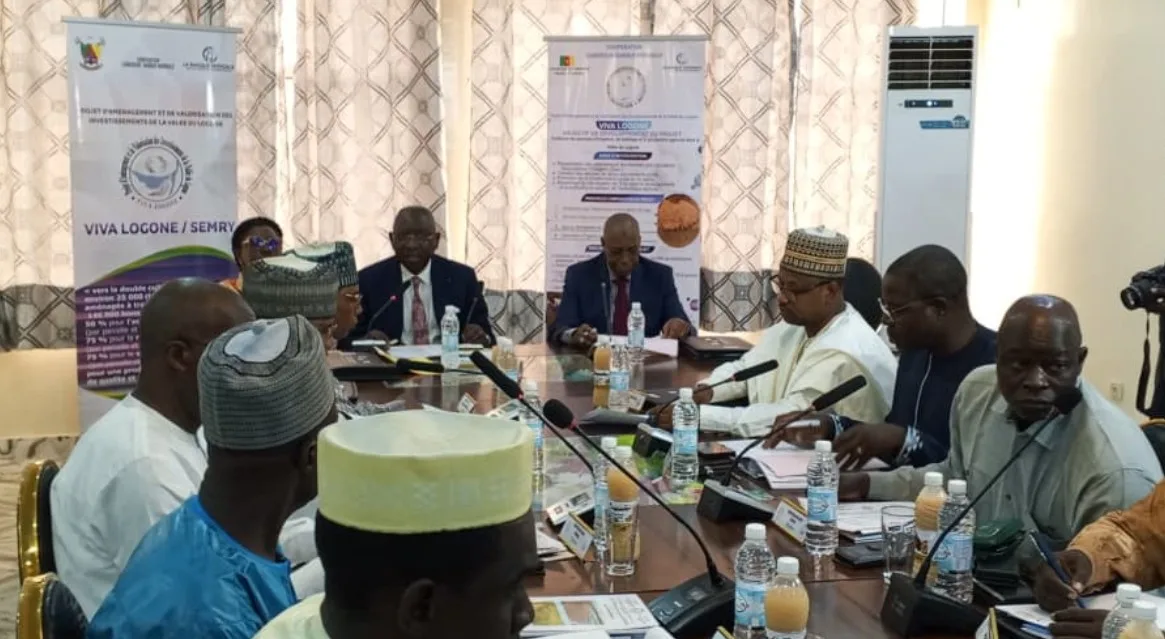
This visit is part of the 11ᵉand 12ᵉThe ordinary sessions of the VIVA Logone Steering Committee were held in Maroua. The proceedings were chaired by Jean Tchoffo, Secretary General of the Ministry of Economy, Planning and Regional Development (MINEPAT), in the presence of the Governor of the Far North, Midjiyawa Bakari, and members of the project’s steering committee.
On the ground, the condition of certain sections of the dikes has drawn the attention of the authorities. The 21 critical points identified require intervention to reinforce the structures and reduce the risk of flooding. In this part of the Logone Valley, where agriculture, and particularly rice cultivation, are essential activities, the strength of the dikes is a major issue.
A potential breach could expose developed land, affect farms, and jeopardize harvests. Beyond the material damage, such a situation could have consequences for the food security of the population in a region already facing multiple
vulnerabilities.
However, VIVA Logone is showing encouraging results. As of July 31, 2026, the project had a physical implementation rate of 60.6% and a financial implementation rate of 53.2%. In total, 16,154 direct beneficiaries are involved in the project’s interventions.
The project also funded 444 business plans for women, while 7,980 hectares were developed. These investments aim in particular to improve agricultural production conditions and boost the incomes of people in the Logone Valley.
In Maga, these projects have been welcomed by local residents. However, Mohamadou, a resident of the area, believes that securing the dikes now needs to be addressed urgently.
“It is important to quickly secure the dikes because they protect our fields and villages. We appreciate the efforts of VIVA Logone and what is being done to improve production. But the weakened sections must be reinforced to prevent people from being caught off guard by the waters,” he explains.
He believes that the improvements made have already contributed to enhancing agricultural activities in the area. Therefore, the protection of these structures must accompany these investments so that the local population can continue to cultivate their land under good conditions.
The governor of the Far North, Midjiyawa Bakari, for his part, stressed the need to preserve existing infrastructure. The administrative authority particularly deplored the misuse of dikes by some residents.
These structures are sometimes used as roads by inappropriate modes of transport. The governor also noted the use of heavy goods vehicles on the dikes, a practice that could accelerate their deterioration.
Repairing critical points cannot be separated from raising public awareness. The authorities want residents to become more aware of the role of dikes and to avoid practices that could weaken these infrastructures.
For VIVA Logone, the challenge is to preserve the investments already made. The thousands of hectares developed and the infrastructure put in place should allow for a sustainable improvement in agricultural production. However, their effectiveness depends on the ability to protect the hydraulic structures from inclement weather, but also from inappropriate use.
The urgency is all the greater given the continued concern about food security in
the Far North. According to the summary of the OCHA report covering the period from April to June 2026, 96,958 people received food assistance in the region. This figure illustrates the vulnerability of a significant portion of the population and the need to preserve agricultural production areas.
In this context, protecting Maga’s farmland also means preserving part of the region’s food production capacity. A major flood could affect farms, reduce harvests, and increase the dependence of some communities on food aid.