

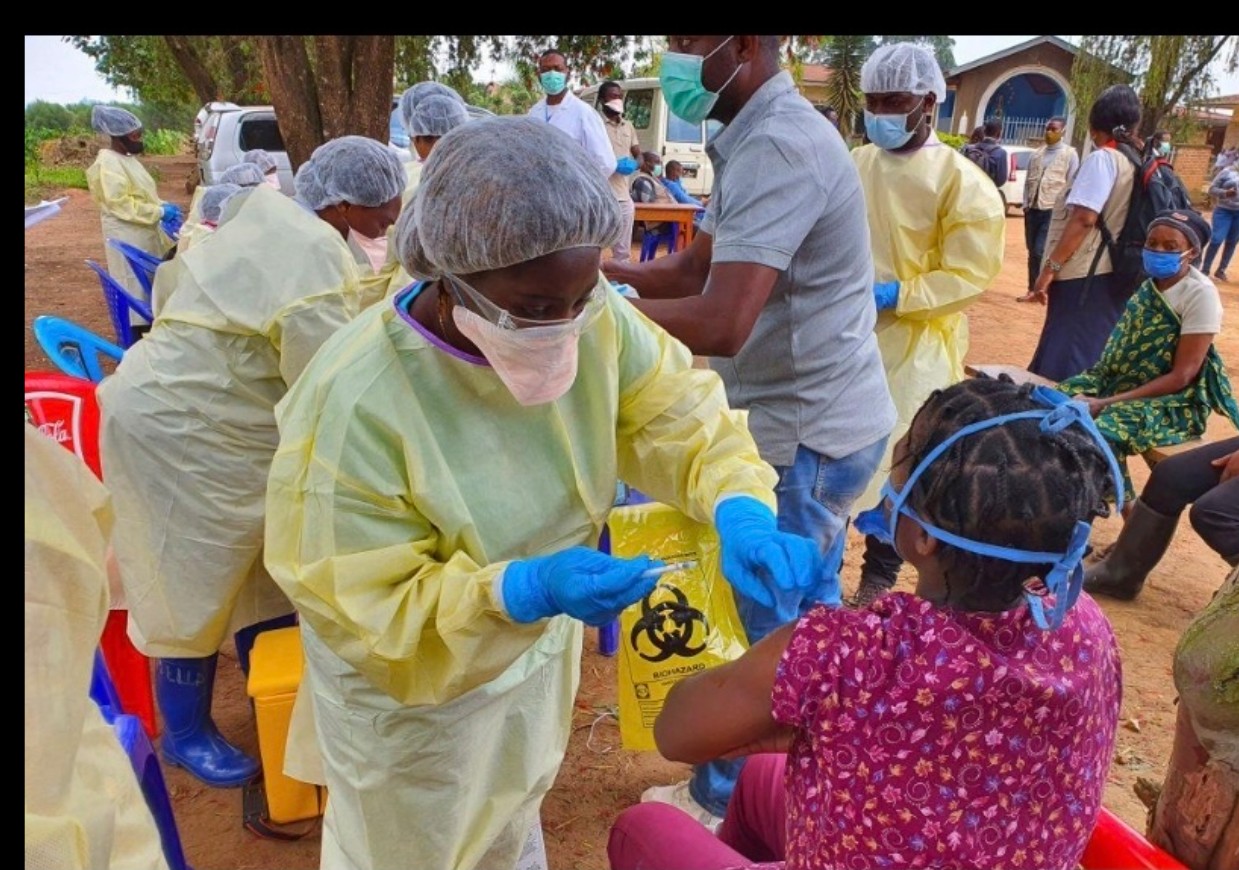
The Ebola epidemic caused by the Bundibugyo virus is spreading at an unprecedented pace, prompting health authorities and international partners to expand surveillance and community-based interventions.
The Ebola outbreak in the Democratic Republic of the Congo has surpassed 4,000 confirmed cases, marking a worrying new milestone in an epidemic that is rapidly becoming one of the largest Ebola outbreaks ever recorded. According to the latest government figures, more than 4,000 infections and over 1,800 deaths have been reported across several provinces, with Ituri remaining the main epicenter.
A rapidly expanding outbreak
The outbreak was officially declared on May 15, 2026, after the Bundibugyo species of Ebola virus was detected in Ituri Province. However, health officials suspect that the virus may have been circulating for several months before the declaration, possibly since January.
The speed of transmission has raised concerns among public health authorities. The current epidemic has already become the second-largest Ebola outbreak on record, behind the devastating 2014–2016 West Africa epidemic.
The virus has been detected in five provinces, including Ituri, North Kivu, South
Kivu, Haut-Uele and Tshopo. Authorities are also closely monitoring the risk of further regional spread, particularly because of population movements and cross-border travel.
A response under pressure
Health authorities and international partners are stepping up efforts to identify cases earlier and interrupt chains of transmission. Surveillance teams are increasingly moving beyond conventional contact tracing to actively search for people with symptoms, including through door-to-door investigations in affected communities.
The World Health Organization has supported the government with medical supplies, technical expertise, surveillance, laboratory testing, infection prevention and control measures, clinical care and community engagement. More than 35 WHO and Ministry of Health experts and first responders were initially deployed following the outbreak declaration, with additional teams mobilized as the epidemic expanded.
Difficulties reaching communities
The response is taking place in an environment already affected by insecurity, displacement and limited access to some communities. These conditions make it difficult for health workers to trace contacts, investigate deaths and provide timely care.
Another major concern is that a large proportion of newly identified cases are not linked to previously known contacts. This suggests that transmission is occurring outside established surveillance networks, making it harder to predict where the next cases will emerge. ((The Guardian)
Health workers are also facing difficult working conditions, while shortages of vaccines and treatments specifically suited to the Bundibugyo strain have complicated the response. WHO notes that there is currently no licensed vaccine or specific treatment for this Ebola species, although potential therapeutic and vaccine options are being assessed. (World Health Organizatione)
A race against time
As the number of cases continues to rise, authorities are calling for a broader and faster response focused on active case finding, stronger surveillance, infection prevention and control, safe care and greater community involvement.
The latest developments underline the importance of detecting infections early and
ensuring that communities trust and participate in response measures. With transmission continuing at a rapid pace, health authorities face a critical challenge: bringing the epidemic under control before it expands further across the country and the wider region.


