As school resumption approaches, UNICEF helps children inCameroonns conflict-affected North-Westand South-West regions.Porary learning spaces are giving out-of-school children a second chance to learn, rebuild confidence and prepare for a return to formal education.
As the new school year approaches, thousands of children across Cameroon are preparing to return to classrooms. But in communities affected by insecurity, returning to school is still far from guaranteed. Years of disruption have kept many children away from formal education, leaving them vulnerable to protection risks and widening learning gaps.
In response, UNICEF is supporting Temporary Learning Spaces(TLS)in the North-
West and South-West regions, providing children with a safer environment in which to resume their education. The spaces are designed not to replace permanent schools, but to serve as a bridge for children who have been excluded from formal education while conditions for regular schooling are restored.
A second chance to learn
Babungo, in the North-West Region, illustrates the impact of the initiative. Here, children who have spent years outside the classroom can access accelerated learning programs designed to help them recover essential skills and eventually transition back into the formal education system.
The program is structured around three levels, allowing learners to progress according to their educational needs. For children who have missed several years of schooling, this approach offers an opportunity to rebuild foundational literacy and numeracy rather than remain permanently excluded from education.
For 12-year-old Njwepekem Precious, the learning space offered an opportunity to resume a journey that had been interrupted. She spent two years at home after insecurity disrupted her schooling and, during that period, could neither read nor write. After UNICEF and its partners established a temporary learning space in her community, she returned to learning and is now in Level 2.
The change extends beyond academic progress. Precious has made new friends, regained confidence and developed a renewed enthusiasm for attending classes. Her experience reflects one of the central objectives of the initiative: helping children recover not only lost learning, but also a sense of possibility about their future.
Learning beyond the classroom
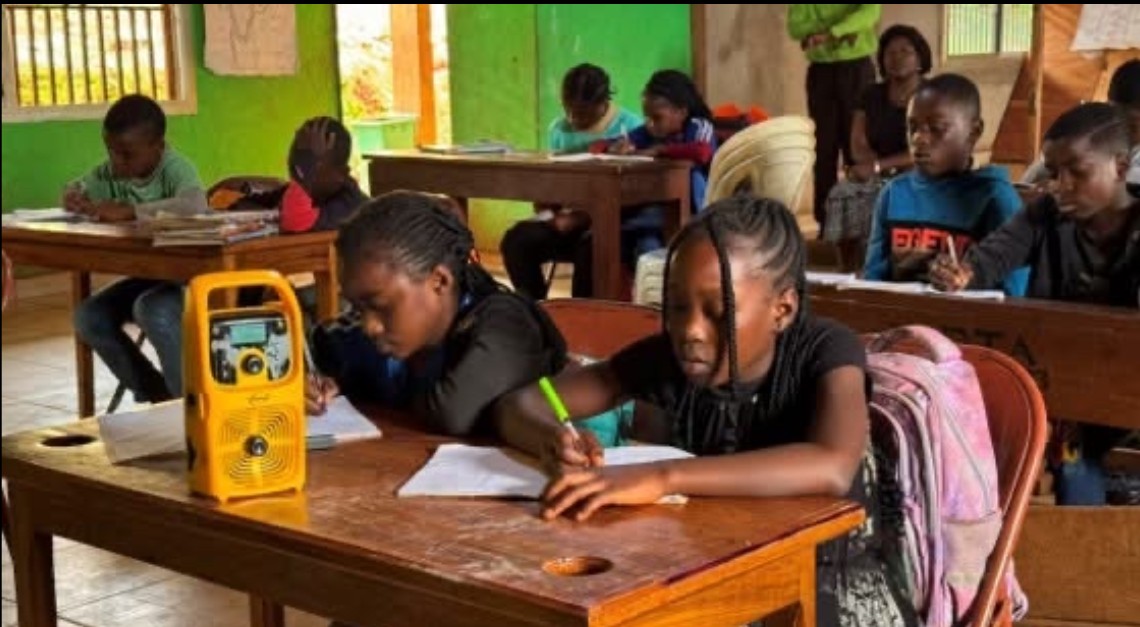
UNICEF has also incorporated interactive radio education into the temporary learning spaces. Radio lessons complement classroom teaching and cover subjects including English, mathematics, literacy and environmental education.
For 10-year-old Ayim Favour, the approach has made lessons more engaging. She uses the radio to follow different subjects and says she particularly enjoys learning through this method.
The approach is particularly relevant in communities where conventional educational infrastructure has been disrupted. By combining facilitators, learning materials and radio-based lessons, the program seeks to maintain continuity of learning even where access to formal schools remains difficult.
Education as protection
For UNICEF, bringing children back to learning is also a child-protection intervention. In crisis-affected communities, prolonged absence from school can expose children to risks including early marriage and drug abuse. Temporary learning spaces provide a structured and safer environment where children can learn, interact with their peers and regain a daily routine.
The initiative is supported through humanitarian assistance from the European Union and implemented with partners working in affected communities. UNICEF’s broader response seeks to ensure that children are not permanently left behind because conflict has interrupted their education.
As another school year approaches, the experience of Babungo offers a reminder that returning to school is not simply about opening classroom doors. For children whose education has been interrupted by crisis, it can mean rebuilding basic skills, restoring confidence and recovering the possibility of a future shaped by learning rather than exclusion.