As the new school year approaches, UNICEF is supporting inclusive education in Cameroon’s North-West and South-West regions, where conflict and displacement have disrupted schooling. More than 3,000 children have been screened to identify their specific needs and provide appropriate support.
For children living with disabilities, returning to school can mean overcoming barriers that go far beyond the classroom. In Cameroon’s crisis-affected North-West and South-West regions, insecurity and displacement have disrupted education, while inaccessible facilities, limited resources and stigma can make learning even more difficult for children with disabilities.
It is against this backdrop that UNICEF, together with local partners, is supporting efforts to make schools and Temporary Learning Spaces more inclusive.
Identifying needs to keep children learning
More than 3,000 children have been screened in schools and Temporary Learning Spaces to identify disabilities and determine the support they need to participate in learning.
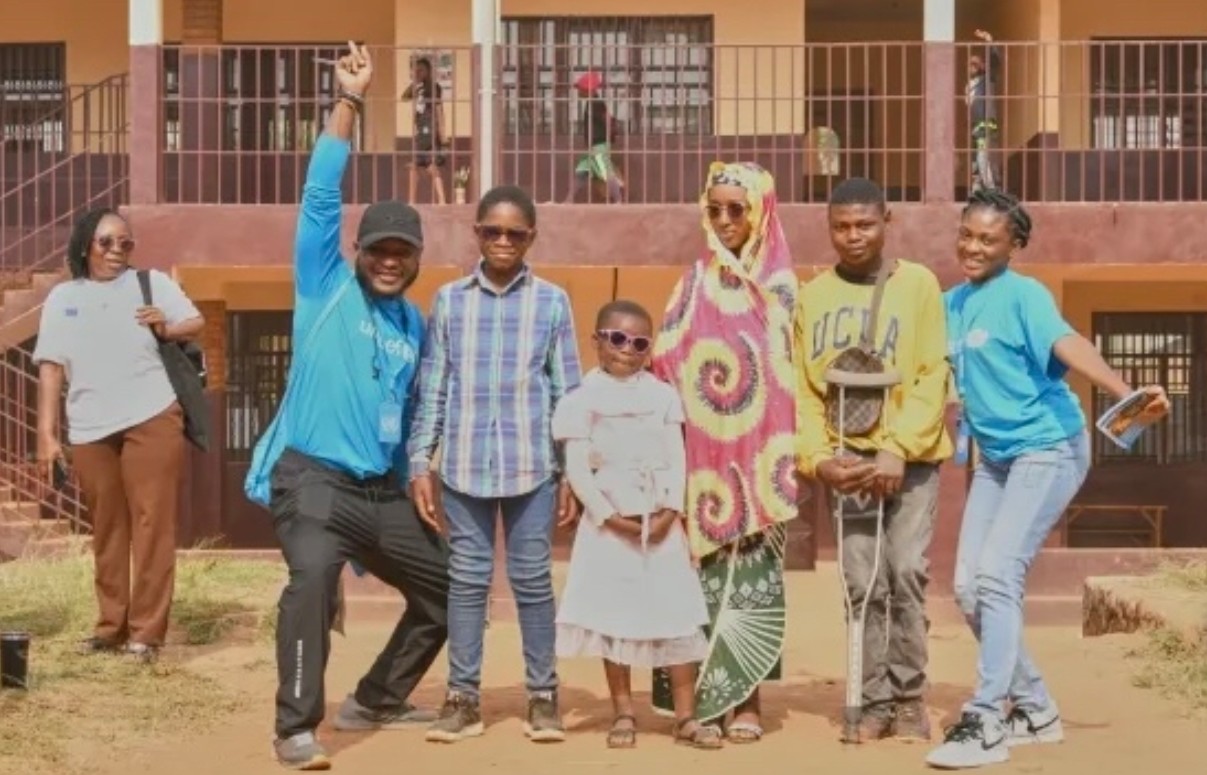
The initiative has also provided practical assistance to some children. Those with visual impairments have received materials such as styluses and slates, while others have benefited from glasses, hearing aids, crutches and mobility devices.
By early 2026, more than 100 children had received assistive devices, helping them participate more fully in classroom activities.
For a child who struggles to see the board, hear the teacher or move around the classroom, such support can make the difference between remaining on the margins and taking part in school life.
Teachers at the center of inclusion
UNICEF’s intervention also focuses on teachers and facilitators. More than 82 teachers and facilitators working in schools and Temporary Learning Spaces have been trained in inclusive education practices.
The training covers areas including Universal Design for Learning, basic Braille, sign language and psychosocial support for children affected by conflict and trauma.
The objective is not simply to bring children with disabilities into classrooms, but to create conditions in which they can participate, learn and develop their potential alongside other pupils.
For teachers working in crisis-affected communities, this requires adapting teaching methods while also responding to children who may have experienced displacement, insecurity and prolonged interruptions to their education.
“See the child, not the disability”
For Madam Nakum Theresia Tita, a facilitator at the Mulang 1 Temporary Learning Space in Bamenda II, inclusion begins with changing perceptions.
“We must see the child, not the disability,” she says.
The message reflects the approach promoted through the initiative: a disability should not determine a child’s opportunity to learn.
In 2025, UNICEF-supported interventions enabled 35,999 children in the North-West and South-West to access formal or non-formal education, including 752 children with disabilities in non-formal education through Temporary Learning Spaces.
As another school year approaches, UNICEF’s work highlights a challenge that goes beyond reopening classrooms. In communities affected by crisis, ensuring
every child has a place at school also means identifying barriers, providing appropriate support and equipping teachers to respond to diverse needs.
For children with disabilities, inclusion can mean more than access to education. It can mean regaining confidence, participating with their peers and seeing new possibilities for their future.