As Team Cameroon prepares for upcoming continental competitions, medical monitoring is proving to be the cornerstone of performance. From injury prevention and rigorous weight management to optimal recovery, the athletes’ health guarantees their success on the tatami.
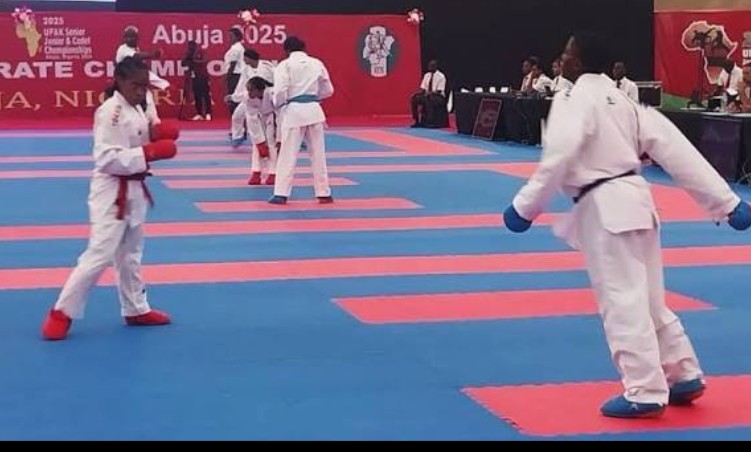
In high-level competition, the line between gold and obscurity often hinges on a detail invisible to the general public: the athletes’ health. As Team Cameroon hones its skills for the upcoming continental events following its historic haul of 37 medals at the recent UFAK Central Region African Championships in Bujumbura, one thing is clear. Behind the roundhouse kicks and devastating sweeps, the true key to consistency lies in rigorous medical and sports monitoring. In combat sports like karate, the body is subjected to extreme mechanical and physiological stress. Between drastic weight management before weigh-ins, repeated joint trauma, and the constant risk of overtraining, the role of the medical staff goes far beyond simply applying bandages at the edge of the mat. It’s a true engineering of performance.
Under the guidance of specialized coaches, the health preparation of the Karate Lions is now based on a comprehensive and proactive approach. Before competitions, complete blood tests and electrocardiographic monitoring allow for the detection of the slightest sign of systemic fatigue or micronutrient deficiency. From a biomechanical perspective, injury prevention relies on a meticulous functional assessment of the ankles, knees, and shoulders, joints particularly vulnerable during explosive extensions in kumite.
Managing the « cutting » phase—this delicate stage where the athlete must lose several kilos in record time to qualify for their weight class—is another major challenge. Expert medical supervision prevents the pitfalls of acute dehydration, which can impair cognitive function, reaction time, and lean muscle mass. Thanks to a personalized hydro-electrolytic rehydration protocol, athletes take to the mat in full possession of their physical abilities.
But the major innovation of this modern approach lies in its focus on mental health and sleep. The nervous fatigue accumulated during intensive training camps is the primary risk factor for ligament ruptures or muscle tears. By incorporating methods to optimize recovery and address pre-competition anxiety, the medical team ensures maximum vigilance for athletes as they secure their victory. The results of this scientific approach were quickly evident on the regional stage. The image of a virtually empty infirmary after tournaments is the most reliable indicator of successful preparation. To maintain its leadership and transform its regional successes into continental titles, Cameroonian sport must continue to place sports medicine at the heart of its national strategy. Investing in athletes’ health ensures the longevity of their victories.