
Health workers and other frontline personnel in the Democratic Republic of Congo are being vaccinated as the country battles a severe outbreak of Bundibugyo virus disease. But the vaccine being used, Ervebo, is not licensed specifically against this strain, leaving an important question unanswered: how much protection does it actually provide
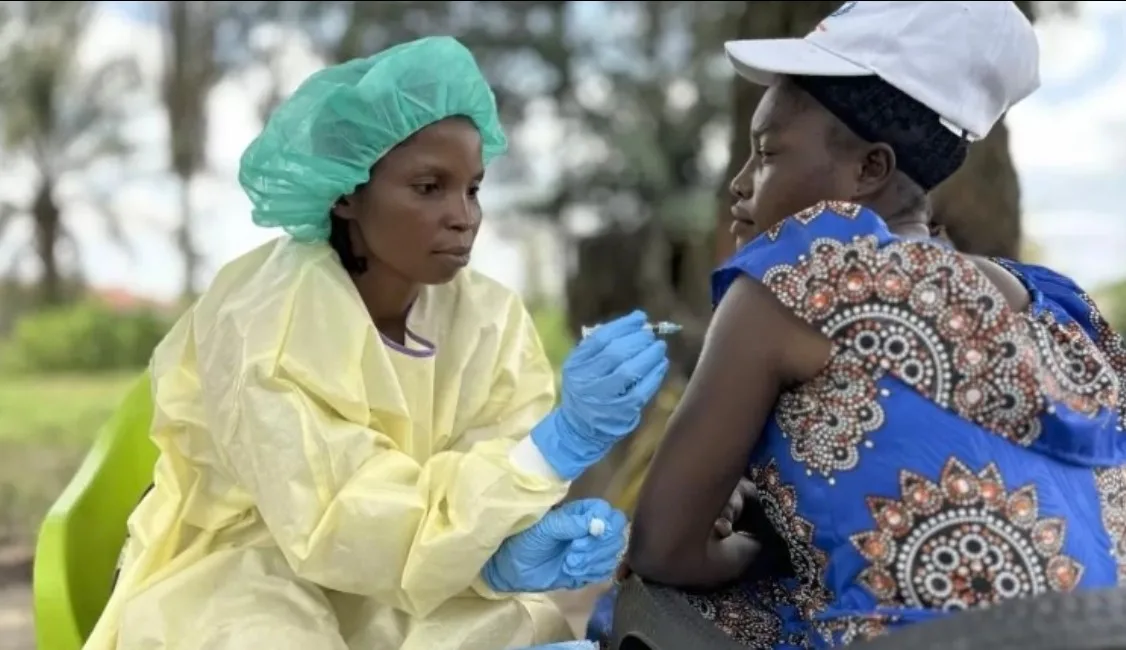
A healthcare worker administers an Ebola vaccine during a vaccination campaign in the Democratic Republic of Congo.
On the front line of an evolving outbreak
For health workers treating patients with Ebola, protection begins long before a patient enters a treatment center. Personal protective equipment, infection prevention and control measures, early detection and strict protocols remain essential for reducing the risk of exposure.
But vaccination has now become another component of the response. Since late August, healthcare and frontline workers in several affected areas have begun receiving Ervebo, the only licensed and WHO-prequalified vaccine specifically available against Ebola virus disease caused by the Ebola virus species.
The difficulty is that the current outbreak is caused by Bundibugyo virus, a different species for which no licensed vaccine currently exists. WHO states that available evidence is still insufficient to determine whether Ervebo protects humans against Bundibugyo virus or how effective such protection might be.
A vaccine, but with unanswered questions
The decision to use Ervebo in the current outbreak therefore comes with an important scientific caveat. Studies in animals and laboratory evidence suggest that the vaccine could offer some cross-protection against Bundibugyo virus. However, these findings cannot establish how well it protects people.
WHO’s current guidance recommends that Ervebo should be used against Bundibugyo virus within a research protocol designed to generate reliable evidence on its effectiveness and safety. A randomized clinical trial is considered the most rigorous approach, while an
observational vaccine-effectiveness study can also be used when a trial is not feasible.
The approach therefore combines an immediate response with the need to answer a longer-term scientific question. Health workers can receive the vaccine, while vaccination activities contribute to generating evidence that could guide future outbreak responses.
Thousands of doses mobilized
In August, the International Coordinating Group on Vaccine Provision released an initial 70,000 doses of Ervebo for the DRC. Of these, 20,000 doses were allocated to a Phase 3 clinical trial, while 50,000 were intended for frontline and health workers.
By 6 September, 2,007 people had been vaccinated across six health zones in Tshopo, Bas-Uélé and Ituri provinces.
The vaccination campaign comes as transmission continues. By 13 September, the outbreak had reached seven provinces and 62 health zones, with 7,258 confirmed cases and 3,510 deaths reported. South Ubangi became the latest province affected after a confirmed case was detected in Bulu Health Zone.
Vaccination does not replace other protections
For health workers, vaccination is therefore only one layer of protection. WHO continues to stress the importance of surveillance, laboratory testing, early case detection, infection prevention and control, appropriate patient care, safe and dignified burials and community engagement.
This is particularly important in areas where insecurity, population displacement, overcrowding and limited access to water, sanitation and healthcare can complicate the response. In such settings, delays in detecting cases can increase the risk of transmission within communities and healthcare facilities.
For the professionals working closest to patients, the current vaccination strategy therefore carries two dimensions. It offers an additional preventive measure at a time of intense transmission, while also helping researchers determine whether that protection is effective against the virus actually driving the outbreak.
Until stronger evidence becomes available, however, the uncertainty remains. For those on the front line, Ervebo is part of the response, but it cannot yet be considered a proven shield against Bundibugyo virus disease.