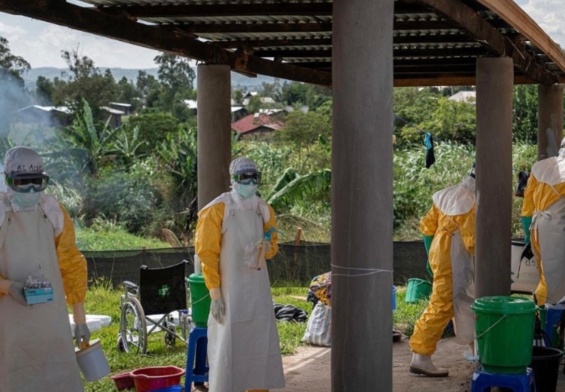
The World Health Organization (WHO) and the King Salman Humanitarian Aid and Relief Center (KSrelief) have signed a $5.3 million agreement to strengthen cholera preparedness and response in Cameroon, Chad, Mali, Niger and Nigeria. The initiative comes as more than 61,000 cholera cases have been recorded in Africa in the first five months of 2026.
Access to safe water and sanitation is a key component of the new WHO-KSrelief cholera response program in the Lake Chad Basin.
The agreement, valued at US$5,327 million, was signed on September 22 in New York on the sidelines of the 81st session of the United Nations General Assembly. It aims to support life-saving interventions in communities affected by or at risk of cholera across the Lake Chad Basin.
The partnership comes amid a persistent cholera burden in the WHO African Region. More than 61,000 cases were reported during the first five months of 2026. Nigeria has recorded the region’s largest outbreak, with more than 50,000 cases and 338 deaths since January. In Chad, nearly two thirds of reported infections have affected children under 15.
Combining prevention and medical response
The new project will address several factors that influence the spread and management of cholera. Its activities will include water, sanitation and hygiene interventions, notably the drilling of wells and rehabilitation of public latrines.
The program will also strengthen epidemiological surveillance and provide medicines and medical consumables to support the response to outbreaks.
For health facilities, the agreement provides for the rehabilitation of selected medical structures and the provision of equipment for radiology, sterilization, operating theaters, emergency services and intensive care units for both children and adults.
The approach reflects the different requirements of cholera control. While rapid detection and treatment are essential when cases occur, access to safe water, sanitation and hygiene remains central to preventing transmission.
A regional response
The initiative covers five countries sharing the wider Lake Chad Basin context: Cameroon, Chad, Mali, Niger and Nigeria. The regional approach is intended to strengthen preparedness and response capacities across communities facing humanitarian pressures and limited access to essential services.
According to WHO, an estimated 8.2 million people across the Lake Chad Basin require humanitarian assistance. As of April 2026, only 22% of the funding requirements for the humanitarian response had been met.
For Cameroon, the inclusion in the program places the country within a broader regional effort to reinforce cholera preparedness, particularly through
surveillance, WASH interventions and health-system support. The WHO, however, does not specify how the $5.3 million announcement will be distributed among the five countries.
Faster detection and treatment
WHO Director-General Dr Tedros Adhanom Ghebreyesus said sustained support would help the five countries detect outbreaks earlier, respond more rapidly and provide life-saving care to affected populations.
KSrelief’s Supervisor General, Dr Abdullah bin Abdulaziz Al Rabeeah, said the partnership would support improvements in water, sanitation and hygiene services while strengthening the medical sector in the region.
For the Lake Chad Basin, the agreement therefore links two sides of cholera control: reducing the conditions that facilitate transmission and improving the capacity of health systems to detect and treat cases when outbreaks occur.