The Ebola outbreak caused by the Bundibugyo virus continues to spread in the Democratic Republic of Congo (DRC), with two newly affected health zones bringing the total to 63 across seven provinces. As of September 23, the country had recorded 7,890 confirmed cases and 3,799 deaths. But beyond the geographical spread, Africa CDC is highlighting another concern: the number of contacts identified remains far below the number expected to have been exposed.
Two new health zones affected
According to the World Health Organization (WHO), Bulu health zone in South-Ubangi province and Dungu health zone in Haut-Uele province have recently reported cases, extending the outbreak to 63 health zones in seven provinces.
The expansion is significant because both areas are located in regions where population movements and cross-border links can complicate surveillance and
response operations. WHO has warned of the risk of further transmission across borders, particularly in areas connected to the Central African Republic and South Sudan.
The outbreak remains concentrated in eastern DRC. Ituri province has recorded the highest number of confirmed cases, followed by North Kivu.
Hundreds of thousands of contacts still need to be identified
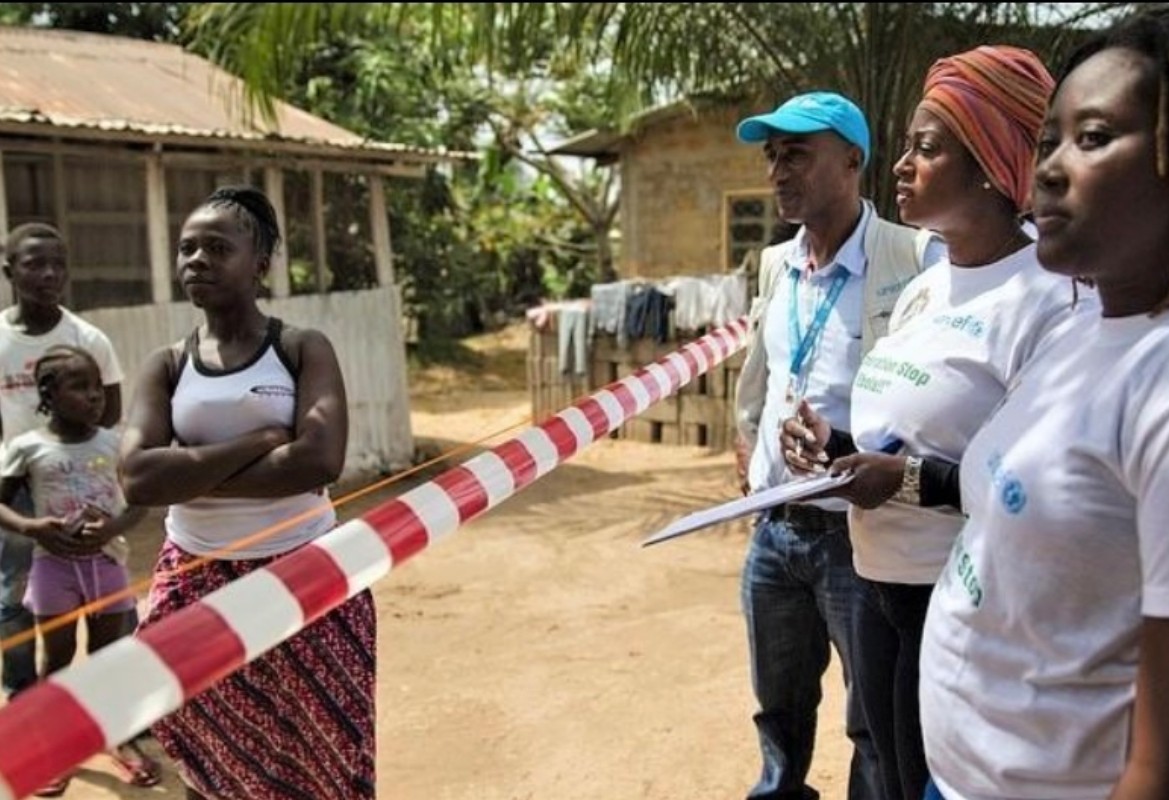
Contact tracing is a central component of the Ebola response. Once a person is confirmed to have Ebola, health workers try to identify people who may have been exposed to the virus. These contacts can then be monitored for symptoms and rapidly referred for testing and treatment if necessary.
But Africa CDC says the scale of contact identification remains a major gap.
According to Africa CDC Director General Jean Kaseya, around 30,000 contacts had been identified, whereas more than 400,000 would be expected based on the number of cases and the estimated number of people exposed.
The gap matters because identifying contacts allows response teams to follow transmission chains before additional infections occur.
More than eight in ten new cases outside contact lists
Another indicator illustrates the difficulty facing the response. According to Reuters, more than 80 percent of newly confirmed Ebola cases were being detected among people who had not previously been listed as contacts.
This means that many infections are still being identified outside the existing contact-tracing system. For response teams, this makes it more difficult to reconstruct chains of transmission and determine where the virus is continuing to circulate.
The finding also underlines the importance of active surveillance in communities, particularly where people may not have been identified through existing contact networks.
Security and population movements complicated surveillance
The difficulties are not only related to the number of people who need to be followed. WHO reports that insecurity, population displacement and limited access to health services continue to complicate surveillance, case finding and contact tracing in affected areas.
Ituri, the current epicenter of the outbreak, has recorded more than 6,000
confirmed cases. North Kivu has also reported a substantial number of infections.
At the same time, the situation is not uniform across all affected provinces. Africa CDC has reported declines in cases and deaths in some outbreak hotspots, while other areas have experienced increases.
For health authorities, the challenge is therefore twofold: maintaining progress where transmission is declining while closing surveillance gaps in communities where new infections continue to emerge.
As the outbreak spreads to additional health zones, strengthening contact identification and follow-up remains essential to understanding transmission and enabling response teams to intervene more rapidly.