Kenya has confirmed its first imported case of Bundibugyo virus disease after a Kenyan national traveled from the Democratic Republic of the Congo through Uganda to Nairobi. The patient died on October 5, prompting authorities to intensify contact tracing and surveillance.
First case confirmed
Kenya has confirmed its first imported case of Bundibugyo virus disease, the World Health Organization (WHO) reported on October 6, 2026. The case was officially notified by the Kenyan government under the International Health Regulations.
The patient was a Kenyan national who had been living in the Democratic Republic of the Congo (DRC), where he became ill and received care at several health facilities. He later traveled by road from the DRC through Beni to Kampala, Uganda, on October 2, before flying to Nairobi on October 3.
Upon arrival in Kenya, he was admitted and isolated at a health facility in Nairobi. Samples tested positive for Bundibugyo virus at both the National Virology Reference Laboratory and the Kenya Medical Research Institute, confirming the infection.
The patient died during the night of October 5 and was buried on October 6 under safe and dignified burial procedures.
Contact tracing underway
Following the confirmation, Kenyan health authorities immediately launched contact tracing
to determine whether other people may have been exposed.
Twenty-eight contacts have so far been identified, including family members and healthcare workers. Authorities are also searching for 23 passengers and four crew members who traveled on the same flight as the patient.
The contacts are being monitored as part of efforts to detect possible infections at an early stage. The priority is to identify any secondary cases quickly and prevent further transmission.
The case is therefore being managed as an imported infection, with no evidence in the WHO communication of established community transmission in Kenya.
Kenya strengthens preparedness
The detection comes after months of preparedness measures against the possible introduction of the virus.
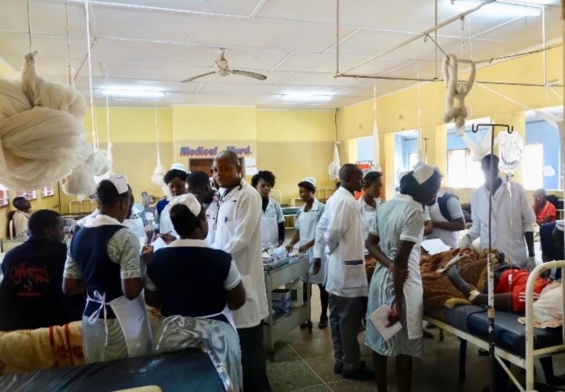
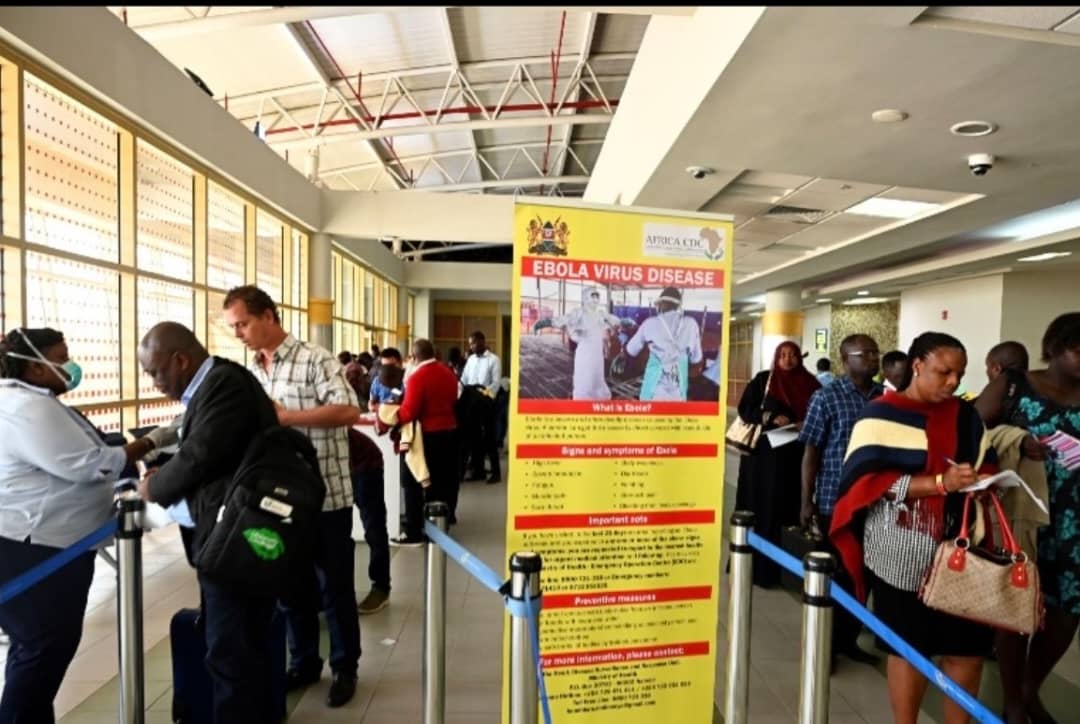
According to WHO, more than 652,000 travelers have been screened in Kenya since May. About 5,000 healthcare workers have also received training, while isolation units have been identified and assessed in 27 high-risk counties
WHO has further supported Kenya with approximately 1,000 Ebola tests and 1,000 personal protective equipment kits to strengthen preparedness and response capacity.
These measures are particularly important because Bundibugyo virus disease can cause severe illness and is transmitted through contact with the blood or bodily fluids of infected people, as well as contaminated materials.
A regional surveillance challenge
Kenya’s first imported case highlights the importance of cross-border surveillance in a region where Bundibugyo virus is still circulating.
An outbreak is ongoing in the DRC, while Uganda declared the end of its latest outbreak in August. Kenya now becomes the fourth country to confirm a case of Bundibugyo virus disease.
The patient’s journey through three countries also illustrates the challenge faced by national health systems in detecting infections among people crossing borders.
WHO says there are currently no licensed vaccines or approved specific treatments for Bundibugyo virus disease, although candidate vaccines are being evaluated in clinical trials. Care therefore relies largely on early detection, isolation, infection prevention and control, and supportive treatment.
For Kenya, the immediate priority is to complete contact tracing and monitor exposed people closely. The response will determine whether this imported case remains an isolated event or results in further transmission.
For WHO, the situation is another reminder that early detection, rapid laboratory confirmation and coordinated surveillance remain essential to containing emerging infectious diseases before they spread across borders.