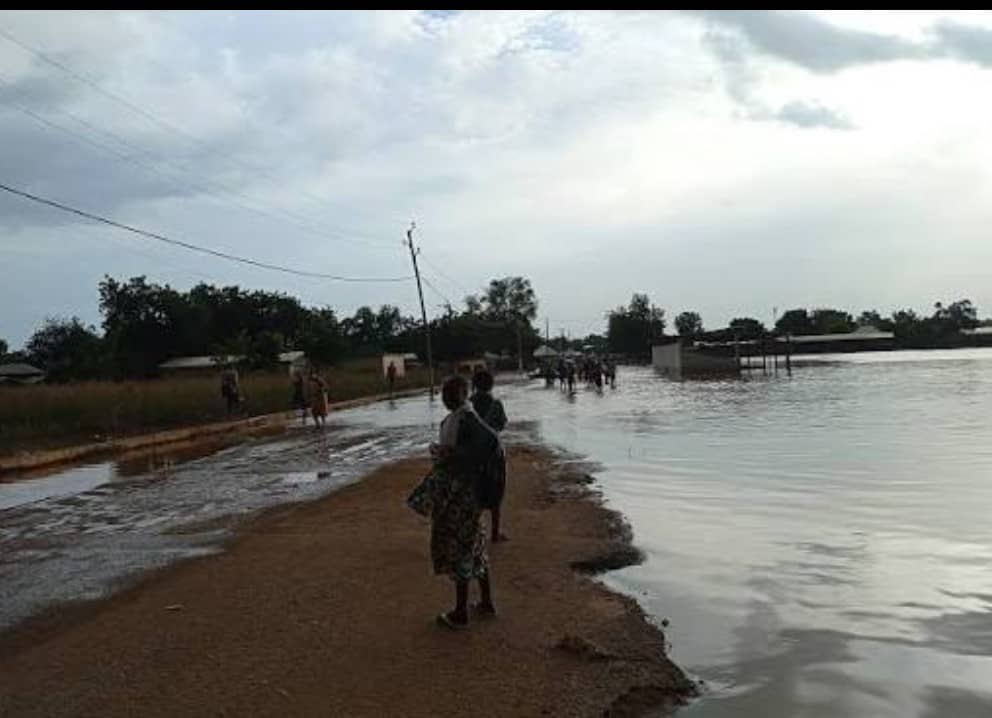
Floods, stagnant water, blocked gutters: each rainy season exposes communities in northern Cameroon a little more to waterborne diseases and malaria.
Accumulated waste, insufficient latrines, contaminated water: in Moutourwa as in Lagdo, the rains transform ordinary unsanitary conditions into a veritable health time bomb.
Cholera, malaria, childhood diarrhea: diseases linked to the rainy season primarily affect children, in areas where access to care remains limited.
Every year, at the same time, the same scenario is repeated in several localities in northern Cameroon: the first rains fall, and with them comes a health threat that is as silent as it is deadly.
In Moutourwa as in Lagdo, the rainy season is not limited to the usual inconveniences of flooding or impassable roads. It reactivates a cycle well documented by health authorities: stagnant water becomes a breeding ground for mosquitoes, while accumulated waste and untreated wastewater create conditions conducive to the contamination of drinking water sources.
A historically vulnerable region
The Far North is no stranger to cholera outbreaks. Health authorities consider this region an endemic area where cholera reappears cyclically. In November 2024, an outbreak was detected there after several patients were admitted with severe diarrhea; a total of 127 people were affected, and two community deaths were recorded before the epidemic gradually subsided by the end of the year. This outbreak was directly linked to climatic conditions: severe flooding struck the region in August, September, and October 2024, affecting 459,000 people.
This is not an isolated case. Nationwide, Cameroon has experienced fifteen major cholera outbreaks since the first recorded epidemic in 1971, with case fatality rates ranging from 2% to 60%. The largest epidemic occurred between 2009 and 2011, affecting seven out of ten regions and causing 23,152 cases and 843 deaths. The Far North region was particularly hard hit, accounting for a large proportion of the country’s cases.
The danger equation
In places like Micilia, the equation remains the same from one season to the next: accumulating waste, stagnant wastewater near homes, and insufficient access to latrines. This combination creates an environment conducive not only to cholera, but also to malaria, the transmission of which depends directly on the presence of
breeding grounds—these stagnant water sources where mosquitoes thrive.
In addition to this, there are childhood diarrheas, often linked to the consumption of contaminated water, which remain one of the main causes of death among children under five in the rural areas of the country.
In Lagdo, an additional risk is added to this list: that of flooding itself. From the first rains, the gutters, clogged with plastic waste, struggle to drain the water, causing overflows that further aggravate the stagnation and contamination of the immediate environment of the homes.
A national response is being developed.
Faced with this recurrence, the Cameroonian government has undertaken a structural response. The Ministry of Public Health, with the support of the World Health Organization and several technical and financial partners, validated in September 2025 a National Cholera Control Plan, whose ambition is clear: to eliminate the disease on the national territory by 2030, in accordance with the global roadmap put forward by the Global Working Group on Cholera Control.
While awaiting the long-term effects of this national strategy, immediate preventative measures remain the best available protection for exposed populations: daily sanitation of concessions, washing hands and food with clean water and soap, storing drinking water in covered containers, and systematic use of impregnated mosquito nets to limit exposure to nighttime bites.
This reality reminds us, once again, that in areas where access to health facilities remains limited, community prevention often constitutes the first and sometimes the only defense against seasonal epidemics that accompany each return of the rainy season.