The Central African Republic is facing a dual security and health crisis: a cholera epidemic is raging in Bangui and its surroundings, while armed groups are increasing their incursions in the Northeast and Northwest of the country.
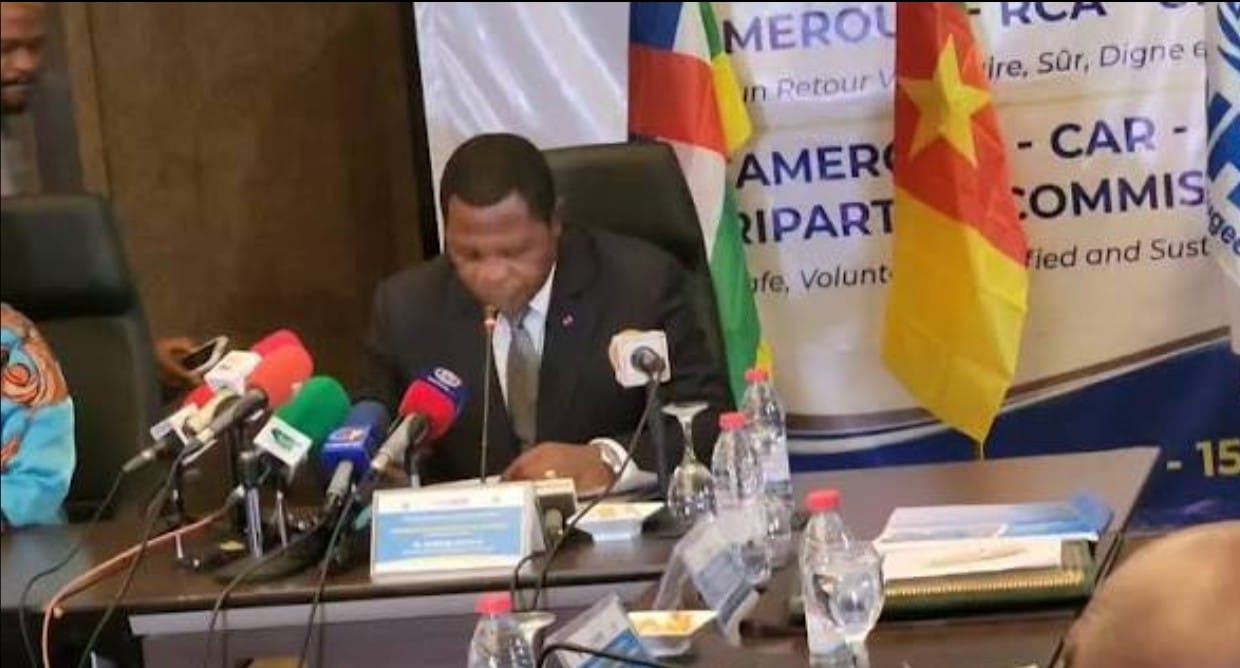
Faced with this instability, the Central African government, during the tripartite commission meeting held in Yaoundé, requested Cameroon’s cooperation in postponing the voluntary repatriation of Central African refugees.
The three parties Cameroon – CAR – UNHCR, nevertheless validated a joint roadmap, focusing on strengthening coordination and socio-economic reintegration for a resumption of the process as soon as possible.
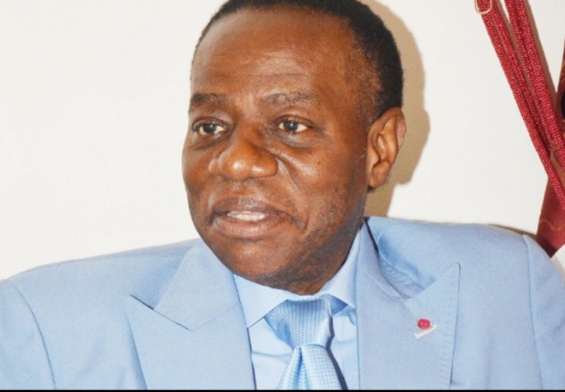
Opening the proceedings on behalf of the Cameroonian government, the Minister of Territorial Administration, Paul Atanga Nji, welcomed the Central African delegation « on behalf of the Head of State, His Excellency Mr. Paul Biya » and commended the UNHCR’s continued support. He noted that since the post-election crisis in the Central African Republic in 2013, Cameroon has hosted more than 412,521 refugees and 21,223 asylum seekers, based on the 1951 Geneva Convention and its 1967 Additional Protocol. Among them, 287,052 Central African refugees have been registered, the majority of whom are settled in the East and Adamawa regions, and 31,942 live in urban areas.
The minister indicated that the tripartite agreement, signed on June 29, 2019, between Cameroon, the Central African Republic, and UNHCR, had enabled the launch of voluntary repatriation operations in October of the same year, with a total of approximately 28,067 refugees repatriated to date « in dignity and safety. » He affirmed that the implementation of this agreement remains « a priority for the Cameroonian Head of State » and that the current meeting aimed to « re-examine certain obstacles in the process. » According to him, the technical working group identified several persistent difficulties, including communication problems, the identification of returnee candidates, and security issues, before proposing a consensus-based work program to resume repatriations. He concluded his remarks with a series of applause for the two Heads of State and for bilateral cooperation.
Bangui is pleading for an additional delay
Speaking on behalf of the Central African government, the Minister of Humanitarian Action, Solidarity and National Reconciliation, Josiane Lina Bemaka-Soul, detailed the five priorities adopted by her country to support the process: the prevention of risks incurred by children born in exile, the priority care of people with specific needs and the determination of the best interests of separated or unaccompanied children, the establishment of a rigorous schedule of activities to guarantee the regularity of convoys, and the advocacy for sustainable financing of the socio-economic reintegration of returnees while respecting, she insisted, « with dignity, I repeat with dignity », the choice of those who freely opt for local integration in Cameroon.
She noted an improvement in the security situation in the Central African Republic since the re-election of President Faustin-Archange Touadera in the first round, while acknowledging that « enemies of peace continue to carry out sporadic attacks in certain areas. » Citing a Central African proverb that states, « A couple quarreling internally cannot welcome their relatives, » she justified her government’s
prioritization of consolidating internal peace and national reconciliation as a prerequisite for a lasting return.
The minister also raised concerns about several health and security challenges facing the Central African Republic: an Ebola outbreak on the border with the Democratic Republic of Congo, a cholera epidemic around Bangui, and threats of incursions by armed groups in the northeast and northwest of the country. Citing these issues, she announced that she would be conveying a message from President Touadéra to his Cameroonian counterpart, Paul Biya, to « request his understanding » regarding a more flexible schedule and a postponement of the repatriation operations. She reiterated her government’s gratitude to the Cameroonian president for his support, conveyed his fraternal greetings, and commended the quality of the work done by the organizing committee.
Interviewed on the sidelines of the session by presenter Charlabos Solopouba, Josiane Lina Bemaka-Soul summarized her position: the discussions were deemed satisfactory, with hopes for an agreement allowing repatriations to resume « in the near future, » in a spirit of coordination. She reiterated that the current turmoil—the cholera epidemic in Bangui and attacks by armed groups—justifies the request made to the Cameroonian government for a period of stabilization before restarting the process.
UNHCR calls for cooperation and the empowerment of refugees
The acting UNHCR representative in Cameroon, Saoudatou Bah-Mansare, praised Cameroon’s long-standing commitment to hosting and protecting hundreds of thousands of people fleeing violence for over a decade, as well as the efforts of the Central African government in the areas of security, governance, civil documentation and the reintegration of returnees.
She indicated that the work of the technical working group, held in Yaoundé on July 12 and 13, 2026, had made it possible to identify the main operational challenges and to develop concrete ways to strengthen coordination between the parties, improve verification mechanisms, harmonize administrative procedures and ensure the regularity of convoys.
Recalling that 2026 marks the 75thᵉOn the anniversary of the 1951 Convention relating to the Status of Refugees, she placed voluntary repatriation efforts within the « 50 by 39 » vision championed by the United Nations High Commissioner for Refugees, which calls for halving refugees’ dependence on humanitarian aid by 2035. The UNHCR, she affirmed, reaffirms its « full readiness » to continue providing technical and operational support, in full respect of state sovereignty, to
ensure that every refugee can make a free and informed decision about their future, in a process based on safety, dignity, and the voluntary nature of return.
A roadmap to be implemented
At the end of this opening session, the three parties must adopt a document setting out the practical arrangements for repatriation as well as a timetable for the next steps, intended to serve as a compass for the resumption of the process.
« The effective implementation of the tripartite agreement is a priority for the Cameroonian Head of State.
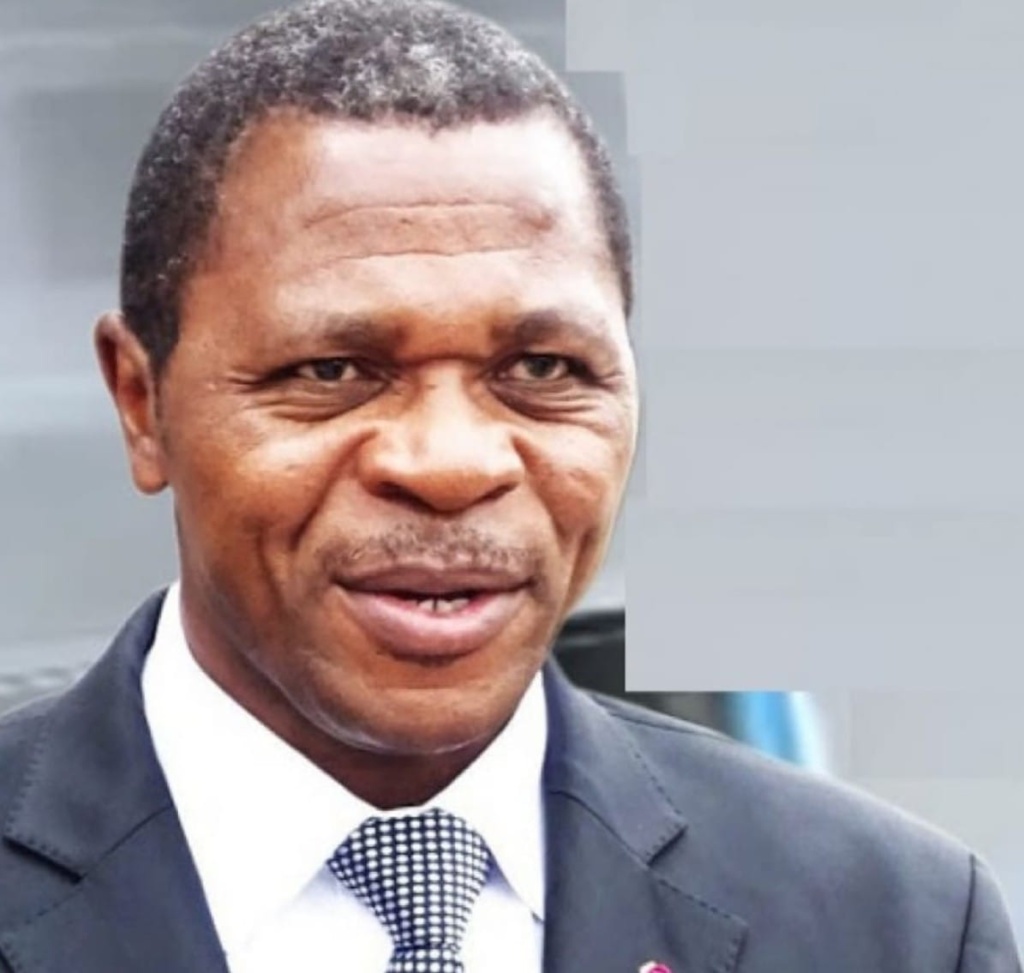
« To date, approximately 28,067 refugees have been repatriated safely and with dignity by the Tripartite Commission. It is important to emphasize that the effective implementation of the Tripartite Agreement is a priority for the Head of State of Cameroon, His Excellency Mr. Paul Biya. The current visit of the Central African authorities to this capital city therefore provides an ideal opportunity to re-examine certain obstacles in the process and to resume the voluntary and safe repatriation of Central African refugees, following a program agreed upon by Cameroon, the Central African Republic, and the Office of the United Nations High Commissioner for Refugees, under the best possible conditions. Recently, experts from the technical working group examined several concerns raised by the various parties: these include communication difficulties, identification of returnee
candidates, and some security issues. During this visit, the experts’ work led to a consensus-based proposal for a work program whose main objective remains the resumption of the repatriation process.