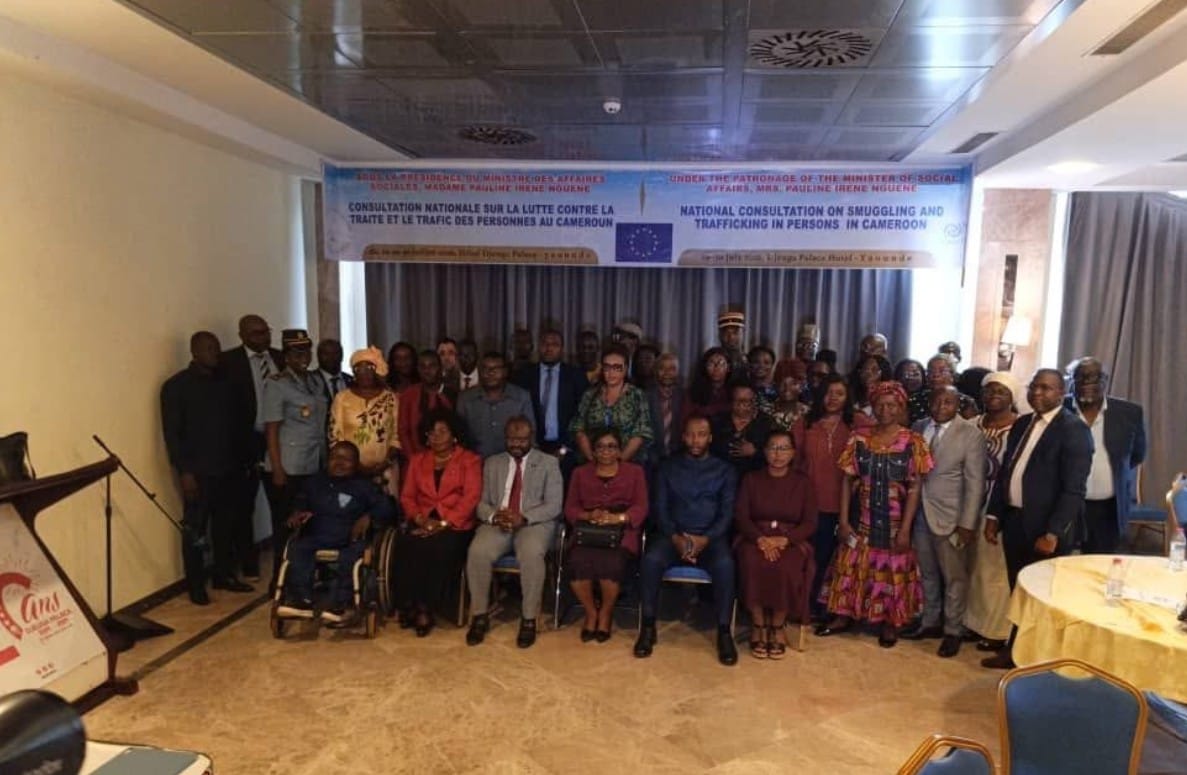
The Ministry of Social Affairs, with support from the International Organization for Migration, held a national consultation in Yaounde from July 29 to 30, 2026, to strengthen Cameroon’s response to human trafficking and migrant smuggling, with a focus on victim identification, protection and care.
Putting victims at the centre
Human trafficking is not only a criminal and migration issue. It also has serious consequences for the physical, psychological and social well-being of those subjected to exploitation. This was one of the concerns raised during the national consultation on human trafficking and migrant smuggling held in Yaounde on July 29 and 30, 2026.
Organized by the Ministry of Social Affairs with the support of the International Organization for Migration (IOM), the consultation brought together public administrations, United Nations agencies, civil society organizations, private sector representatives, technical and financial partners and experts.
The meeting was organized as Cameroon seeks to strengthen its national response to trafficking and contribute to the development of its National Migration Policy.
Improving identification and referral
Among the priorities highlighted during the discussions was the need to improve mechanisms for identifying victims. Early identification is essential, particularly for people who may be reluctant or unable to report the exploitation they have experienced.
Once identified, victims also need to be referred to appropriate services. This requires closer collaboration between the institutions responsible for social protection, justice, law enforcement, health and other forms of assistance.
For victims who have experienced physical violence, psychological abuse, forced labor or other forms of exploitation, access to adequate support can be an important step towards recovery and reintegration.
Participants therefore called for stronger referral mechanisms and better coordination among the different actors involved in victim assistance.
Prevention remains essential
The consultation also stressed the importance of prevention. Awareness campaigns were identified as an important tool for helping communities recognize the risks associated with trafficking, including deceptive recruitment practices.
Such efforts are particularly important for vulnerable populations who may be targeted with false promises of employment or better living conditions. Providing people with reliable information can help them recognize potential risks before they become victims of exploitation.
The participants also underlined the importance of protecting victims’ rights throughout the assistance process. A victim-centered approach requires dignity, confidentiality, protection and access to appropriate services.
Towards a stronger national response
Beyond victim assistance, the consultation addressed the need to strengthen investigations and prosecutions against trafficking networks. Participants also called for greater national and international cooperation to improve the response to trafficking and migrant smuggling.
The recommendations adopted during the two-day meeting are expected to contribute to the development of Cameroon’s National Migration Policy and to a
more coordinated national response.
For the Ministry of Social Affairs and its partners, strengthening the fight against trafficking therefore goes beyond dismantling criminal networks. It also means ensuring that people who have been exploited are identified, protected and supported, while addressing the vulnerabilities that expose others to trafficking.
As Cameroon works towards a more coordinated migration policy, victim protection, prevention and access to appropriate care are expected to remain central to its efforts to combat human trafficking.