

Faced with the threat of cholera spreading from the Far North and the Central African Republic (CAR), health and administrative authorities in the Adamaoua region have, in recent days, stepped up prevention and surveillance measures at the borders and within communities. The aim is to prevent the epidemic from being introduced into the region.
The Adamawa Regional Public Health Officer, Guillaume Tchédélé, has set up and activated the community-based epidemiological surveillance and alert system at the region’s entry points. Every week, the teams deployed submit a report on community-based epidemiological surveillance. In addition to coordination, mobile teams and community health workers are deployed to carry out checks, identify suspected cases and quickly refer patients to treatment centers. Surveillance posts have been set up on major roads and at border crossings to strengthen monitoring of the flow of people arriving from affected areas.
In the Dang health district, the gateway to the region, Dr Jame Afane Yannick, the district head, has given assurances that community health workers’ capacity to detect and manage cases has been strengthened. According to him, efforts will be stepped up under the coordination of the regional team.
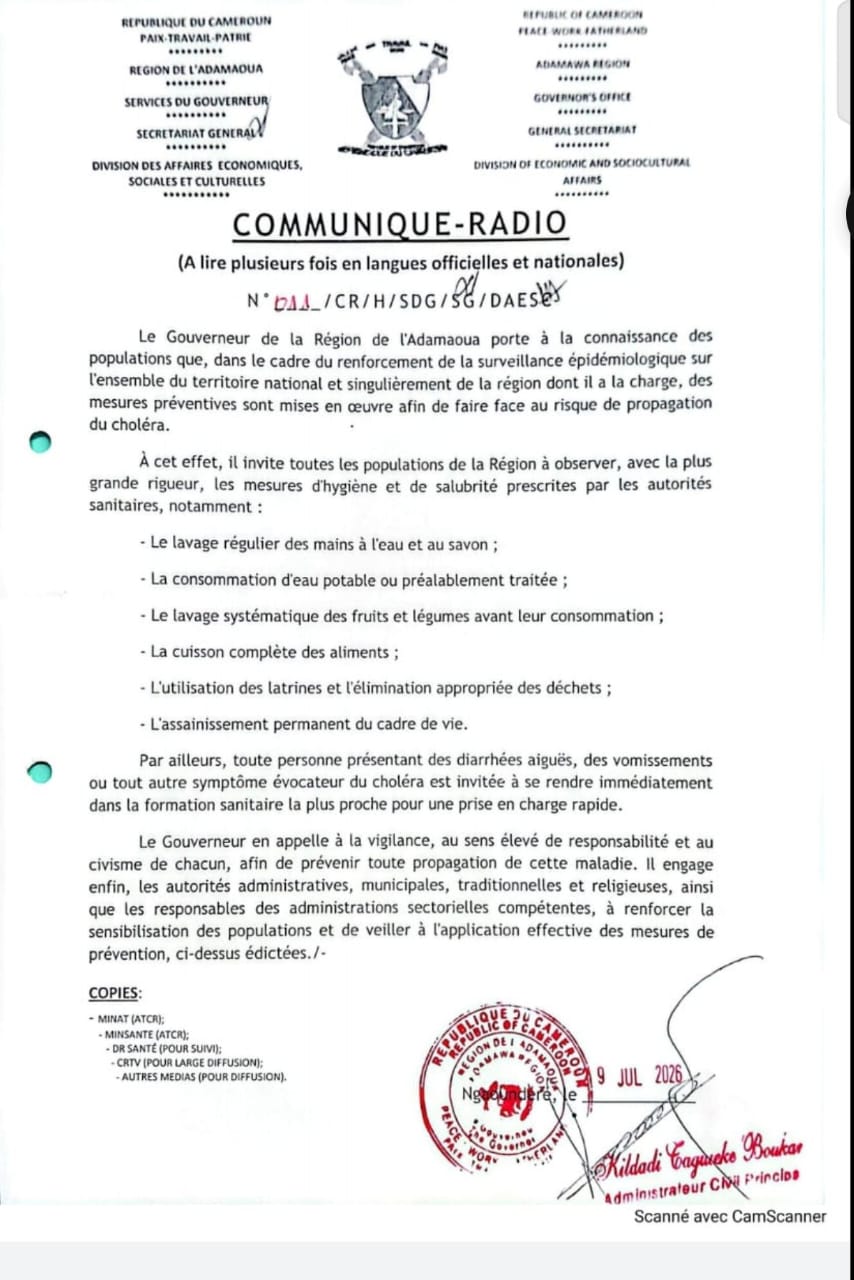
Meanwhile, on July 29, 2026, the Governor’s office issued a statement urging the public to remain vigilant and to strictly observe hygiene rules. The message emphasizes simple but effective measures: washing hands regularly with clean water and soap or, failing that, using hand sanitiser; drinking only boiled or treated water; avoiding food sold by street vendors where the origin and preparation conditions cannot be guaranteed; and using appropriate latrines or waste disposal facilities.
Awareness campaigns are also being carried out through local radio programs, schools and places of worship. The governor’s statement highlights the role of traditional and religious authorities, whose contribution to promoting community health is undeniable. These initiatives aim to raise awareness of the clinical signs of cholera acute watery diarrhea, vomiting and rapid dehydration and the importance of early treatment in reducing mortality.
The authorities emphasize that following hygiene measures and promptly reporting suspected cases are the best defenses against the spread of cholera in Adamawa. They urge anyone showing symptoms to go to a health center immediately.
Thanks to this scheme and the efforts of local epidemiological surveillance officers, no cases of cholera have been recorded. The health authorities intend to maintain this positive trend until the start of the new school term in early September.


