As the Democratic Republic of Congo battles its largest Ebola outbreak on record, authorities and health partners have launched an emergency operation along the Congo River to prevent the virus from spreading towards Kinshasa, the country’s capital.
The Democratic Republic of Congo has opened a new front in its fight against Ebola, targeting one of the country’s most important transport corridors. Launched on August 20, the “Congo River Without Ebola” initiative seeks to prevent the Bundibugyo virus from traveling along the river from Kisangani towards Kinshasa.
The operation comes as the outbreak continues to expand at an alarming pace. Since the epidemic was officially declared on May 15, 2026, more than 5,200 confirmed cases and over 2,500 deaths have been reported across six provinces, according to the World Health Organization.
The detection of Ebola cases in Kisangani has raised particular concern. Located along the Congo River, the city is connected to several communities and major
transport hubs downstream. Health authorities fear that the movement of passengers and goods could facilitate further transmission towards Kinshasa if infections are not detected and contained early.
Securing a vital transport corridor
The initiative focuses on the 1,734-kilometer river corridor linking Kisangani to Kinshasa. The route passes through several major river ports, including Bumba, Lisala, Mbandaka, Kwamouth, Bolobo and Yumbi, creating a network through which thousands of people and hundreds of boats move.
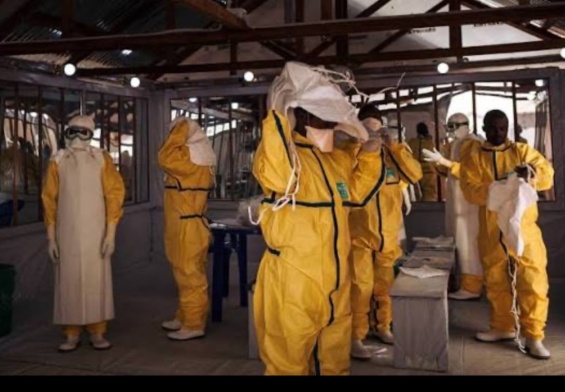
Rather than restricting movement along the river, the response is designed to strengthen health protection at strategic points along the route. Surveillance teams will work to identify suspected cases earlier, while measures will be reinforced in ports, boats and other points where people come into close contact.
The operation also includes strengthening infection prevention and control, improving access to testing and care, and increasing risk communication and community engagement. Authorities and partners will also reinforce coordination between different sectors and strengthen cross-border cooperation.
The growing approach reflects concern that Ebola could spread beyond the areas where transmission is already established. The WHO has repeatedly warned that population movement, insecurity, delayed detection and gaps in contact tracing are making the response more difficult. In early August, WHO and Africa CDC called for contact follow-up to reach at least 95 percent in order to identify transmission chains quickly.
Protecting Kinshasa before the virus arrives
For the Congolese authorities and their partners, the objective is therefore not simply to respond to cases after they appear, but to prevent the virus from reaching densely populated areas further west.
The Congo River, which normally serves as a major economic and social link between communities, could become a route for disease transmission if surveillance and prevention measures fail. The new initiative aims to turn that same corridor into a line of defense.
The urgency is underscored by the unprecedented scale of the current outbreak. WHO Director-General Tedros Adhanom Ghebreyesus said in August that the epidemic was moving faster than any previous Ebola outbreak and warned that, at its current pace, it could surpass the 2014–2016 West African epidemic in scale.
With transmission still accelerating, the Congo River operation represents an attempt to move faster than the virus itself, and to prevent the outbreak from reaching Kinshasa.