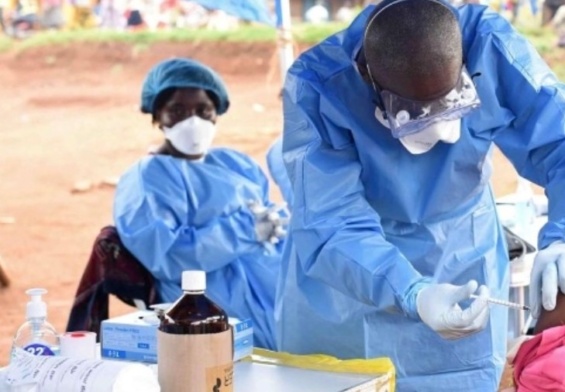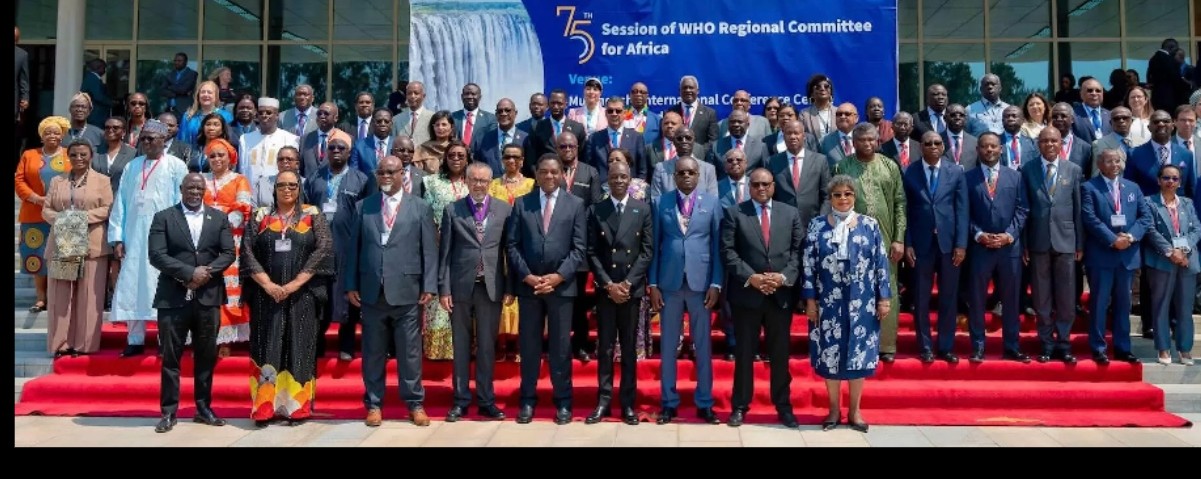
The 76th session of the WHO Regional Committee for Africa opened on August 25 in Addis Ababa, bringing health ministers and senior officials from 47 countries together around a critical question: how can Africa build and retain the workforce needed to deliver quality healthcare?
Africa is training more health professionals than ever before, but the continent still faces a major workforce gap. This paradox is at the heart of discussions in Addis Ababa, where African health ministers are meeting from August 25 to 28 to define regional health priorities and consider the Africa Health Workforce Agenda 2026–2035.
More health workers, but still not enough
The numbers show significant progress. The health workforce in the WHO African Region grew from about 1.6 million in 2013 to 5.1 million in 2022. Around 4,000 health training institutions now produce approximately 255,100 graduates every year. Yet this growth has not been sufficient to meet the continent’s needs. The WHO estimates that Africa could face a shortage of 6.1 million health workers by 2030.
The challenge is therefore not simply about producing more doctors, nurses, midwives, laboratory technicians or other professionals. It is also about ensuring that trained workers find jobs, are deployed where they are most needed and have sufficient incentives to remain in the health system.
The WHO’s latest regional assessment points to an important gap between training and employment. In 2024, the Region had around 5.7 million health workers, but was estimated to have only 46% of the workforce required. At the same time, about one million trained health workers were out of work or underemployed, while rural and underserved facilities continued to experience shortages.
From “train” to “retain”
This is precisely what the new Africa Health Workforce Agenda seeks to address over the next decade. The framework is built around three priorities: plan, train and retain.
Planning means helping countries better anticipate how many health workers they need, in which professions and where they should be deployed. Training focuses on expanding and improving health professions education, including competency-based curricula. Retention, meanwhile, addresses one of the continent’s most persistent problems: keeping qualified professionals within national health systems and ensuring that they are available in underserved areas.
The issue also has a financial dimension. Governments must create funded positions and provide working conditions capable of attracting and retaining professionals. Recent commitments already point in that direction. Several countries have announced new health-sector positions, including Ethiopia with 39,000 posts, Zimbabwe with 32,000 and Kenya with 20,000. Cameroon has also committed to creating 2,000 positions under this broader regional effort.
Beyond numbers
For African health systems, the workforce question ultimately translates into access to care. A shortage of personnel can mean longer waiting times, overstretched health workers and limited services, particularly in rural and underserved communities.
The Addis Ababa meeting therefore comes at a decisive moment. Alongside the workforce agenda, ministers are expected to consider strategies on health financing, medical-product regulation, emergency medical teams, polio transition and health security.
The challenge for the next decade will be to turn political commitments into funded positions, adequate training and sustainable careers. For Africa, strengthening the health workforce is not only a question of numbers. It is a prerequisite for building health systems capable of responding to a growing population and increasingly complex health needs.