Angola is strengthening its immunization strategy to reach children who remain outside routine vaccination services. With support from the World Health Organization, UNICEF, Gavi and other partners, health authorities are focusing on underserved communities, better data and outreach activities to reduce inequalities in access to childhood vaccines.
Angola is stepping up efforts to ensure that children living far from health facilities are not left behind by routine immunization. The country is implementing a 2026-2030 national immunization strategy that places greater emphasis on identifying zero-dose children and improving access to vaccination in underserved communities.
The challenge goes beyond increasing national coverage. Children who have never received a routine vaccine are often concentrated in communities where distance, transport difficulties, limited health resources and weak access to information can prevent families from reaching health services. Identifying these children and bringing services closer to them has therefore become a central part of Angola’s response.
In September, more than 125 provincial and municipal immunization professionals from 62 municipalities across 10 provinces met in Luanda to examine the main gaps affecting vaccination services. Their discussions covered access to health services, human resources,
cold-chain capacity, data quality, community engagement, disease surveillance and outbreak response.
The meeting is part of efforts to translate the national strategy into actions at local level. Particular attention is being given to municipalities with large numbers of children who have received no vaccine doses. Better local data can help health authorities identify where these children live and determine which interventions are needed to reach them.
Taking vaccination closer to families
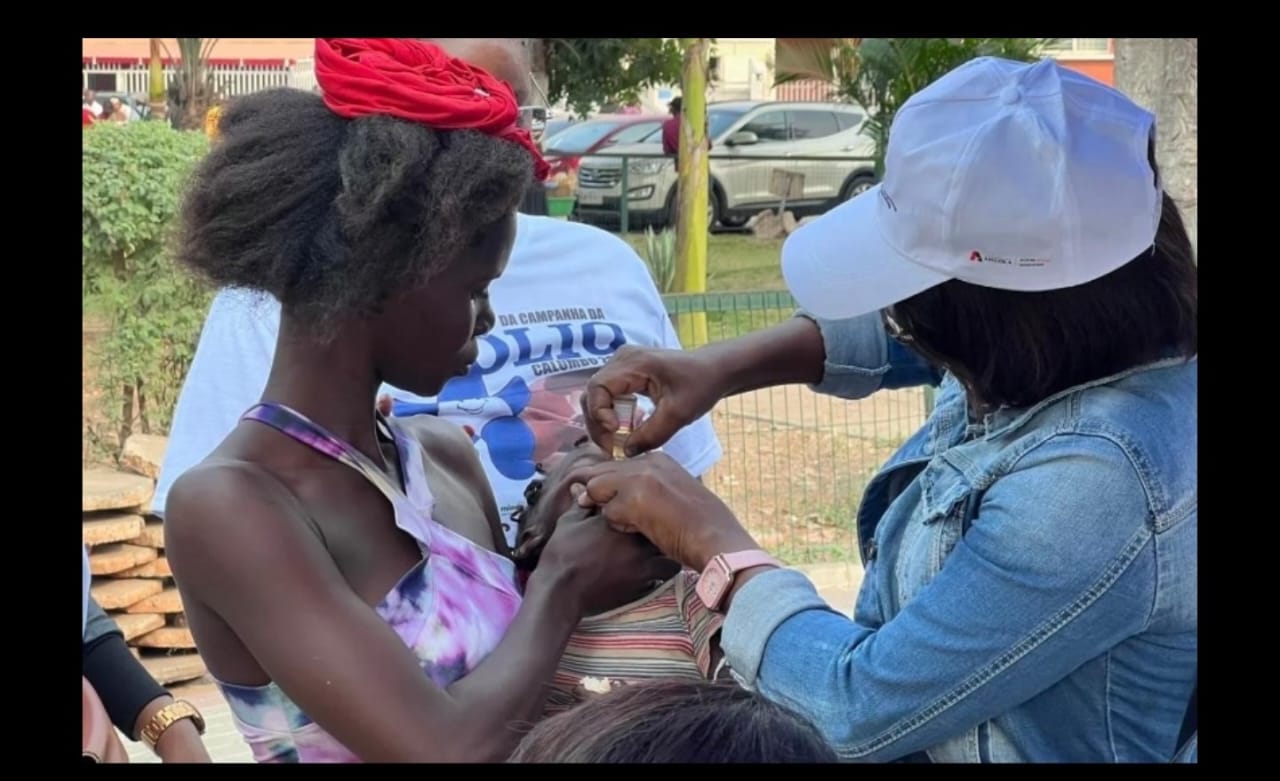
The approach is already visible in several parts of the country. In Viana municipality, Luanda Province, UNICEF has highlighted the difficulties faced by vaccination teams in reaching communities that are not easily accessible by vehicle. Motorcycles have been used to improve the mobility of health workers and bring vaccination services closer to families.
In Bengo Province, outreach activities are also being used to reach communities located far from health facilities. Health teams travel to remote areas as part of intensified routine immunization activities, while efforts are being made to strengthen the cold chain and improve the capacity of health workers to manage vaccination data.
These interventions address a practical gap in immunization programs: a vaccine can be available nationally while remaining physically out of reach for some children. For communities located far from health facilities, bringing vaccination closer can be essential to ensuring that children receive their scheduled doses.
From national targets to local access
HASngola’s 2026-2030 strategy sets a target of reaching 90% vaccination coverage and reducing the proportion of zero-dose children to below 5% by 2030. These figures are targets, not results already achieved.
Meeting them will require sustained efforts to identify underserved populations, maintain vaccine supplies and cold-chain equipment, strengthen the health workforce and engage communities. It will also require reliable data to monitor which children are being reached and which groups continue to be missed.
The country’s experience illustrates a broader challenge for immunization programs: improving coverage is not only a question of how many vaccines are administered, but also of who receives them and who remains outside the system. For children living in hard-to-reach communities, equitable vaccination depends on health services being able to move beyond fixed facilities and adapt their delivery to local realities.