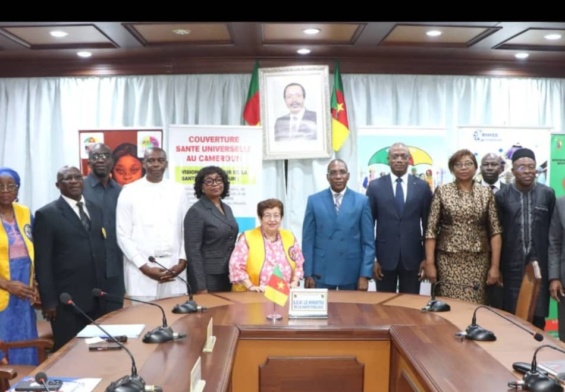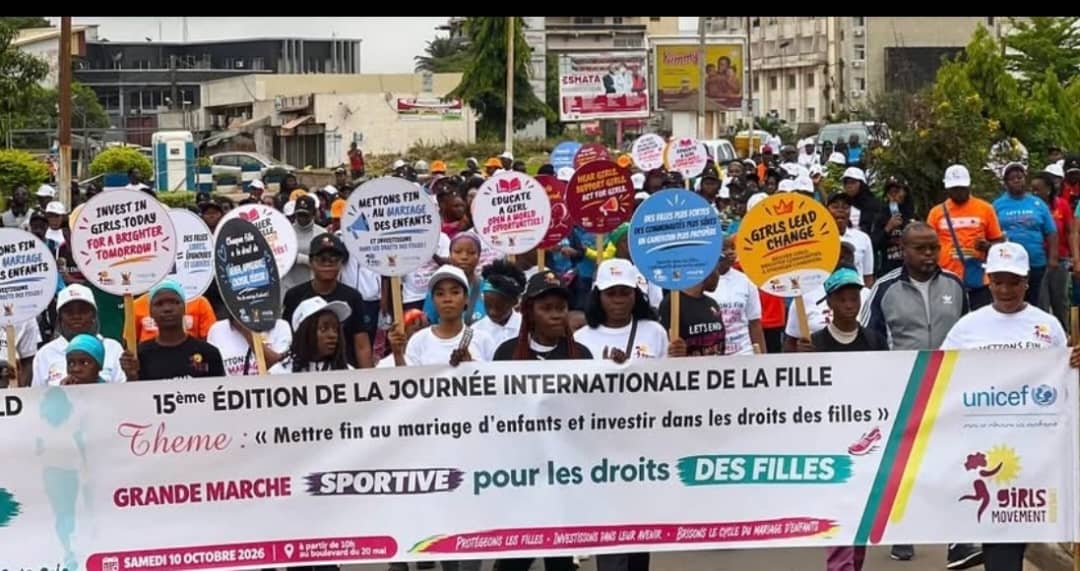
The Ministry of Women’s Empowerment and the Family (MINPROFF) organised a sports march at the 20th May Boulevard on October 10, 2026, ahead of the International Day of the Girl Child, reaffirming its commitment to protecting girls’ rights and ending child marriage in Cameroon.
The streets became a platform for advocacy on October 10 as the Ministry of Women’s Empowerment and the Family (MINPROFF) organised a sports march to promote girls’ rights and strengthen efforts to end child marriage. The event, held ahead of the International Day of the Girl Child on October 11, brought together government officials, partners and other participants around a common message: every girl deserves the opportunity to grow up safely, pursue her education and determine her future.
The march was attended by the Minister of Women’s Empowerment and the Family, Abena Ondoa née Obama Marie Thérèse; UNICEF Representative in Cameroon, Nadine Perrault; and MINPROFF Secretary-General, Moussa Aoudou, among other personalities. Through this public mobilisation, participants reaffirmed their commitment to fighting forced and child marriage, practices that threaten girls’ rights and limit their opportunities.
A persistent challenge
Beyond the symbolism of the march, child marriage remains a major child protection concern in Cameroon. According to data from the 2018 Demographic and Health Survey, approximately 30 per cent of women aged 20 to 24 had been married before their 18th birthday. Although these figures do not reflect the current situation precisely, they illustrate the scale of the challenge and the need for sustained prevention efforts.
Child marriage can be associated with several factors, including poverty, gender inequality, social pressure and barriers to education. In some communities, marriage is perceived as a way of securing a girl’s future or easing the financial burden on her family. However, such decisions can deprive girls of their childhood and expose them to situations for which they are not physically, emotionally or socially prepared.
Consequences for health and education
The implications extend beyond the family environment. Girls who marry early may face increased risks associated with adolescent pregnancy and childbirth, including serious maternal health complications. They may also experience psychological distress, domestic violence and restricted access to sexual and reproductive health services.
Education is another area of concern. Marriage and early pregnancy can interrupt schooling, reducing girls’ prospects of acquiring professional skills and achieving financial independence. These consequences can reinforce cycles of poverty and inequality, making it more difficult for the next generation to access better opportunities.
Preventing child marriage therefore requires coordinated action involving families, schools, health professionals, community leaders and child protection services. Keeping girls in school, improving access to health information and support, and ensuring that cases of forced marriage are identified and addressed are important elements of this response.
Turning commitments into action
The theme of this year’s International Day of the Girl Child, “Ending Child Marriage, Investing in Girls’ Rights”, places emphasis on the need to move beyond awareness-raising towards
lasting solutions. The message highlights the importance of investing in girls’ education, health, protection and participation in decisions affecting their lives.
The MINPROFF sports march provided a public platform for reaffirming this commitment. Its broader significance will depend on how such mobilisation translates into sustained prevention initiatives, accessible protection mechanisms and support for girls at risk.
As Cameroon marks the International Day of the Girl Child, the challenge remains to ensure that every girl can grow up free from coercion, remain in school and make informed choices about her future. Protecting girls from child marriage is not only a matter of safeguarding childhood; it is also essential to advancing public health, equality and human rights.