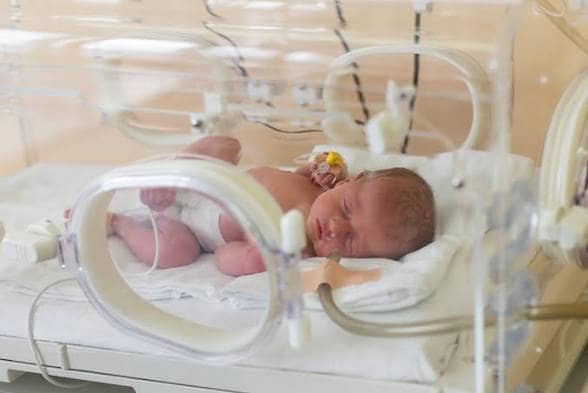
In several hospitals, the survival of premature and low-birth-weight newborns still depends on inadequate equipment. Faced with power cuts and a shortage of incubators, some healthcare workers resort to kangaroo mother care an effective solution, but one that cannot durably replace an essential medical device such as an incubator.
An incubator maintains the baby’s body temperature while regulating humidity, protects against infections and enables close monitoring of vital functions. For a premature baby, who is unable to stabilise their temperature alone, this technology can make the difference between life and death. Hypothermia, infections and breathing difficulties remain among the leading causes of neonatal deaths, particularly in facilities with limited resources. “We do not have a continuous power supply, so we use the kangaroo method,” explains Mrs Mveng, head midwife at the maternity unit of the Garoua-Boulaï Regional Annex Hospital.
When the electricity supply is interrupted, the incubator stops working, exposing the child to rapid cooling. Health workers are then forced to place the newborn against the chest of the mother or a companion, in line with the kangaroo method. This prolonged skin-to-skin contact, combined with breastfeeding, helps to keep the baby warm and promotes growth.
The World Health Organization (WHO) recognises the effectiveness of this practice: it can reduce deaths among premature or low-birth-weight newborns by more than 30%, reduce hypothermia by around 70% and cut serious infections by 15%. The WHO also recommends starting kangaroo mother care early for all premature or low-birth-weight babies, provided they can breathe unaided and do not show any distress requiring urgent care.
Kangaroo mother care should be understood as a vital complement, not as a permanent alternative to the incubator. It requires the constant availability of the mother or a close relative, adequate staff training and rigorous follow-up. It becomes difficult to apply when the mother is ill or absent, or when the child has complications requiring respiratory support, oxygen therapy or continuous monitoring.
Increasing the number of incubators in hospitals, particularly in remote areas, is therefore a public health emergency. This requires the acquisition of appropriate equipment, but also reliable energy provision through generators, inverters or solar solutions. Training midwives, nurses and paediatricians in the use of these devices must accompany every investment.
Saving a newborn should never depend on a power cut. Strengthening neonatal units, equipping maternity wards and rolling out kangaroo mother care form an indispensable combination for durably reducing neonatal mortality and giving every child an equal chance of survival.