
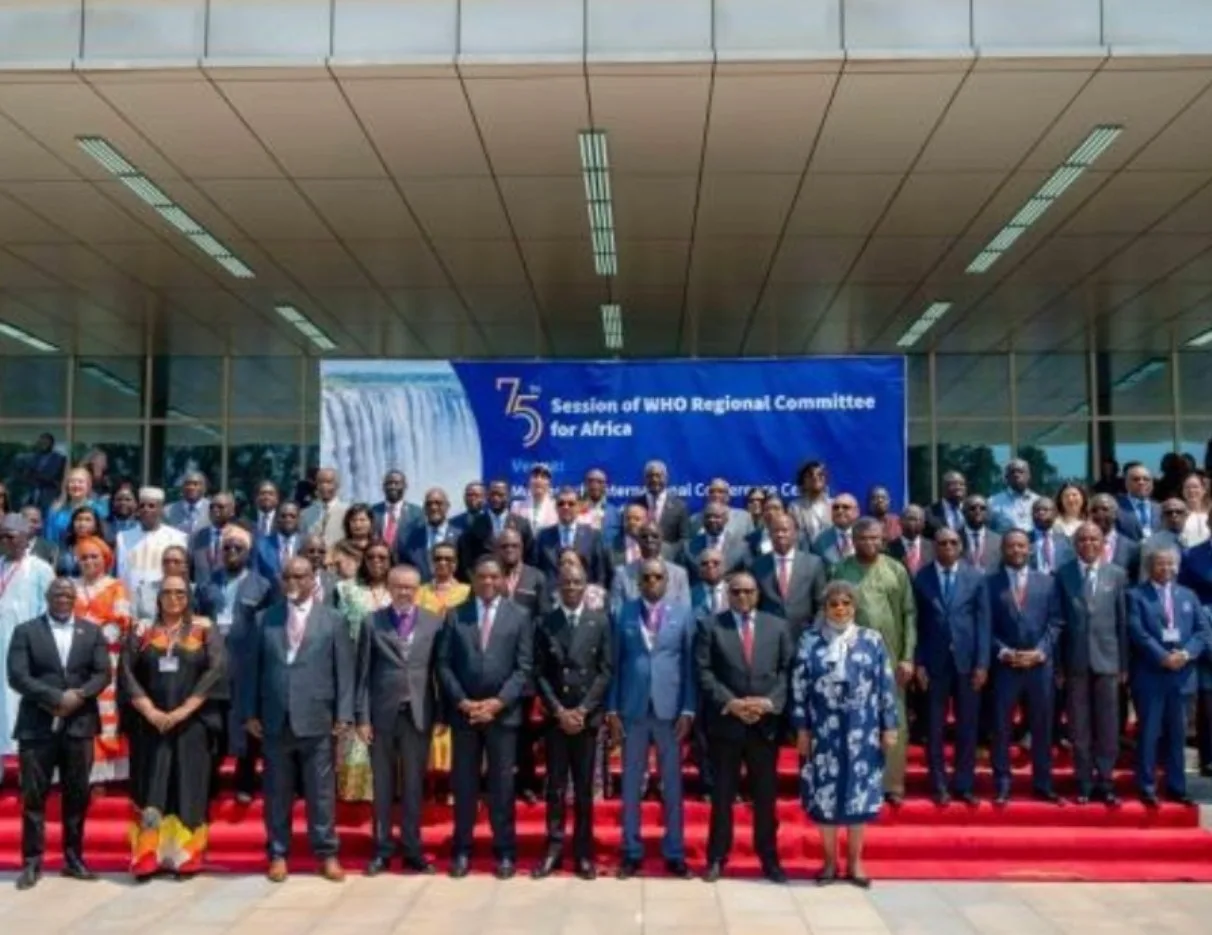
Ministers of Health and senior health officials from 47 African countries will gather in Addis Ababa, Ethiopia, from 24 to 28 August 2026 for the 76th session of the WHO Regional Committee for Africa, with major decisions expected on health financing, the health workforce, sickle cell disease, medical products and health emergency preparedness.
The African Region is preparing for one of its key annual health policy meetings. Agreed by the World Health Organization (WHO), the 76th session of the WHO Regional Committee for Africa will bring together ministries of health and senior officials from the region’s 47 Member States, alongside development partners and other health stakeholders.
The meeting will provide a platform for countries to review progress on existing health commitments and agree on policies and strategies intended to strengthen health systems and improve access to quality care. The Regional Committee is the governing body of the WHO Regional Office for Africa and meets annually to determine the strategic direction of the Organization’s work in the region.
Tackling the health workforce crisis
Among the major issues on the agenda is Africa’s health workforce. Member States are expected to consider the Africa Health Workforce Agenda 2026–2035, which focuses on sustainable planning, training and retention of health workers.
The issue comes amid persistent shortages, unemployment among trained professionals and migration. A WHO report published in May 2026 highlighted the paradox facing the continent: health worker training capacity is expanding, while many countries continue to struggle to recruit, distribute and retain enough personnel where they are most needed. The proposed 10-year agenda seeks to
address these gaps through better workforce planning, education, employment and retention.
The strategy is also expected to support the creation and employment of millions of additional health workers over the next decade, while improving the quality and relevance of health professional training.
Financing and access to care
Health financing will be another central issue. The meeting is expected to consider a Strategy for Financing the Future of Health in the WHO African Region, 2026–2035, aimed at strengthening the financial foundations of health systems.
The discussions come as countries face fiscal pressures while trying to expand essential health services and advance universal health coverage. The strategy forms part of a broader effort to mobilize sustainable resources for health and reduce financial barriers to accessing care.
Sickle cell disease and health emergencies
The agenda also includes a proposed regional strategy on sickle cell disease for 2026–2035, reflecting the need for stronger prevention, diagnosis, treatment and long-term care for people living with the condition.
Health emergency preparedness will feature prominently as well. Delegates are expected to consider a regional framework for Emergency Medical Teams for 2026–2030, as well as measures linked to the transition and sustainability of polio programs and the implementation of amendments to the International Health Regulations.
Other proposed priorities include the regulation of medical products, early childhood development and strengthening health systems capable of responding to public health threats.
Towards a common health agenda
Beyond the adoption of individual strategies, the Addis Ababa meeting is expected to provide an opportunity for African countries to align their responses to shared health challenges.
For WHO Africa, the session comes at a time when the region is seeking to accelerate progress towards universal health coverage, strengthen health security and build more resilient health systems. The decisions taken in Addis Ababa could therefore shape health policies and investments across the continent over the coming years.