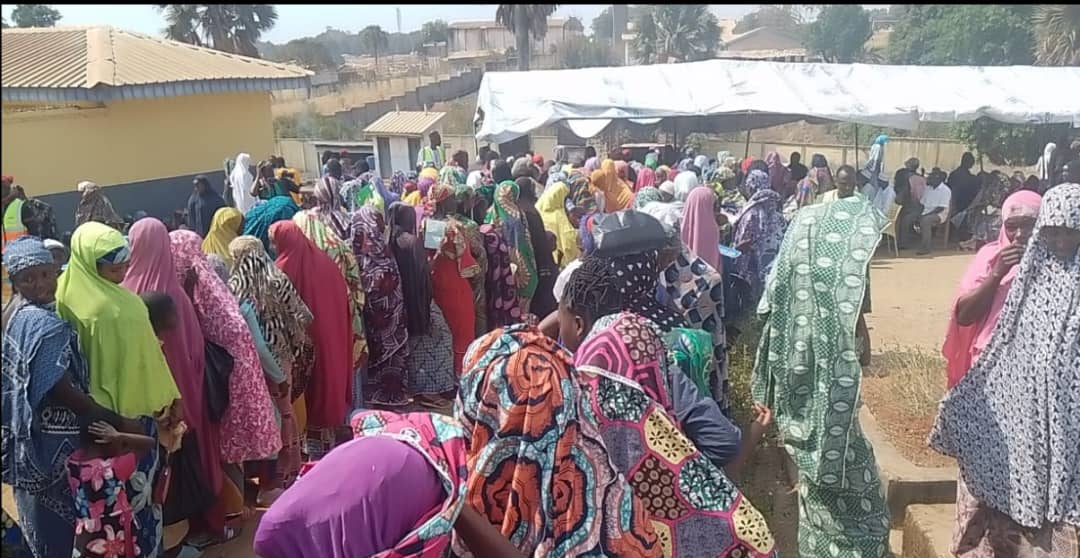
Strong cultural pressures and misconceptions about male gynaecologists in health facilities are behind many cases of women’s reluctance to be examined by male specialists. This situation can lead to serious health risks in a region where specialists are generally scarce.
In the Adamawa region, many women hesitate, or even refuse, to be examined by a male gynaecologist. Between demands for modesty, taboos surrounding sexuality and social pressure, this reluctance delays potentially life-saving diagnoses and raises questions about how reproductive health services are organised. “I cannot undress in front of a man who is not my husband, even if he is a doctor. I would prefer a woman like me,” says Aïssatou, a woman in her thirties met in Ngaoundéré.
Like her, several patients say they would prefer a female gynaecologist, postpone their appointment or turn to informal solutions. “It is not that I look down on male doctors. But the examination touches on my privacy. I feel ashamed,” explains another woman, a mother of three. For Djeinabou, information about a health worker practising in a local health facility is the source of this fear, even though the doctor is there only to do their job.
This seemingly innocuous attitude takes place in a context where sexuality and reproductive health remain difficult subjects to discuss in many families. In the Adamawa, health workers acknowledge that cultural considerations and the taboo surrounding sexuality limit attendance at reproductive health units, despite their existence in hospitals.
In some communities, modesty is regarded as a religious and social duty, a woman should not expose her body or be touched by a man outside her family. Research on barriers to the use of maternal health services in Cameroon shows that gender relations, fear of stigma and cultural representations directly influence access to care, particularly in sexual and reproductive health.
“It is not a whim,” says Fatimé, a community leader. “Many women fear people’s looks,
rumours and even their husband’s reaction. If the service does not respect their modesty, they would rather suffer in silence.” For others, the problem is the small number of female specialists, which genuinely limits their choices.
A health risk
The consequences can be serious. Delaying a gynaecological consultation can conceal infections, fibroids, pregnancy complications, menstrual disorders or cancers that could be detected at an early stage. Cameroonian studies already highlight how shame and sociocultural beliefs lead some patients to turn to alternative practices rather than appropriate medical follow-up.
“A woman who refuses an examination out of modesty is not refusing health care,” notes a health worker at a hospital in the region. “Our role is to create the conditions that enable her to accept care: privacy, sheets, the presence of a female nurse, a clear explanation of the medical procedure and, where possible, referral to a female practitioner.”
For some health officials, the solution lies in recruiting and deploying more female gynaecologists in health facilities across the Adamawa. Others call for better training of male teams in providing care that respects modesty and cultural specificities. While it is true that the main public health facilities in the city of Ngaoundéré already have female gynaecologists, the presence of these specialists in more remote towns would also encourage attendance and acceptance of examinations involving women’s intimate areas.
“We must also involve husbands, religious leaders and women leaders in sexual and reproductive health awareness programmes,” argues a midwife. “When the community understands that an examination can save a life, resistance decreases.” UNFPA also notes that social, cultural and informational barriers remain major challenges to access to reproductive health services in Cameroon, particularly in areas where literacy levels are not very high.
Between respect for modesty and medical urgency, striking the right balance is difficult in the Adamawa. For many women, the question is not whether to choose between their dignity and their health, but how to obtain care that protects both.