The United Nations Development Program warns that the ongoing Bundibugyo Ebola outbreak could evolve into a major development crisis if containment efforts fail. While the epidemic remains concentrated in the Democratic Republic of Congo, the risk of regional spread threatens lives, jobs and economic growth across Africa.
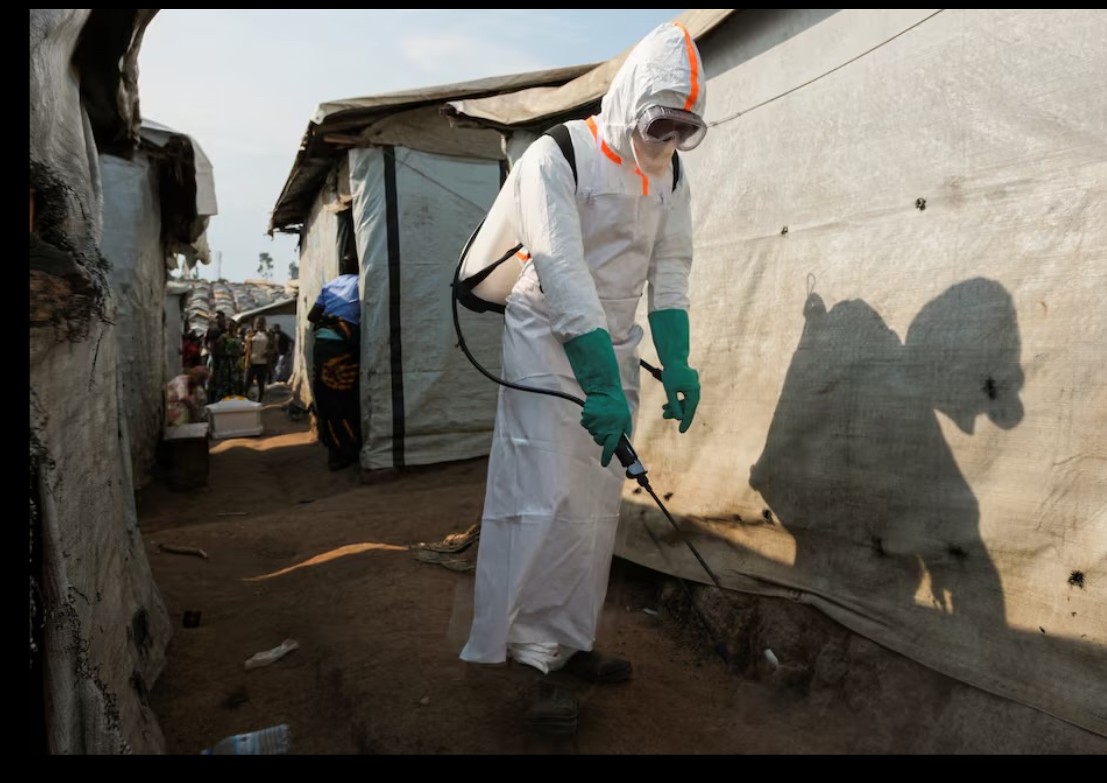
A health worker in full personal protective equipment (PPE) disinfects an area while preparing for the burial of suspected Ebola victims at the Kigonze displaced persons camp in Bunia, eastern Democratic Republic of Congo
Africa could cost the continent as much as $3.6 billion and wipe out hundreds of millions of jobs if it spreads beyond its current hotspots, the United Nations has warned. In a new assessment released on June 30, the United Nations Development
Program (UNDP) said the epidemic is no longer solely a public health concern but also a serious threat to economic development and regional stability.
The outbreak, declared on May 15 in the Democratic Republic of Congo (DRC), has so far infected 1,307 people and claimed 377 lives, according to Congolese government figures. Although the vast majority of cases remain in the DRC, Uganda has also reported a small number of infections, while neighboring countries such as South Sudan remain at increased risk because of cross-border movements.
Health authorities are particularly concerned because the outbreak involves the Bundibugyo strain of Ebola, for which there is currently no licensed vaccine or proven treatment. This makes rapid case detection, isolation of patients, contact tracing and community engagement the primary tools for limiting transmission.
Presenting the report in Geneva, Damien Mama, UNDP Resident Representative in the DRC, stressed that the coming weeks will be decisive. According to him, swift mobilization of financial resources and stronger regional coordination could prevent the outbreak from escalating into a wider humanitarian and economic emergency.
“If we have the resources and we step up, we can contain this outbreak and prevent further losses,” he said. “If we do not, this health emergency risks becoming a much deeper and prolonged development crisis across the region and potentially the continent.”
The UNDP report outlines three possible scenarios depending on how effectively the epidemic is contained. In the most optimistic case, where transmission remains limited to the DRC and Uganda, the economic impact would still amount to approximately $1 billion in lost gross domestic product for the DRC alone.
The outlook becomes significantly more severe if the virus spreads across additional borders. Under the worst-case scenario, Ebola reaches countries including Rwanda and Angola, while African economies simultaneously face rising fuel prices linked to the ongoing Iran crisis. In this situation, the continent’s GDP could shrink by $3.6 billion, with an estimated 328,000 jobs lost across multiple sectors.
Beyond the direct health consequences, the epidemic could disrupt trade, transport, tourism and agricultural activities, particularly in border communities where restrictions on movement often affect livelihoods. Previous Ebola outbreaks have shown that fear and misinformation can further weaken local economies by reducing commercial activity and limiting access to essential services.
The UNDP is therefore calling for stronger investment in surveillance, emergency response and community preparedness to stop the outbreak before it expands further. According to the agency, acting now would not only save lives but also protect economic growth and prevent a health emergency from becoming a continent-wide development crisis.