A €1.5 million joint initiative has provided healthcare and protection services to more than 36,000 vulnerable people in five conflict-affected localities, while supporting communities in moving from emergency assistance towards greater self-reliance.
In Cameroon’s North-West and South-West regions, humanitarian assistance is increasingly being linked to efforts to help vulnerable communities recover and build resilience. Through a partnership between the European Union’s Directorate-General for European Civil Protection and Humanitarian Aid Operations (DG ECHO) and the United Nations Population Fund (UNFPA), essential healthcare and protection services have been brought closer to populations affected by conflict and displacement.
Implemented in Ndu, Ashong, Finkwi, Kumba and Ekondo Titi, the €1.5 million initiative reached more than 36,000 people, including over 6,200 persons living with disabilities. The intervention builds on ongoing efforts supported by the German
Federal Government through GIZ and focuses on linking immediate humanitarian relief with longer-term recovery.
Bringing essential healthcare closer
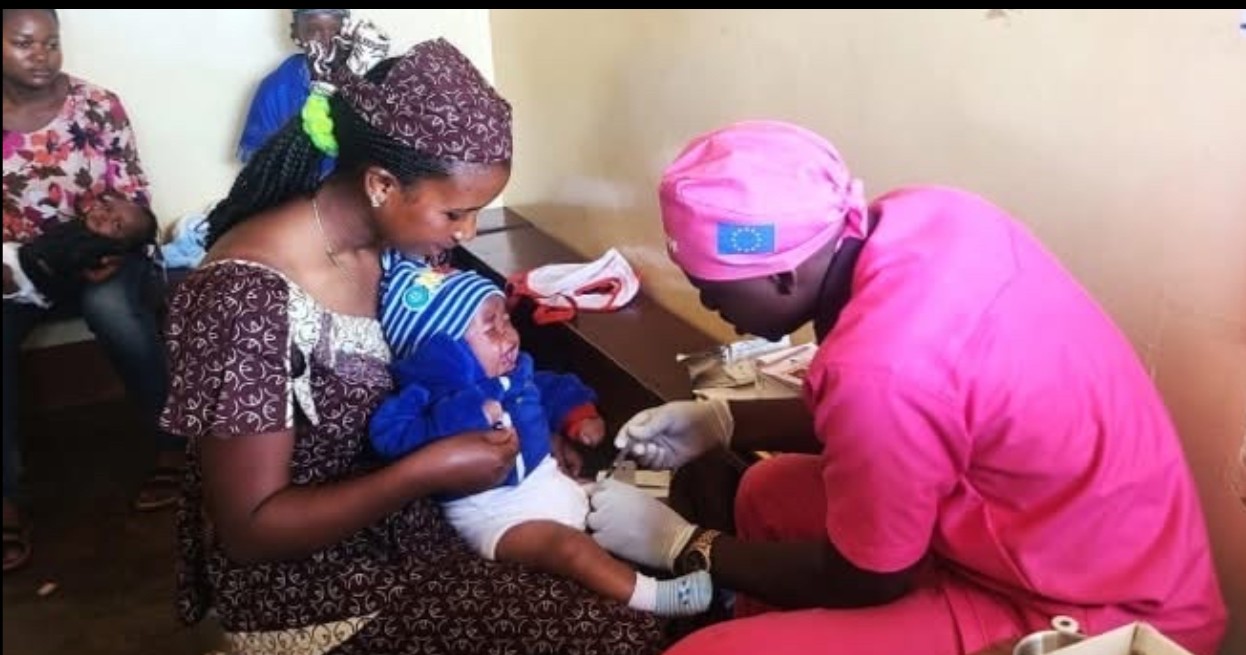
Access to healthcare remains a major challenge for communities living in isolated and conflict-affected areas. Under the initiative, more than 11,500 health consultations were conducted with the support of 10 midwives and 10 youth peer educators.
The program also strengthened maternal health services. Supported healthcare facilities recorded skilled attendance at birth, while emergency obstetric care was provided through local partnerships. Overall, the intervention contributed to improving access to reproductive, maternal and other essential health services for communities with limited access to care.
Mental health was also incorporated into the response, with 25 healthcare workers trained to better respond to the psychological needs of people affected by crisis and displacement.
Protecting women and girls from violence
Protection against gender-based violence was another key component of the intervention. Nearly 4,000 survivors received multi-sectoral care, including medical, psychosocial and protection services.
The program also supported 23 Safe Spaces where women and girls could seek assistance and access information in a safer environment. High-risk cases received follow-up, while local organizations contributed to identifying survivors and strengthening referral mechanisms.
Teen Alive supported Safe Spaces and GBV-related activities, while WA Cameroon contributed to last-mile outreach and cash assistance. WE TECH, meanwhile, introduced the “Alert GBV” application to strengthen reporting and access to protection services.
Turning relief into resilience
Beyond the figures, the initiative places emphasis on helping displaced and vulnerable people regain control over their lives. During an official field mission, UNFPA Representative ai Samuel Kissi visited communities in Bamenda and Buea, where he witnessed some of the program’s human impact.
In Bamenda, he celebrated the birth of healthy triplets, while in Buea he met Lambi
Angela, a displaced artisan rebuilding her economic independence. Her experience illustrates the programme’s broader ambition: moving beyond assistance towards opportunities for self-reliance and dignity.
For UNFPA, empowering young people and vulnerable women to make autonomous decisions is both a humanitarian and development priority. By combining healthcare, protection, disability inclusion, youth engagement and support for livelihoods, the EU-UNFPA partnership seeks to ensure that emergency assistance can serve as a bridge towards recovery.
In the North-West and South-West, the approach therefore goes beyond responding to immediate needs. It seeks to strengthen local systems and create conditions in which communities affected by crisis can gradually rebuild their resilience.