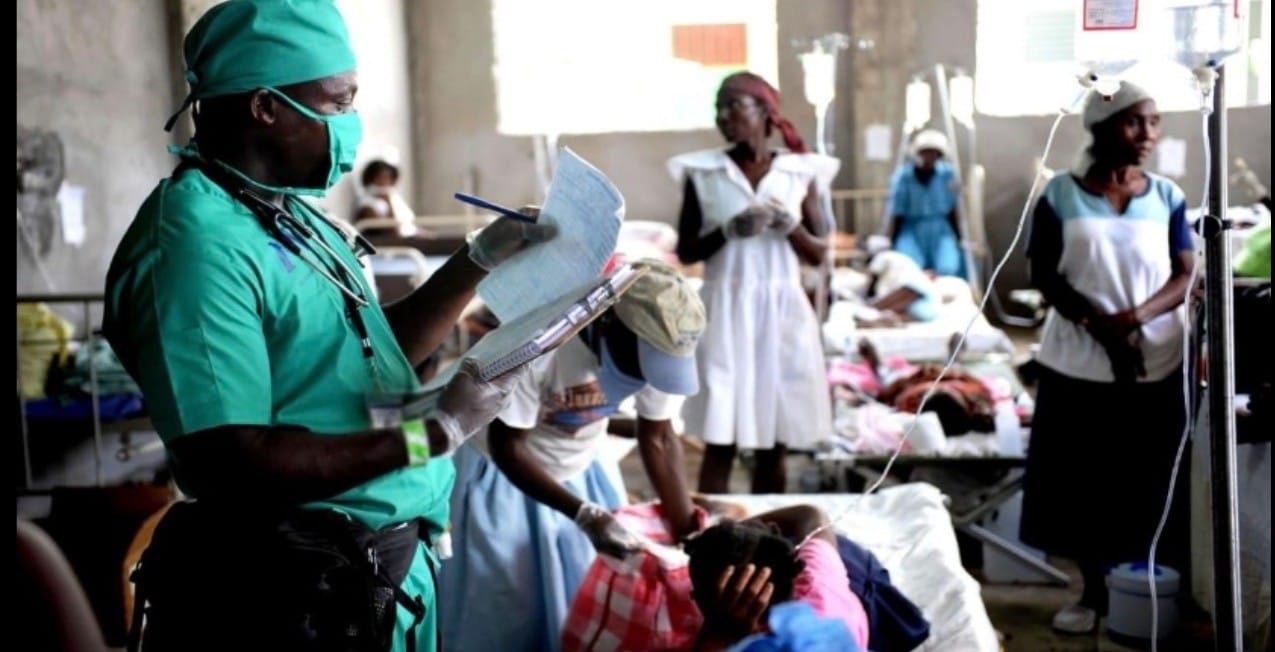
While global attention remains focused on the Democratic Republic of the Congo’s latest Ebola outbreak, another deadly health emergency is quietly escalating. Cholera has already claimed more than 3,100 lives this year, exposing the immense strain on a health system battling multiple crises at once.
The Democratic Republic of the Congo is facing a growing cholera epidemic that has received far less attention than the country’s 17th outbreak of Bundibugyo Ebola virus disease. As health authorities continue to respond to Ebola and ongoing armed conflict in the eastern provinces, cholera is spreading rapidly across the country, putting thousands more lives at risk.
According to the World Health Organization (WHO), the country has recorded 106,401 suspected cholera cases and 3,124 deaths since January 2026. The case fatality rate stands at nearly 3 percent, highlighting the severity of the outbreak.
A disease expanding across the country
Cholera has now affected at least 56 health zones in 16 of the country’s 26 provinces. More than half of all reported cases, about 52 percent, have been recorded in the conflict affected provinces of North Kivu and South Kivu, where insecurity continues to limit access to healthcare, safe drinking water and sanitation.
The epidemic is no longer confined to eastern DR Congo. In the western part of the country, cholera has also spread to Kwango and South Ubangi provinces. South Ubangi alone accounted for 270 suspected cases in a single week, representing 21 percent of all reported infections during that period.
The geographic expansion of the disease underscores the growing challenge facing health authorities as they attempt to prevent further transmission in both conflict zones and previously less affected regions.
Multiple crises fuel the outbreak
Public health experts have long warned that cholera flourishes where access to clean water, sanitation and healthcare is disrupted. In DR Congo, years of armed violence, population displacement and fragile health infrastructure have created ideal conditions for the disease to spread.
The simultaneous Ebola response has also stretched already limited medical resources, forcing health workers to confront multiple emergencies at the same time. While Ebola often captures international headlines because of its high fatality rate and epidemic potential, cholera continues to infect tens of thousands of people and remains one of the country’s deadliest public health threats.
WHO supports response efforts
The WHO says response efforts are underway in collaboration with Congolese health authorities to contain the epidemic. Surveillance, case management, community awareness campaigns and measures to improve access to safe water remain central to the response.
However, health experts warn that controlling cholera will require sustained investment beyond emergency interventions. Without stronger water, sanitation and hygiene infrastructure, the disease is likely to continue resurfacing and placing vulnerable communities at risk, even as the country battles other infectious disease outbreaks.